Weber Searwood Review: The “Hybrid” Pellet Grill We’ve Been Waiting For?
Is this the redemption arc Weber needed after the Smokefire? We tested the Searwood 600 and XL 600 to find out.
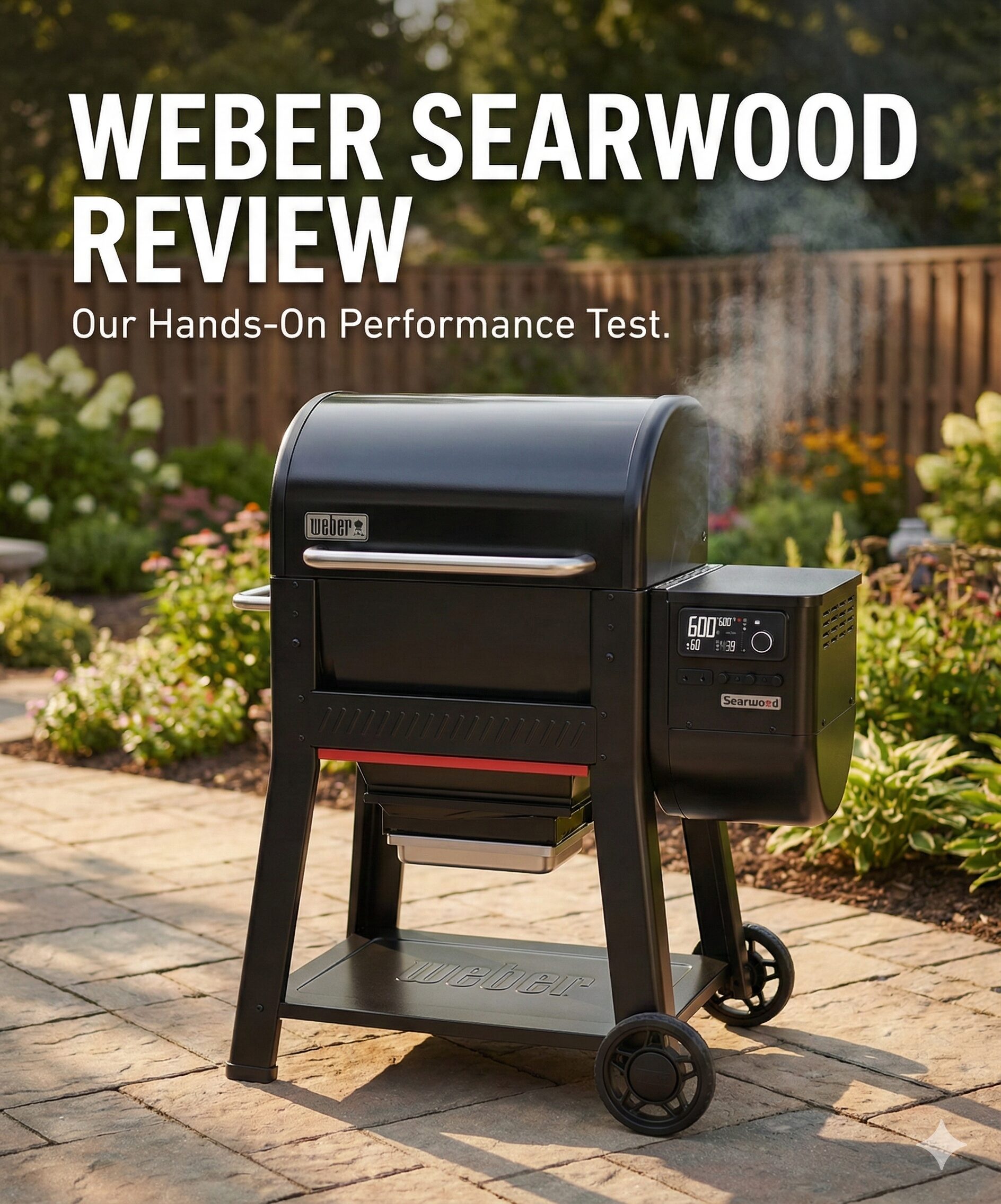
When Weber first entered the pellet grill market with the Smokefire, the BBQ world held its collective breath—and then exhaled in frustration. It was a grill plagued by grease fires and feeding issues. But Weber didn’t quit. They went back to the drawing board, and the result is the Weber Searwood.
The marketing claim is bold: this isn’t just a smoker; it’s a grill that can actually sear (hence the name). Weber claims it can hit 600°F and allows for open-lid grilling—something most pellet grills struggle to do.
In this deep-dive review, we are analyzing the Searwood 600 and Searwood XL 600. Does “DirectFlame” technology actually work, or is it just another buzzword? Let’s fire it up.

What is the Weber Searwood?
The Searwood is designed to fill the gap between a gas grill and a traditional barrel smoker. It features a temperature range of 180°F to 600°F, powered by what Weber calls the “Rapid React PID” controller.
Unlike competitors that use a large metal drip tray that blocks the fire (creating indirect heat only), the Searwood uses a unique flavorizer bar system similar to their gas grills. This allows heat to rise directly to the grates.
The Two Models:
- Searwood 600: 648 sq. in. cooking area (Ideal for families of 4).
- Searwood XL 600: 972 sq. in. cooking area (Ideal for large parties).
Note: The XL model also includes a pellet level sensor, which is missing on the smaller 600.
The “DirectFlame” Difference: Can It Actually Sear?
Most pellet grills are essentially outdoor convection ovens. They are great at 225°F for ribs, but terrible at searing a steak. If you want to know more about the mechanics, check our guide on Pellet Grill vs Gas Grill.
The Searwood changes this with DirectFlame cooking. Because there is no solid grease tray blocking the firepot, the flames can reach much higher.
The Test: We cranked the Searwood to 600°F. It hit temperature in under 15 minutes (impressively fast). We threw on a ribeye.
The Result: Genuine grill marks. Not the faint grey lines you get on a Traeger Pro, but actual Maillard reaction crust. Is it as good as a charcoal kettle? No. But it is significantly better than 90% of pellet grills on the market.
Open Lid Cooking
Unlike other pellet grills that lose heat instantly, the Searwood’s “Manual Mode” keeps the fan and auger running aggressively even with the lid up.
Rapid React PID
The controller learns how you cook. If you open the lid, it senses the drop and feeds pellets immediately to recover temp.
Smoking Performance: Low & Slow
Searing is great, but you buy a pellet grill for flavor. How does it handle a 12-hour brisket?
The Searwood features a SmokeBoost mode. When engaged, the grill fluctuates temperature and fan speed to smolder the pellets, creating a thicker “blue smoke” profile. We found that the smoke ring production was excellent, though the flavor profile is milder than an offset smoker (as expected with all pellet grills).
We recommend using high-quality oak or hickory pellets. Need recommendations? See our list of the Best Barbecue Rubs to pair with your smoke.
Design & Usability: The Good and The Bad
The Build
The unit feels sturdy. The cookbox is cast aluminum and porcelain-enameled steel, which means it won’t rust out like cheap barrel smokers. However, the legs on the non-wheeled side are static. This makes moving the grill around a patio difficult if you don’t lift it up—a strange omission for a premium grill.
Weber Connect 3.0
The onboard computer is brilliant. The LCD screen is bright and easy to read in sunlight. It pairs with the Weber Connect app to give you real-time graphs of your cook. It predicts “Time to Done” based on the internal temperature probe, which is a game-changer for planning dinner.

Pros & Cons: The Honest Truth
| Why We Love It (Pros) | Where It Falls Short (Cons) |
|---|---|
|
|
Comparison: Weber Searwood vs. The Competition
Weber Searwood vs. Traeger Ironwood
The Traeger Ironwood is the direct competitor. Traeger has a slightly better app ecosystem and double-walled insulation for extreme cold weather. However, the Searwood crushes the Traeger in searing capability. If you want one grill to replace both your gas grill and your smoker, the Searwood is the better hybrid. If you only care about smoking, the Traeger is a valid choice.
For a detailed breakdown of the competition, read Pit Boss vs Traeger Grills.
Weber Searwood vs. Weber Smokefire (Old Model)
The Searwood is not just an upgrade; it is a fix. The grease fire issues of the Smokefire are gone thanks to the new grease management drawer. The pellet feeding slide is steeper, eliminating the “bridging” issues where pellets would get stuck.
Final Verdict
The Weber Searwood is the “Swiss Army Knife” of pellet grills. It successfully bridges the gap between high-heat grilling and low-and-slow smoking.
If you are looking for a single unit that can cook burgers on Tuesday night and a brisket on Sunday morning, this is currently the best option on the market in the sub-$1,200 price range. It isn’t perfect (buy the shelves!), but the cooking performance is undeniable.
Recommendation: Go for the **Searwood XL 600** if you have the space. The extra cooking surface and the included pellet sensor are worth the price bump.
Frequently Asked Questions
Can the Weber Searwood actually sear a steak?
Yes. The Weber Searwood can reach 600°F and uses “DirectFlame” technology to allow open fire access to the grates, creating genuine sear marks that most pellet grills cannot achieve.
What is the difference between Searwood 600 and XL 600?
The main difference is size: the 600 has 648 sq. in. of cooking space, while the XL has 972 sq. in. Additionally, the XL model includes a digital pellet level sensor, which the standard 600 lacks.
Does the Weber Searwood have the same grease fire issues as the Smokefire?
No. Weber completely redesigned the grease management system. Grease and ash now fall into a disposable pan in a slide-out drawer, separating it from the heat source and drastically reducing flare-up risks.
For more maintenance tips, ensure you read Key Maintenance Requirements for Barbecues.