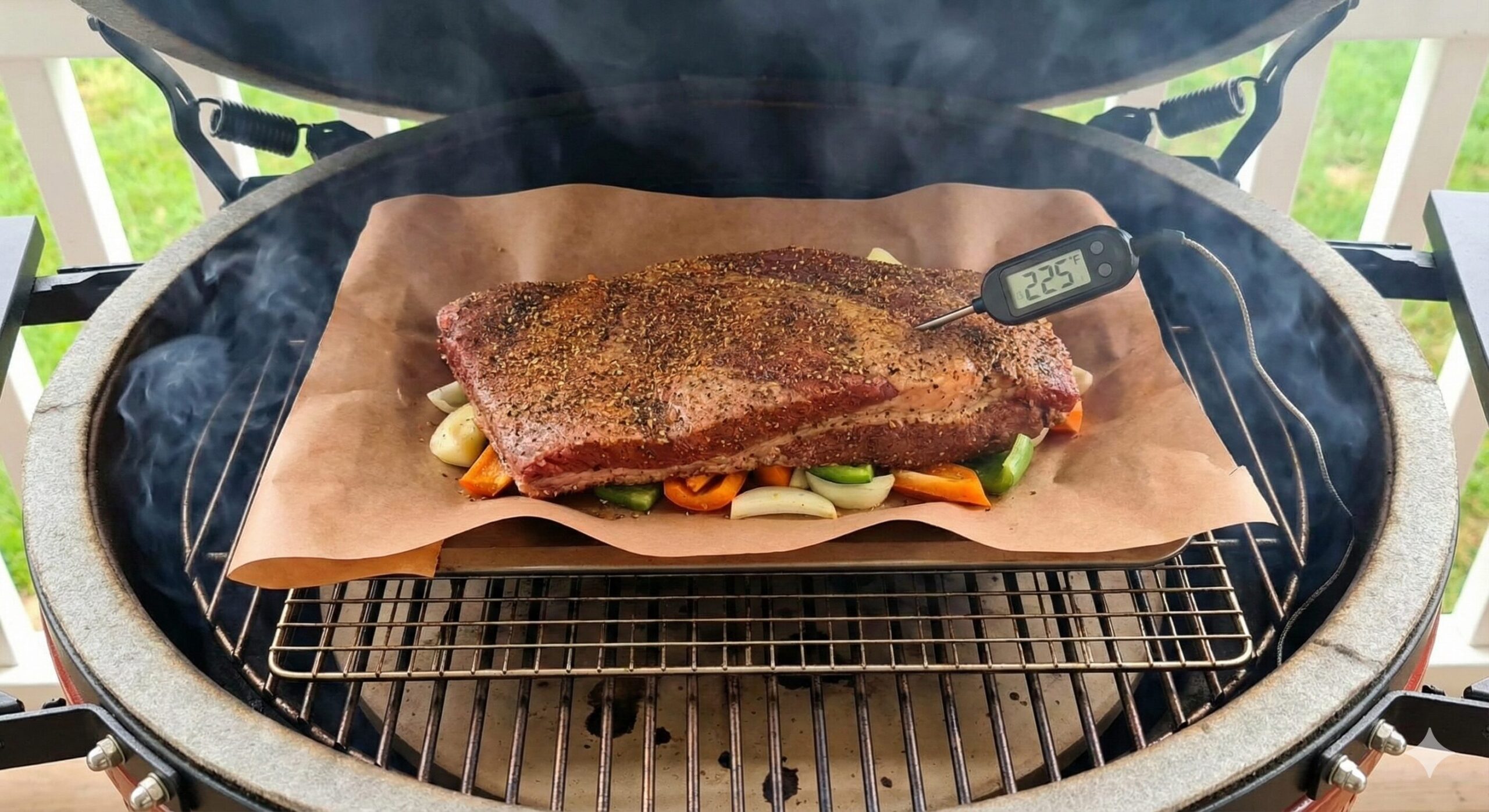
Can You Use Parchment Paper in a Smoker? The Truth About Wrapping
1. The “Crutch” Confusion: Can I Use What’s in My Kitchen?
You are six hours into smoking a pork butt. You hit the dreaded “stall”—that moment when the internal temperature stops rising as moisture evaporates from the meat. You know you need to wrap it (the “Texas Crutch”) to push through the stall and retain moisture. But you open your pantry and realize you are out of heavy-duty aluminum foil and you never bought that fancy pink butcher paper the YouTubers use. All you have is a roll of white parchment paper for baking cookies.
Can you use parchment paper in a smoker?
The short answer is YES. You can absolutely use parchment paper in a smoker. It is heat-resistant, food-safe, and breathable. However, it is not always the optimal choice compared to butcher paper or foil, depending on what you are trying to achieve with your bark and moisture retention.
In this comprehensive guide, we will break down the science of wrapping meat, the critical safety difference between parchment and wax paper (this could save your meal!), and exactly when parchment paper is actually the superior choice for your BBQ.

If you are going to use parchment, go for unbleached. It’s heat resistant up to 425°F and fully compostable, making it safe for low-and-slow smoking.
Check Price on Amazon2. Safety First: The Critical Difference Between Parchment & Wax Paper
Before we discuss bark and flavor, we must address a safety hazard. Many people use the terms “parchment paper” and “wax paper” interchangeably. In a smoker, this is a recipe for disaster.
Parchment Paper (Safe)
Parchment paper is paper that has been treated with acid (parchmentizing) or coated with silicone to make it non-stick and heat-resistant. Most quality parchment paper is rated for temperatures up to 420°F to 450°F. Since most smoking is done between 225°F and 275°F, parchment paper is perfectly safe inside your smoker. It will not burn, melt, or release toxins at these temperatures.
Wax Paper (UNSAFE)
Wax paper is tissue paper coated in paraffin wax. This wax has a very low melting point. If you put wax paper in a smoker, the wax will melt onto your food, ruining the taste and potentially making it unsafe to eat. Furthermore, the paper itself is not heat resistant and can easily catch fire or smoke aggressively. Never use wax paper in a BBQ or smoker.
Check the Box!
Always verify the packaging says “Parchment” and look for the heat rating. If it feels waxy and slippery on both sides like a crayon wrapper, double-check that it isn’t wax paper.
3. Parchment Paper vs. Pink Butcher Paper
Pink butcher paper (often called peach paper) has become the gold standard for Texas-style brisket. But how does parchment compare? They are actually quite similar, but with subtle differences in porosity.
Breathability & Bark
The main reason pitmasters prefer paper over foil is breathability. You want to trap heat to cook the meat faster, but you want some steam to escape so your “bark” (the crusty, flavorful exterior) doesn’t turn into mush.
- Butcher Paper: Highly breathable. It lets a significant amount of steam escape while retaining grease. This preserves the best bark.
- Parchment Paper: Less breathable than butcher paper because of the silicone coating. It traps slightly more steam. This means your bark might be a little softer than with butcher paper, but still significantly better than foil.
Durability
Parchment paper becomes brittle when it dries out and can tear easily if saturated with grease for too long. Butcher paper is generally thicker and designed specifically to hold up against heavy, greasy briskets without disintegrating.

If you want authentic Texas-style bark, this is the material to use. It allows maximum breathability while speeding up the cook.
Check Price on Amazon4. Parchment Paper vs. Aluminum Foil
Aluminum foil is the original “Texas Crutch.” It is impermeable. It traps 100% of the moisture and heat.
The Foil Effect
Because foil traps everything, it powers through the stall faster than any paper. It essentially braises the meat in its own juices. This results in incredibly tender meat, but usually at the cost of the bark. The crust becomes wet and soft (think pot roast texture).
The Parchment Compromise
Parchment paper sits right in the middle. It creates a better seal than butcher paper (cooking faster) but still breathes more than foil (saving the bark). If you are looking for a middle ground—or simply ran out of foil—parchment is an excellent substitute.
However, note that parchment paper is usually sold in narrow rolls (12-15 inches), whereas heavy-duty foil comes in 18-inch widths. Wrapping a large brisket with narrow parchment can be tricky and may require overlapping sheets.
5. When to Use Parchment in a Smoker (Best Use Cases)
While butcher paper rules for brisket, parchment paper actually excels in other areas of smoking:
- Smoking Fish: Fish skin sticks to everything. Placing a filet of salmon on a piece of parchment paper inside the smoker prevents sticking and makes transfer easy. The smoke still penetrates the meat from the top and sides.
- Smoking Vegetables: Small items like asparagus or cherry tomatoes can fall through the grates. A sheet of parchment acts as a perfect mat.
- “Boat” Method: Instead of fully wrapping, you can crinkle parchment paper to create a “boat” under a pork butt to catch juices while leaving the top exposed to smoke.
- Baking: If you are baking a cobbler or mac and cheese in your smoker (treating it like an oven), parchment is the standard non-stick liner.
6. Step-by-Step: How to Wrap Meat with Parchment
If you decide to use parchment for your ribs or brisket, follow these steps to ensure a tight seal despite the paper’s slippery texture.
- Wait for the Bark: Do not wrap until the bark is set and dark (usually around 165°F – 170°F internal temp). If you wrap too early, the bark will never form.
- Layer the Paper: Since parchment rolls are narrow, tear off two long sheets. Overlap them by about 5 inches to create a wide surface.
- Place the Meat: Center your meat on the paper. Spritz it with apple juice or vinegar if desired.
- Fold Tight: Fold the bottom edge over the meat, then the sides in, and roll the meat over. Tuck the loose ends underneath the meat. The weight of the meat holds the package closed.
- Return to Smoker: Place the wrapped meat back in the smoker, seam side down. This prevents it from unraveling.
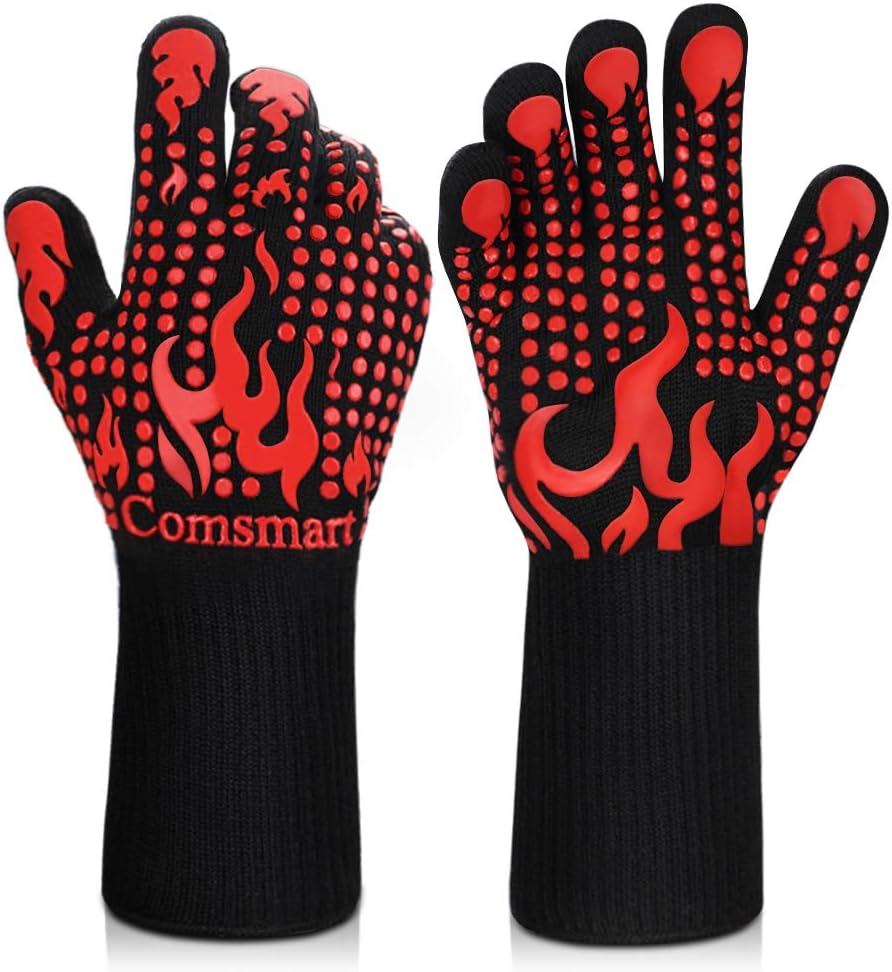
Handling hot meat and slippery paper requires dexterity. These gloves protect your hands while allowing you to wrap tightly without burning your fingers.
Check Price on Amazon7. Pros & Cons Summary
| Material | Pros | Cons |
|---|---|---|
| Parchment Paper | Readily available in kitchens, non-stick, good heat resistance, inexpensive. | Narrow rolls make wrapping large cuts hard, less breathable than butcher paper, brittle when dry. |
| Butcher Paper | Best for bark preservation, breathable, wide rolls available, durable when wet. | Harder to find locally (usually online), absorbs more grease (can be messy). |
| Aluminum Foil | Fastest cooking time, traps all juices, easy to shape and seal. | Ruins bark (makes it mushy), creates a pot-roast flavor profile. |