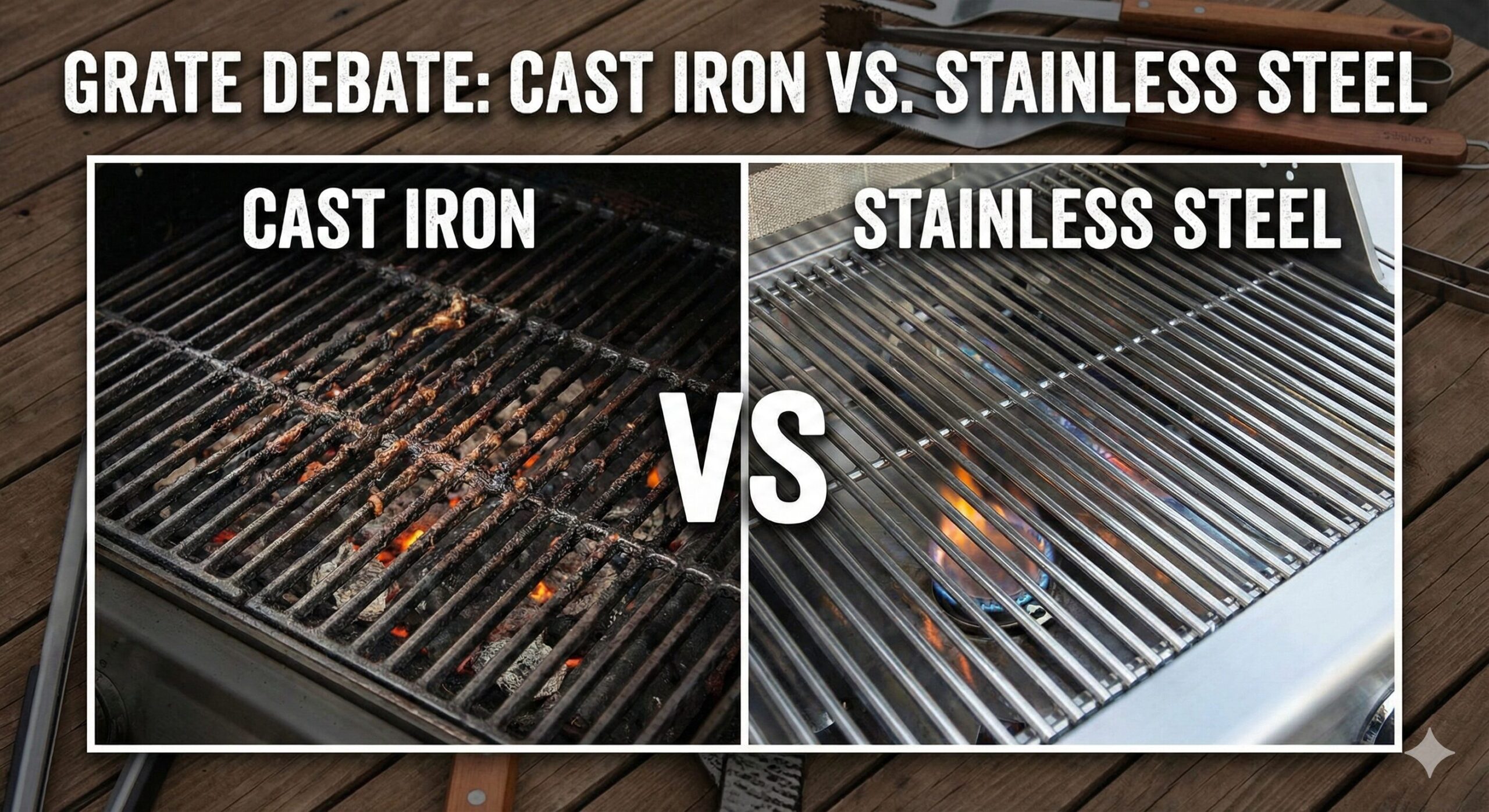
Cast Iron vs Stainless Steel Grill Grates: Which One Reigns Supreme?
You have invested in the best barbecue grill money can buy, picked out the perfect cuts of meat, and dialed in your fuel. Yet, there is one critical component that stands between your heat source and your food: the cooking grate. The debate of cast iron vs stainless steel grill grates is one of the oldest rivalries in the BBQ world, right alongside pellet grill vs charcoal grill.
The grate is the only part of the grill that actually touches your food. It determines the quality of your sear marks, the ease of cleanup, and the longevity of your setup. Do you choose the heavy heat retention of cast iron, reminiscent of a classic steakhouse? Or do you opt for the sleek, rust-resistant durability of stainless steel? In this comprehensive guide, we strip away the marketing hype to compare thermal physics, maintenance requirements, and long-term value to help you make the right choice for your patio.
At a Glance: The Tale of the Tape
Before diving into the metallurgy and thermal dynamics, here is a quick overview of how these two heavyweights stack up against each other.
| Feature | Cast Iron Grates | Stainless Steel Grates |
|---|---|---|
| Heat Retention | Excellent (Holds heat longer) | Good (Heats up faster) |
| Sear Marks | Wide, dark, restaurant-style | Thinner, lighter marks |
| Maintenance | High (Requires seasoning) | Low (Scrub and go) |
| Durability | Prone to rust and cracking | Rust-resistant, can warp |
| Stick Resistance | Excellent (If well seasoned) | Good (Needs oiling) |
| Lifespan | Decades (With care) | 10-15 Years (Quality dependent) |
The Contender: Cast Iron Grates
Cast iron has been a staple in cooking for centuries. In the grilling world, it is revered for its density and weight. Cast iron grates are porous, meaning they absorb fats and oils over time. When heated, they act like a thermal battery.
This material is the go-to for purists who prioritize the visual appeal of food. If you are cooking on a high-end charcoal grill or a ceramic Kamado, you will often find cast iron as the stock option. The magic lies in “seasoning”—a process of baking oil into the pores of the iron to create a natural non-stick surface. Without this, cast iron is basically a rust magnet.
Most modern cast iron grates come with a porcelain-enamel coating. This matte or glossy finish protects the iron from rusting initially, but once that coating chips (and it usually does eventually), you are back to managing raw iron.

Heavy Duty Cast Iron Grate Replacement
Upgrade your sear game with these high-density cast iron grates. Perfect for heat retention and classic grill marks.
Check Price on AmazonThe Contender: Stainless Steel Grates
Stainless steel brings modern convenience to the fire. However, not all stainless steel is created equal. You generally encounter two types: heavy-duty hexagonal rods and thinner wire grids.
304 vs. 430 Stainless Steel: The quality of the steel matters immensely. 304-grade stainless steel is non-magnetic and highly resistant to corrosion, making it ideal for coastal environments or humid climates. 430-grade is cheaper, magnetic, and will eventually succumb to rust, though slower than iron.
Stainless steel is non-porous. It doesn’t hold flavors (good or bad) and it doesn’t require the ritualistic seasoning process. It is the preferred choice for many gas grill owners who want a “set it and forget it” maintenance routine.
Round 1: Heat Retention and Searing
When you throw a steak on the grill, the “hiss” is the sound of moisture vaporizing and the Maillard reaction beginning. This requires heat transfer.
The Cast Iron Sear
Cast iron wins the heat retention battle hands down. Because it is heavy and dense, it holds a massive amount of thermal energy. When cold meat hits hot cast iron, the grate doesn’t cool down significantly. It transfers that stored heat directly into the meat, creating thick, dark, crispy sear marks. This is essential for direct grilling steaks and chops.
The Stainless Steel Radiant Heat
Stainless steel heats up much faster but cools down quicker when cold food touches it. However, this isn’t necessarily a bad thing. Stainless steel creates a more radiant heat profile. Instead of branding the meat only where it touches metal, stainless steel allows the radiant heat from the fire below to cook the meat evenly between the bars. This results in an all-over browning rather than distinct stripes. For delicate items, this can actually be superior.
Round 2: Maintenance and Durability
Here is where the lifestyles diverge. Are you a patio warrior who loves tending to your gear, or do you want to cook and cover?
Cast Iron: The High-Maintenance Diva
Cast iron requires love. If you leave it wet, it rusts. If you drop it, it cracks. You must scrape it while hot and oil it after every single use. This process, known as seasoning, is vital. If you are unsure how to do this, check out our guide on how to season a new BBQ grill. Furthermore, cast iron is prone to mold if stored in a damp environment for winter. You’ll need to know how to clean mold from a grill safely to restore it.
Stainless Steel: The Workhorse
Stainless steel is incredibly forgiving. You can scrub it with a stiff brush, use strong cleaners, or even pressure wash it (though we recommend standard barbecue grill cleaners). It is impervious to thermal shock (rapid temperature changes) and won’t shatter if dropped. Over time, cheap stainless steel may warp or discolor, turning a bronze hue, but it generally maintains its structural integrity longer with less effort.

Best Stainless Steel Cleaning Tool
Keep those stainless rods shining without damaging the finish. Safe, bristle-free design.
Check Price on AmazonRound 3: Cooking Performance & Stickiness
The stick factor is a major annoyance for any griller. Whether it’s fish skin tearing or burgers crumbling, the grate surface plays a role.
Cast Iron Non-Stick Qualities
A well-seasoned cast iron grate is arguably the best non-stick surface you can get outdoors. The carbonized oil layer allows burgers to slide right off. If you struggle with meat falling apart, combine a seasoned cast iron grate with our tips on how to keep burgers from falling apart.
Stainless Steel Slickness
Stainless steel is naturally smoother than raw iron, but because it doesn’t hold a seasoning layer well, proteins can bond to the metal if it isn’t hot enough or oiled properly. To prevent this, particularly with poultry, you must oil the food directly. Read more on how to keep chicken from sticking to the grill.
Pros and Cons Breakdown
🔥 Cast Iron Grates
Pros
- Superior heat retention for maintaining temperature.
- Creates wide, defined, restaurant-quality sear marks.
- Becomes naturally non-stick over time with seasoning.
- Adds longevity to the grill if maintained (can last decades).
Cons
- High maintenance; requires regular oiling and seasoning.
- Heavy and difficult to remove for cleaning.
- Brittle; can crack if dropped.
- Prone to rust if neglected or left in humidity.
⚙️ Stainless Steel Grates
Pros
- Extremely durable and rust-resistant (especially 304 grade).
- Low maintenance; easy to clean and requires no seasoning.
- Heats up quickly, reducing fuel consumption during pre-heat.
- Smooth surface is easy to scrape clean.
Cons
- Does not retain heat as well as iron; rapid cooling.
- Sear marks are thinner and less distinct.
- Can warp under extreme heat over time.
- Usually more expensive upfront for high-quality gauges.
Safety and Health Considerations
When discussing safety features to look for in a barbecue, the grate material is often overlooked.
Rust Ingestion: Rusty cast iron isn’t just unsightly; it can transfer iron oxide to your food. While a little iron is good for you, flakes of rust are not appetizing.
Chipped Enamel: Many cast iron grates are porcelain-coated. If you use metal tools aggressively, this coating can chip, ending up in your burger. This is a choking hazard and a dental risk.
Wire Bristles: Regardless of the grate, be careful with wire brushes. Stainless steel grates are tough, but cheap brushes shed bristles. Always inspect your grate or use a coil brush.
Final Verdict: Which Should You Buy?
The decision between cast iron vs stainless steel grill grates ultimately comes down to your grilling style and patience level.
Choose Cast Iron If:
- You are a steak lover who demands those wide, dark sear marks.
- You own a Kamado or charcoal grill and want to maximize heat retention.
- You enjoy the ritual of maintaining your equipment and don’t mind the seasoning process.
- You want a naturally non-stick surface without chemical coatings.
Choose Stainless Steel If:
- You want a low-maintenance experience (scrub and go).
- You live in a humid or coastal area where rust is a constant enemy.
- You cook a lot of vegetables, fish, or delicate items that benefit from radiant heat.
- You prefer durability and don’t want to worry about chipping porcelain or cracking iron.
Regardless of your choice, ensure you have the best barbecue tools to handle the heat. And remember, the grate is just one variable. The fuel, the meat, and the seasoning blend all play a role. Check out our reviews for the best barbecue rub and best barbecue sauce to elevate your next cookout.
Frequently Asked Questions
1. Can I replace my cast iron grates with stainless steel?
Yes, in most cases. Many manufacturers and third-party sellers offer stainless steel upgrades for popular grill models. Just measure your current grates precisely before ordering.
2. How do I fix a rusty cast iron grate?
Scrub the rust off with steel wool or a wire brush until you see raw metal. Wash it, dry it thoroughly, coat it in high-heat oil (like canola or grapeseed), and bake it in the grill at 400°F for an hour. This re-seasons the iron.
3. Is porcelain-coated cast iron better than matte cast iron?
It is easier to clean initially and doesn’t require immediate seasoning. However, porcelain can chip, leading to rust underneath. Matte cast iron lasts longer if maintained because you can always re-season it.
4. Why does my food stick to my stainless steel grates?
Stainless steel is not naturally non-stick. You must preheat the grill properly and oil the grates (or the food) right before cooking. Also, ensure the food has released naturally before trying to flip it.
5. Which grate lasts longer?
High-quality 304 stainless steel usually has the longest lifespan with the least effort. Cast iron can last virtually forever, but only if meticulously maintained. Neglected cast iron will rot away in a few years.
6. Can I use a dishwasher for stainless steel grates?
Technically yes, if they fit. However, the grease from grilling is often too heavy for residential dishwashers and can clog your drain. Hand washing or pressure washing is better.
7. Does the grate affect the taste?
Indirectly. Cast iron creates more char (carbonization) due to conductive heat, which adds a distinct grilled flavor. Stainless steel allows for more juices to vaporize and smoke the meat, offering a different flavor profile.
8. What is the best oil for seasoning cast iron grates?
Oils with high smoke points are best. Grapeseed oil, avocado oil, or canola oil are excellent choices. Avoid olive oil or butter, as they burn at high temperatures.
Conclusion
Whether you choose the heavy-duty conductive power of cast iron or the sleek, rust-resistant resilience of stainless steel, upgrading your grates is one of the best ways to improve your grilling game. Don’t let old, rusty grates ruin a good steak.
Ready to start cooking? Make sure you check out our guide on Kamado vs Gas grills to see which unit pairs best with your preferred grate type.