Charcoal Smoker vs Electric Smoker: The Battle for BBQ Soul
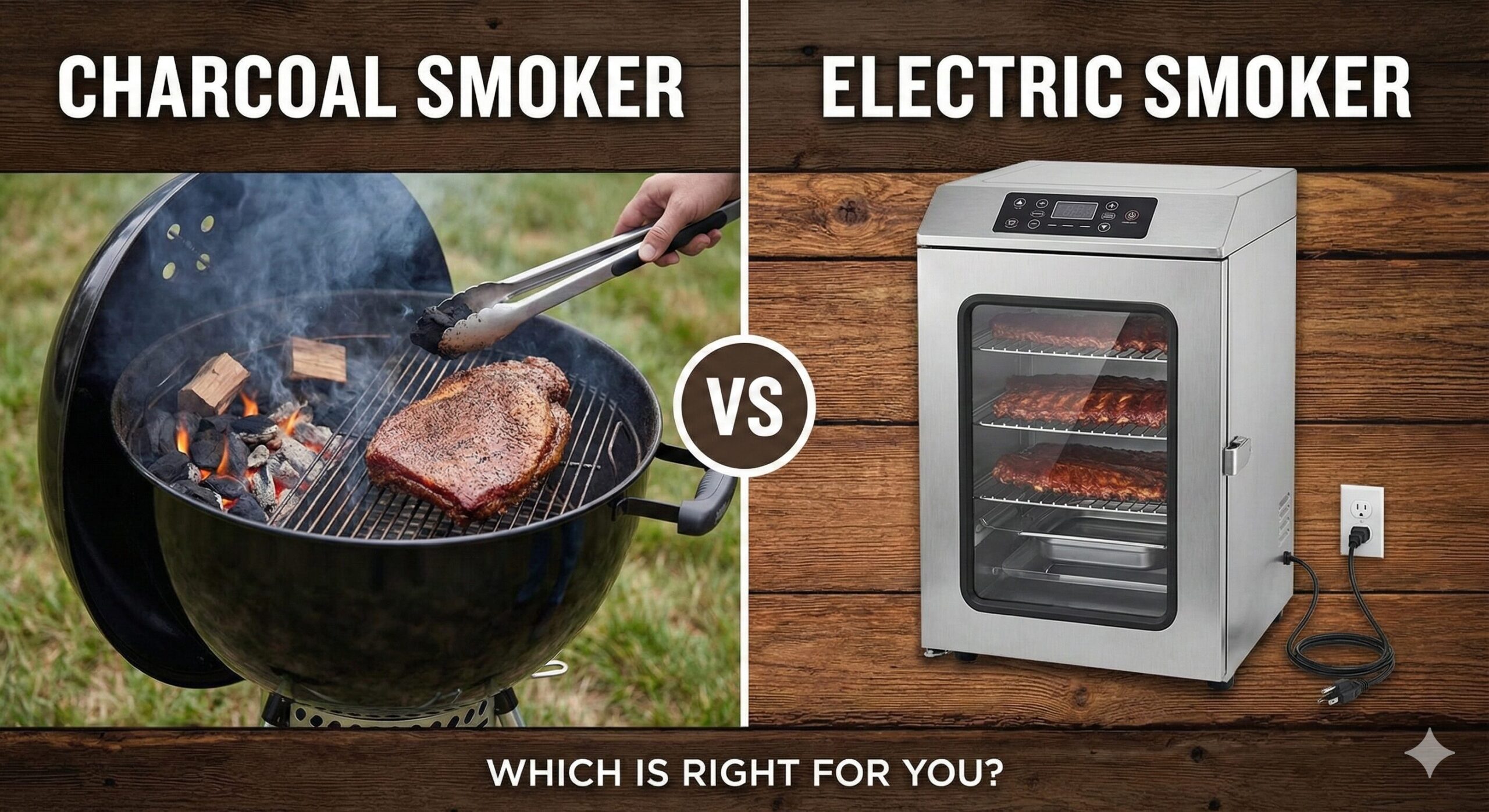
Introduction: The Purist vs. The Pragmatist
There is a war being waged in backyards across the country. It is a quiet war, fought with hickory wood chunks, temperature probes, and strong opinions. On one side, you have the traditionalists, the fire-tenders, the ones who believe that real barbecue requires combustion, airflow management, and a little bit of sweat. These are the charcoal smoker devotees.
On the other side, you have the modern pragmatists. They love BBQ, but they also love sleep, consistency, and “set it and forget it” ease. They don’t want to smell like a campfire for three days after making ribs. These are the electric smoker fans.
Choosing between a charcoal smoker vs electric smoker is the first and most important decision you will make on your journey to pitmaster status. It dictates your workflow, the flavor of your food, and how much effort you have to put in to get that perfect brisket. Are you looking for the authentic, deep smoke ring found in the best barbecue smokers, or are you looking for the convenience of an outdoor oven that smokes?
In this comprehensive guide, we will strip away the marketing hype and look at the science, the costs, and the taste results of both methods. Whether you are upgrading from a standard barbecue grill or buying your very first dedicated smoker, this showdown will help you decide.
Quick Comparison: The Tale of the Tape
Before we dive into the deep analysis, here is a snapshot of how these two contenders stack up against each other.
| Feature | Charcoal Smoker | Electric Smoker |
|---|---|---|
| Fuel Source | Charcoal (Lump/Briquettes) + Wood Chunks | Electricity (Heating Element) + Wood Chips |
| Flavor Profile | Deep, complex, robust smoke ring | Subtle, mild, no smoke ring |
| Ease of Use | High learning curve (Airflow control) | Very Easy (Set temp dial) |
| Temperature Range | Variable (200°F – 400°F+) | Limited (Usually maxes at 275°F) |
| Weather Resistance | Moderate (Wind affects temps) | Poor (Electronics hate rain/cold) |
| Maintenance | Ash cleanup is messy | Drip tray and rack cleaning |
| Running Cost | High (Fuel is expensive) | Low (Electricity is cheap) |
Round 1: Flavor Profile and The “Smoke Ring”
This is the most contentious category. If flavor is your only metric, the winner is clear.
Charcoal: The King of Bark and Ring
Charcoal smokers burn fuel. This combustion process releases gases like Carbon Monoxide (CO) and Nitric Oxide (NO). When these gases hit the surface of the meat, they react with myoglobin (a protein in the meat) to fix the color, creating that coveted pink ring just under the surface known as the “smoke ring.”
Furthermore, the airflow in a charcoal smoker creates a drier environment, which helps form a thick, crunchy “bark” (crust) on pork shoulders and briskets. The flavor is intense, bacon-like, and authentically BBQ. For more on achieving the perfect texture, read our guide on the best smokers for ribs and brisket.
Electric: The Gentle Smolder
Electric smokers do not burn wood for heat; they use a heating element (like an electric oven) to create heat, and a small pan of wood chips smolders above it to create smoke. Because there is no combustion of fuel, there is very little NO or CO produced. Result: No smoke ring.
The environment inside an electric smoker is also very humid (often using a water pan). While this is great for keeping meat moist, it can prevent a hard bark from forming, leading to a softer exterior texture. The smoke flavor is cleaner and more subtle, which some people actually prefer for fish and cheese.
For The Flavor Chaser

If you want competition-quality flavor and are willing to learn fire management, the Weber Smokey Mountain is the industry standard.
See Best Charcoal SmokersRound 2: Ease of Use (The “Babysitting” Factor)
Here is where the electric smoker strikes back with a vengeance.
Electric: Plug and Play
Operating an electric smoker is as difficult as operating a toaster. You plug it in, set the digital thermostat to 225°F, add a handful of wood chips, and walk away. It is the ultimate “set it and forget it” device. You can smoke a pork butt overnight while you sleep without worrying about the fire dying. If you are looking for convenience, check out our reviews of the best electric barbecue smokers.
Charcoal: The Ritual
Charcoal requires active participation. You must light the coals, adjust the bottom vents for intake and top vents for exhaust, and monitor the thermometer constantly. If the wind picks up, your temperature might spike. If the ash builds up, the fire might choke. You are the thermostat. While satisfying for enthusiasts, it can be stressful for beginners.
However, newer “gravity series” charcoal smokers are bridging this gap by using digital fans to control charcoal fires, similar to how pellet grills work.
For The Convenience Lover
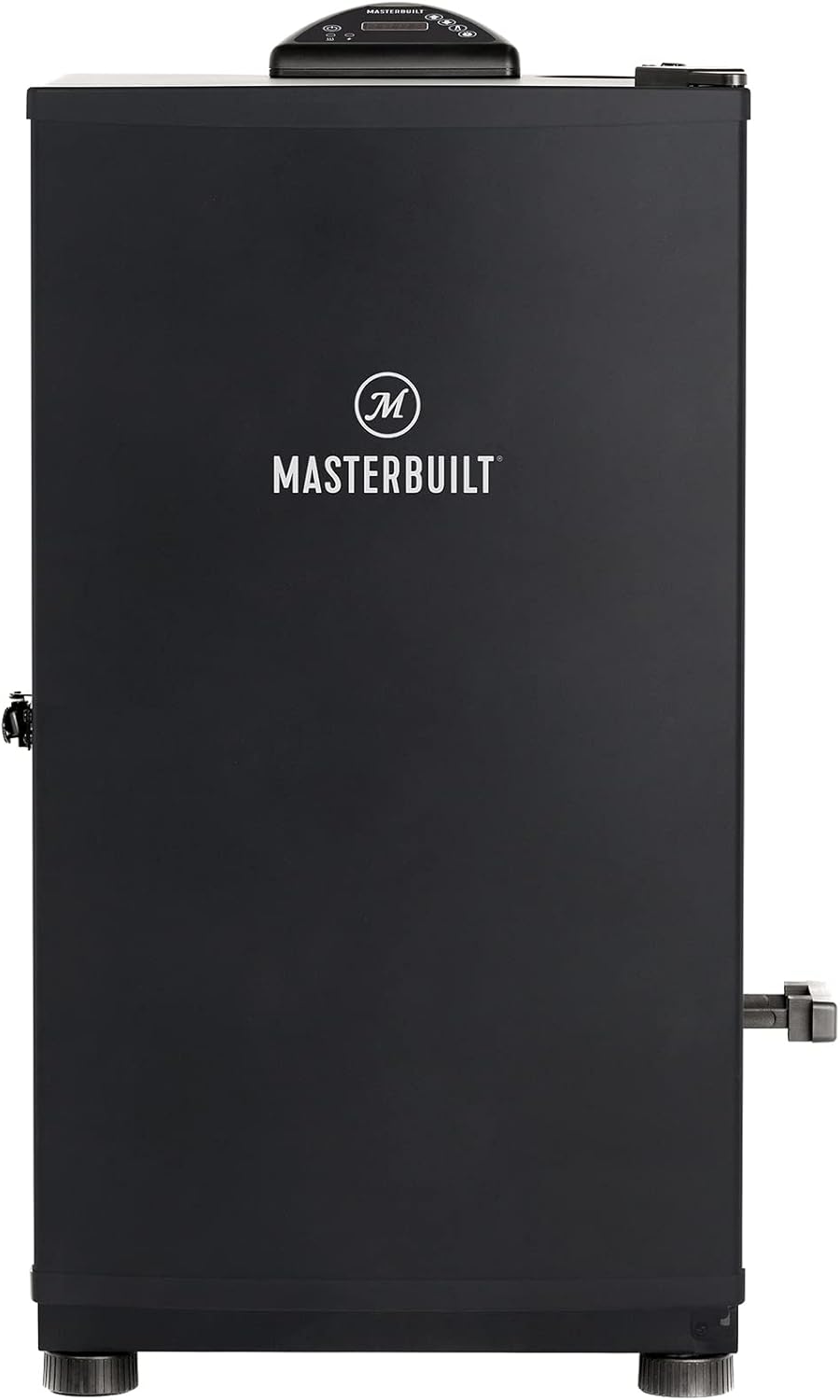
Want BBQ without the hassle? Masterbuilt electric smokers let you press a button and relax.
See Best Electric SmokersRound 3: Temperature Range and Versatility
Are you just smoking, or do you want to grill too?
Charcoal Versatility
Most charcoal smokers can be modified to grill. By removing the water pan or lowering the grates, you can get direct heat to sear a steak. They can reach temperatures of 400°F or 500°F easily. If you understand indirect vs direct grilling, a charcoal smoker is a versatile beast.
Electric Limitations
Electric smokers are “low and slow” specialists. Most max out at 275°F. You cannot sear a steak or crisp up chicken skin effectively (which often results in rubbery skin on poultry). They are strictly outdoor ovens designed for smoking meat, cheese, fish, and jerky.
If you need high heat for burgers, electric is not the way. You would need a separate electric barbecue grill for that.
Round 4: Running Costs and Reliability
Upfront Cost: You can find entry-level models for both types under $200. However, high-end charcoal smokers (like Kamados) can reach $1,500+. High-end electrics generally top out around $500-$600.
Running Cost: Electricity is cheap. Running an electric smoker for 12 hours might cost you $1-$2 in power plus a small bag of wood chips. Charcoal is expensive. A long smoke on a cold day can consume a 20lb bag of premium charcoal, costing $15-$20 per cook.
Reliability: Charcoal smokers have no moving parts (unless you add an aftermarket fan). They can last decades. Electric smokers have heating elements, control boards, and displays. These components can and do fail, especially if left out in the rain. Always use a cover and read up on key maintenance requirements.
Round 5: Weather and Environment
Where do you live? This matters.
Cold Weather: Thin-walled electric smokers struggle to maintain temperature in freezing conditions because the heating element is usually underpowered (800-1200 watts). You may need a welding blanket to insulate it. Charcoal smokers actually perform decently in the cold if you just add more fuel.
Apartments and Condos: Many HOAs and apartment complexes ban open flame (charcoal/gas) on balconies. In these cases, an electric smoker is often the only legal option. They produce less smoke and no flare-ups.
Pros and Cons Breakdown
Charcoal Smoker
- Pros: Superior flavor, authentic smoke ring, better bark, versatile temperature range, portable (no cord needed), long lifespan.
- Cons: Messy ash cleanup, high learning curve, requires constant monitoring, higher fuel cost.
Electric Smoker
- Pros: Set-and-forget convenience, precise temperature control, low running cost, great for cold smoking (cheese/fish), apartment-friendly.
- Cons: No smoke ring, max temp limited to ~275°F, rubbery poultry skin, electronic components can fail.
Expert Tips for Both Methods
Whichever route you choose, technique is key.
- For Electric Users: To combat the lack of smoke ring, try adding a small lump of charcoal to the wood chip tray (if the manual allows). Also, use a high-quality rub with paprika to fake the color.
- For Charcoal Users: Invest in a wireless thermometer immediately. “Looking is not cooking.” Every time you open the lid to check the meat, you lose heat and destabilize the fire.
- For Both: Don’t trust the built-in dome thermometer. They are notoriously inaccurate.
Also, keeping your unit clean prevents mold. If you’ve left your smoker dormant for winter, check our guide on how to clean mold from your grill.
FAQs
1. Can an electric smoker produce a smoke ring?
Technically, no. The smoke ring is a chemical reaction caused by combustion gases (CO and NO) found in wood and charcoal fires. Electric elements don’t produce these. However, the meat will still taste smoky.
2. Is charcoal smoking bad for you?
Charcoal grilling creates HCAs and PAHs when fat drips on coals and creates flare-ups. In smoking, this is less of an issue because of indirect heat, but charcoal does produce more particulate matter than electric. Read more on charcoal health safety.
3. Why is my meat turning pink in the smoker?
That is the smoke ring! Or, in poultry, it might be a chemical reaction in the marrow. If you are using electric, it might just be undercooked. Always use a probe. Read about why smoked meat turns pink.
4. Can I use an electric smoker indoors?
Absolutely not. Even though it doesn’t have an open flame, it produces Carbon Monoxide (from smoldering wood) and massive amounts of smoke. It must be used outdoors.
5. Which creates better jerky?
Electric smokers win for jerky. They can hold very low temperatures (160°F) consistently, which creates the perfect environment for drying meat without cooking it.
6. Can I grill burgers on my electric smoker?
Likely not. Most electric smokers don’t get hot enough (over 400°F) to sear a burger. You’ll end up with a grey, steamed patty. Check our guide on making juicy burgers for the right equipment.
Conclusion: Who Wins the Smoker Showdown?
The decision between a charcoal smoker vs electric smoker comes down to your personality type.
Choose the Charcoal Smoker if: You are a flavor purist. You want the deep smoke ring, the crunchy bark, and the bragging rights that come with mastering fire management. You view BBQ as an event and a hobby, not just a meal.
Choose the Electric Smoker if: You value results over rituals. You want delicious smoked food with minimal effort. You live in an apartment, have small children (safety), or simply don’t have the time to babysit a fire for 12 hours.
Whichever path you choose, the destination is delicious. Ensure you have the right tools, the best meat, and a little patience.
Equip Your Patio

Ready to start smoking? Make sure you have the essential accessories to make your first cook a success.
See Must-Have AccessoriesCheck Price on Amazon