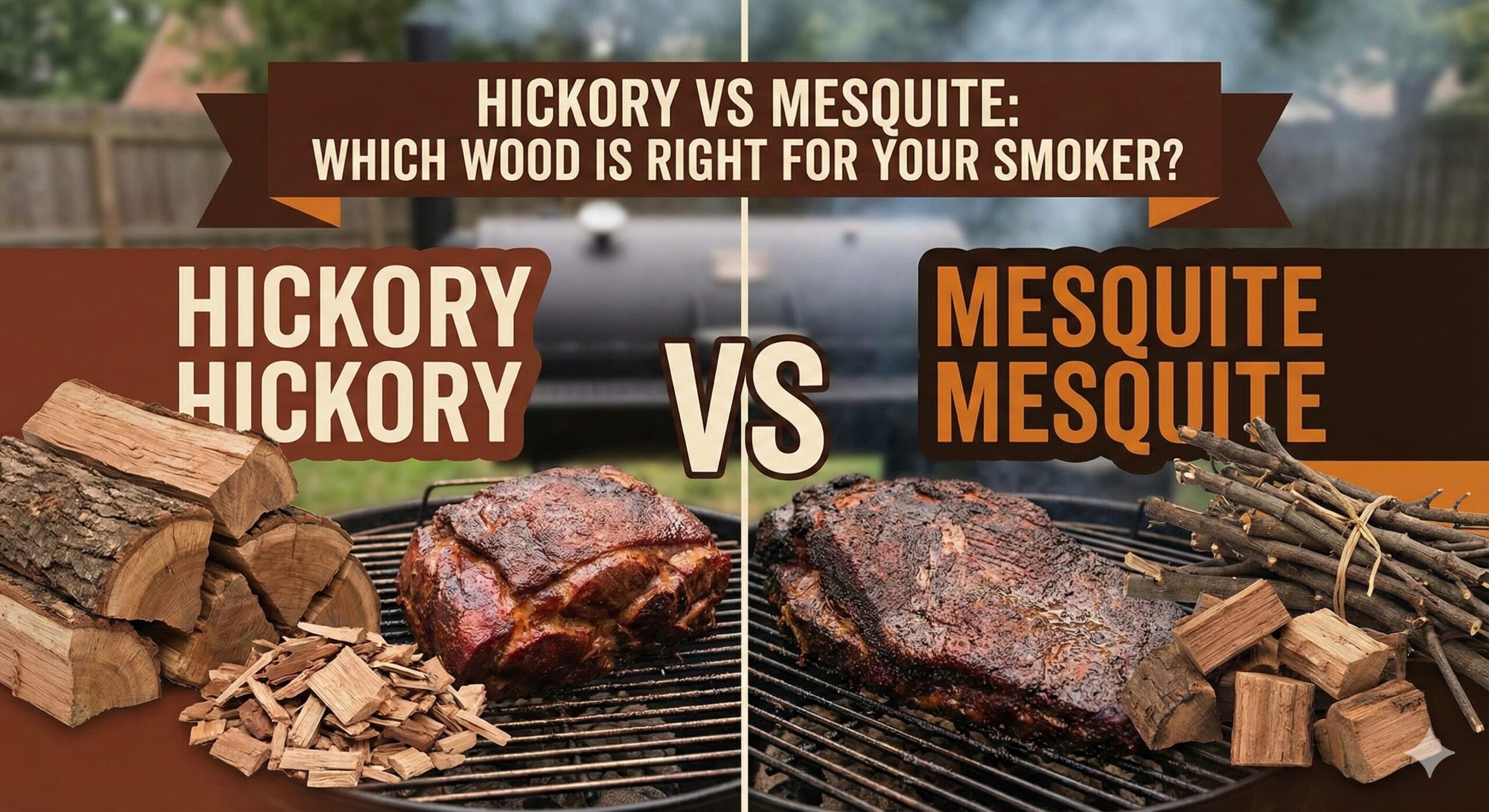
Hickory vs Mesquite for Smoking: The Clash of the Titans
In the world of barbecue, wood is not just fuel—it is an ingredient. Just as you wouldn’t use a delicate white wine to deglaze a hearty beef stew, you shouldn’t pick your smoking wood at random. The two heavyweights of the smoking world, Hickory and Mesquite, are often confused by beginners, yet they possess drastically different personalities.
Hickory, the reliable king of American BBQ, offers a punchy, bacon-like aroma that defines Southern cooking. Mesquite, the wild outlaw of Texas, burns hotter and faster, delivering an intense, earthy spice that can ruin a meal if mishandled. Choosing the wrong one can turn a 12-hour brisket into a bitter disaster. In this comprehensive guide, we’ll break down the hickory vs mesquite debate, helping you decide which wood belongs in your best barbecue smoker for your next cookout.
At a Glance: The Tale of the Tape
Before we analyze the smoke profiles in depth, here is the high-level breakdown of how these two woods compare.
| Feature | Hickory Wood | Mesquite Wood |
|---|---|---|
| Flavor Profile | Strong, sweet, savory, bacon-like | Intense, earthy, spicy, sharp |
| Smoke Intensity | High (but manageable) | Very High (can turn bitter) |
| Burn Rate | Long and slow (good for smoking) | Hot and fast (good for grilling) |
| Best For | Pork ribs, shoulders, poultry | Beef brisket, steaks, game meats |
| Beginner Friendly? | Yes (harder to mess up) | No (easy to over-smoke) |
Hickory: The King of BBQ
Hickory is arguably the most popular smoking wood in the United States, particularly in the Midwest and South. It is a dense hardwood derived from the walnut family. When people think of the “classic BBQ taste,” they are usually thinking of hickory.
The Flavor Profile
Hickory delivers a sweet, savory, and hearty flavor. It is often described as “bacon-esque.” While it is a strong wood—much stronger than fruit woods like apple or cherry—it has a certain mellowness that makes it versatile. It provides a dark, rich bark on meat, which is essential when you are learning how to smoke ribs and brisket.
Best Uses for Hickory
Because of its long burn time, hickory is excellent for low-and-slow cooking. It pairs perfectly with fatty meats that can stand up to the smoke.
- Pork: Ribs, pork butts, and shoulders are hickory’s best friends.
- Whole Chickens: It imparts a beautiful mahogany color to the skin.
- Cheese: Surprisingly, hickory is great for cold smoking cheese if used sparingly.

Premium Hickory Wood Chunks
The gold standard for pork and ribs. Clean burning and long-lasting.
Check Price on AmazonMesquite: The Texas Torch
Mesquite is not a tree in the traditional sense; it is a scraggly, hardy shrub that thrives in the arid deserts of Texas and the Southwest. It is oily, dense, and burns with a ferocity that few other woods can match.
The Flavor Profile
Mesquite is the strongest smoking wood available. It has an earthy, spicy, almost acrid flavor profile. Unlike hickory, which adds a savory sweetness, mesquite adds a sharp “twang.” If you have ever eaten authentic Tex-Mex fajitas or a cowboy steak, that distinct punchy flavor was likely mesquite.
The Danger Zone
The biggest mistake beginners make is treating mesquite like oak or hickory. Because it is so rich in lignin (a chemical compound in wood), it produces massive amounts of smoke. If you use mesquite for a 12-hour cook on a pork shoulder, the meat will likely taste like an ashtray. It is best used for shorter cooks or blended with milder woods.
If you are unsure about the intensity of smoke flavors, reading up on the difference in taste between gas and charcoal can help frame your expectations.

Authentic Mesquite Wood Chips
Perfect for adding a spicy kick to steaks and burgers on the grill.
Check Price on AmazonBurn Characteristics: Heat vs. Endurance
Beyond flavor, the way these woods burn dictates how you should use them. This is crucial for temperature management, especially if you are using a manual setup like a Kamado or pellet grill.
Hickory: The Marathon Runner
Hickory is dense and holds moisture well. It burns slowly and evenly, creating a consistent bed of coals. This makes it ideal for the “minion method” or snake method in charcoal grilling. It provides steady heat, which helps in keeping meat moist during long smokes.
Mesquite: The Sprinter
Mesquite burns extremely hot and fast. In fact, it burns so hot that it is often used as a primary fuel source (coals) in open-pit grilling rather than just a flavoring agent. This high heat is perfect for searing steaks but makes temperature control difficult in an enclosed smoker. If you aren’t careful, a mesquite fire can cause temperature spikes that dry out your meat.
Winning Combinations: What to Cook
The golden rule of smoking is matching the wood intensity to the meat protein.
When to Use Hickory
Hickory is the go-to for pork. The sweetness of the pork fat renders beautifully with the bacon notes of the hickory smoke.
- Baby Back Ribs: Hickory creates that classic BBQ sauce base flavor.
- Pulled Pork: The dense meat can absorb significant smoke without getting bitter.
- Turkey: Hickory gives turkey a rich, dark skin and savory taste.
When to Use Mesquite
Mesquite pairs best with red meat. The iron-rich flavor of beef can stand up to the aggression of mesquite.
- Beef Brisket: Texas style! Use mesquite mixed with oak for best results.
- Steaks: Throw some mesquite chips on the coals right before searing for a steakhouse flavor.
- Venison & Game: Strong game meats benefit from the spicy notes of mesquite.
- Fajitas: Quick-grilled skirt steak over mesquite is a culinary staple.
Regardless of the wood, handling the meat correctly is key. If you struggle with fragile meats like burgers, check our guide on how to keep burgers from falling apart.
The Pro Move: Blending Woods
You don’t have to choose just one. Many pitmasters blend woods to create complex flavor profiles.
- Hickory + Apple: This is a championship winning combo for ribs. The hickory provides the punch, and the apple provides the sweetness.
- Mesquite + Post Oak: The traditional Central Texas blend. Oak provides the heat and mild smoke, while mesquite adds the top note of flavor without overpowering the brisket.
If you are using a gas grill, blending is easy with a smoke box. Check out our recommendations for the best smoke boxes for gas grills.
Pros and Cons Breakdown
🥓 Hickory Pros & Cons
Pros
- Classic BBQ flavor everyone loves.
- Versatile enough for pork, beef, and poultry.
- Long, consistent burn time.
- Readily available in chunks, chips, and pellets.
Cons
- Can become pungent if the fire lacks oxygen.
- Might be too strong for delicate fish.
- Can darken poultry skin too much (turning it black).
🌶️ Mesquite Pros & Cons
Pros
- Unmatched intensity for beef and game.
- Burns very hot, great for searing.
- Unique, earthy spice profile.
- Cooks fast, ideal for grilling.
Cons
- Very easy to over-smoke food (bitter taste).
- Burns fast and erratic (hard to control temp).
- Flavor is polarizing; some find it chemical-like.
Health and Safety: Smoke Rings and Creosote
Regardless of whether you choose hickory or mesquite, your goal is “thin blue smoke.” Thick, billowing white smoke indicates incomplete combustion, which deposits creosote—a bitter, numbing substance—onto your food.
You might also notice a pink ring around the edge of your meat. This is the “smoke ring,” a chemical reaction between nitrogen dioxide in the wood smoke and the myoglobin in the meat. It is a sign of authentic BBQ, not undercooked meat. For a deeper dive into this phenomenon, read why does smoked meat turn pink?
Concerned about the health impacts of smoking? We have analyzed the science in our article: Is charcoal grilling bad for you?
Final Verdict: Which Wood Wins?
The winner of the Hickory vs Mesquite battle depends entirely on what is on your menu and how long you plan to cook it.
Choose Hickory If:
- You are cooking pork ribs, pulled pork, or whole chicken.
- You are doing a long, low-and-slow smoke (6+ hours).
- You want a crowd-pleasing, classic BBQ flavor that isn’t too polarizing.
- You are a beginner looking for a forgiving wood.
Choose Mesquite If:
- You are grilling steaks, fajitas, or burgers hot and fast.
- You are smoking a brisket and know how to manage a clean fire.
- You prefer a bold, spicy, earthy flavor profile.
- You are cooking wild game like venison or duck.
No matter which wood you choose, ensure your equipment is ready. A clean grill produces better flavor. Don’t forget to grab the best barbecue grill cleaner to prep your station before firing up the pit.
Frequently Asked Questions
1. Can I mix hickory and mesquite?
Yes, but be careful. Since both are strong woods, the combination can be overpowering. It is usually better to mix one strong wood (like hickory) with a mild fruit wood (like apple) rather than mixing two heavyweights.
2. Is mesquite wood toxic?
No, mesquite wood is not toxic. However, if burned improperly (smoldering with white smoke), it produces excess creosote, which tastes bitter and can cause stomach upset. Always aim for clean combustion.
3. Which wood produces a better smoke ring?
Both produce excellent smoke rings. Hickory, due to its ability to burn longer and slower, often gives the smoke more time to penetrate the meat, potentially creating a deeper ring on long cooks.
4. Should I soak my wood chunks before smoking?
Generally, no. Soaking wood chunks creates steam, which lowers the temperature of your fire and delays the production of “clean” smoke. Dry wood burns cleaner and more predictable.
5. Is hickory stronger than oak?
Yes. Oak is considered a medium-strength wood, while hickory is strong. Hickory has a more distinct bacon-flavor, while oak is more neutral and smoky.
6. Can I use hickory for fish?
It is risky. Hickory can easily overpower delicate white fish. It can be used for oily fish like salmon, but alder or fruit woods are generally preferred for seafood.
7. Why does my mesquite smoke smell like chemicals?
This often happens if the wood is not seasoned (dried) properly or if the fire is choked for air. Ensure you are using high-quality, kiln-dried wood.
8. Which works better in a gas grill?
For gas grills, wood chips are preferred over chunks because they fit in smoker boxes. Hickory chips are easier to find and provide a great flavor boost for gas grilling.