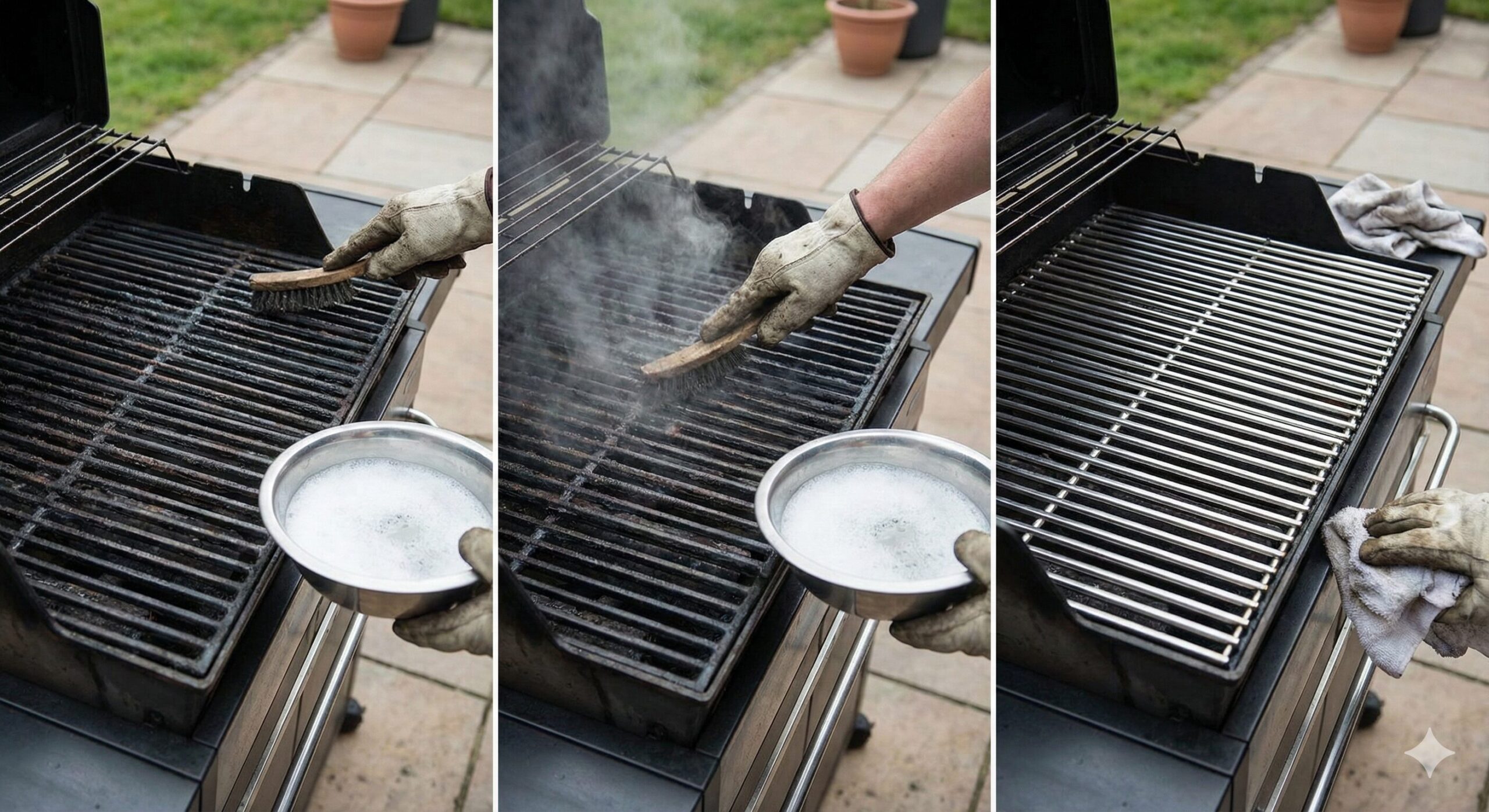
How to Clean Barbecue Grates: The Ultimate Guide to Restoring Your Grill
1. Why Clean Grates Matter (It’s Not Just Looks)
We have all been there: you open the grill lid for the first cook of the season, only to be greeted by a crusty, blackened, and possibly moldy mess from last year’s burgers. It is tempting to just “fire it up” and hope the heat kills everything, but dirty barbecue grates are more than just an eyesore.
Carbon buildup (the black crust) acts as an insulator, preventing your meat from getting that perfect sear. Old grease can turn rancid, imparting a bitter flavor to fresh food. Worse, accumulated animal fat creates a breeding ground for bacteria and mold if the grill wasn’t covered properly.
Cleaning your grates isn’t just a chore; it is the single most important step in achieving steakhouse-quality flavor. Whether you have cast iron, stainless steel, or porcelain-coated rods, this guide will walk you through the exact methods to make them shine like new.
2. Identify Your Grate Type (Before You Scrub!)
Using the wrong tool on the wrong material is the fastest way to ruin a grill. Before you grab a scraper, identify what you are working with:
- Cast Iron: Heavy, black, and rough textured. These rust easily if not oiled but hold heat beautifully. They need to be treated like a cast-iron skillet.
- Stainless Steel: Silver, shiny, and lighter weight. These are durable but can scratch if you use steel wool.
- Porcelain-Enameled: These look like shiny black metal but feel smooth like glass. The metal core is coated in ceramic. Warning: Never use a metal scraper on these; if you chip the porcelain, they will rust instantly.

Stop worrying about swallowing wire bristles. This stainless steel coil design cleans effectively without the danger of shedding metal spikes into your food.
Check Price on Amazon3. The Universal “Burn-Off” Method
Regardless of your grate type, the “Burn-Off” is the first step for any cleaning session. It uses the grill’s own heat to carbonize grease and food debris, turning it into white ash that is easy to brush away.
How to do it:
- Cover the grates with aluminum foil (shiny side down) to trap heat.
- Turn all burners to HIGH.
- Close the lid and wait 15-20 minutes.
- Turn off the grill and carefully remove the foil with tongs.
- While the grates are still hot, scrub vigorously with a grill brush.
4. How to Clean Cast Iron Grates
Cast iron requires love. If you scrub it down to the bare metal with soap, you strip the “seasoning” (the polymerized oil layer that makes it non-stick), and it will rust within days.
The Method:
1. Perform the “Burn-Off” method.
2. Scrub with a wire brush or a balls of aluminum foil.
3. Do not use soap. If deep cleaning is needed, use a paste of kosher salt and cooking oil.
4. Re-Season: Once clean, wipe a thin layer of high-heat oil (Canola, Grapeseed, or Avocado) onto the grates with a paper towel. Heat the grill for 15 minutes to bake it on.
5. How to Clean Stainless Steel Grates
Stainless steel is tougher. You can use chemical cleaners and water without fear of immediate rust, though you should still avoid steel wool which can leave micro-scratches.
The Vinegar Method:
1. Mix 2 cups of vinegar and 1 cup of baking soda.
2. Place your grates in a large heavy-duty garbage bag.
3. Pour the mixture into the bag (it will fizz!).
4. Tie the bag tight and leave it overnight.
5. In the morning, hose them off. The grime should peel right off.
6. How to Clean Porcelain Enamel
Treat these like glass. Never use a metal scraper or a stiff wire brush. If you chip the ceramic coating, water will get underneath, and the iron core will expand with rust, shattering the rest of the enamel.
The Method:
1. Use a Nylon or Brass bristle brush (softer than steel).
2. Wait for the grill to cool completely before washing. Thermal shock (cold water on hot ceramic) can crack the porcelain.
3. Wash with warm soapy water and a sponge, just like you would wash a dinner plate.

Uses the power of steam to clean your grill. No bristles, no chemicals. Just heat up your grill, dip this brush in water, and watch the grease melt away.
Check Price on Amazon7. Deep Cleaning Hacks (The “Soak”)
If your grates are caked in years of neglect, brushing won’t cut it. You need a chemical breakdown.
The Ammonia Trick:
Place your grates in a trash bag. Add 2 cups of household ammonia. Do not seal the bag tightly—you want the fumes to circulate, but not the liquid to touch the grates necessarily. Leave it in the sun for 24 hours. The fumes will dissolve even the hardest carbon. Hose off thoroughly before cooking.
The Onion Hack:
While the grill is still hot, cut a white onion in half. Stick a fork in it and rub the cut side face-down over the grates. The enzymes in the onion help break down grease, and it leaves a nice seasoning flavor.
8. The “Steam Clean” Trick
This is the safest and easiest method for regular maintenance. It mimics the steam cleaning used in commercial kitchens.
- Heat the grill to 400°F+.
- Soak a thick towel or a dedicated steam brush (like Grill Rescue) in water.
- Rub the wet tool over the hot grates.
- The water instantly flashes to steam, blasting the grease and food particles off the metal without any chemicals or abrasion.
9. A Note on Wire Brushes & Safety
Cheap wire brushes are dangerous. As they age, the bristles loosen. These tiny metal wires can fall out, stick to the grate, adhere to your burger, and be ingested. This can cause life-threatening internal injuries.
The Safety Protocol
If you use a wire brush, replace it every single season. Inspect it before every use by running it over a cloth—if bristles snag, throw it away. Better yet, switch to a coil brush or a nylon brush (for cool cleaning).

A plant-based, non-toxic cleaner that uses the power of citrus (d-limonene) to cut through grease without harsh chemical fumes.
Check Price on Amazon