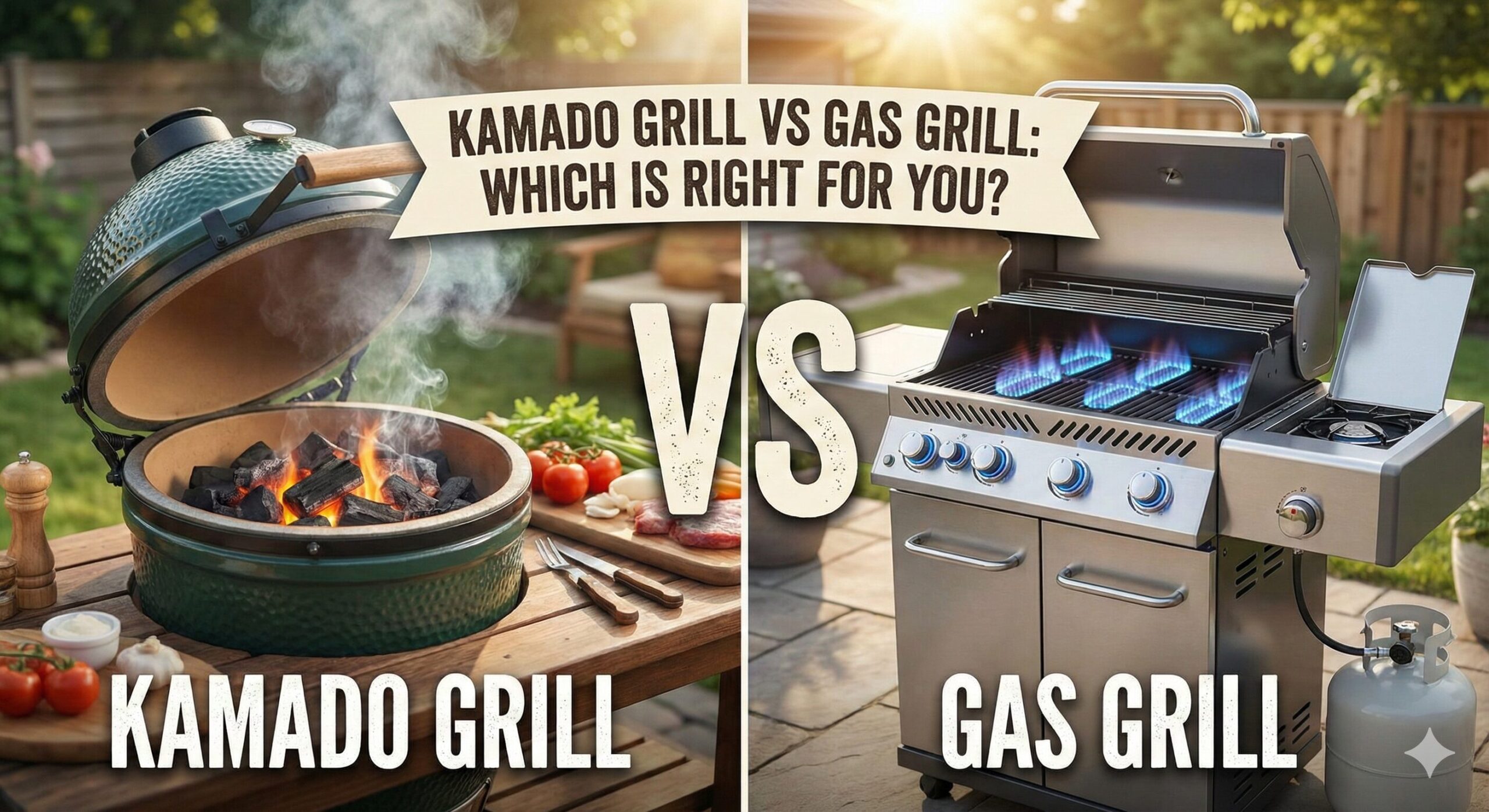
Kamado Grill vs Gas Grill: The Battle for Your Backyard
The debate between the ancient, egg-shaped ceramic cooker and the modern stainless steel convenience machine is one of the most polarizing topics in outdoor cooking. On one side, you have the Kamado grill, a heavy, charcoal-fueled vessel that promises culinary versatility and unbeatable moisture retention. On the other, the gas grill, the undisputed king of weeknight speed and precision.
Choosing between them isn’t just about fuel; it’s about your lifestyle. Do you view grilling as a therapeutic ritual involving fire management, or is it a quick way to get dinner on the table after work? In this comprehensive guide, we strip away the marketing hype to compare performance, flavor, maintenance, and value, helping you decide which grill deserves the prime spot on your patio.
At a Glance: The Tale of the Tape
Before diving into the thermal dynamics and flavor profiles, let’s look at the raw specifications. If you are also considering other fuel types, you might want to see how these stack up in our pellet grill vs charcoal grill comparison.
| Feature | Kamado Grill | Gas Grill (Propane/NG) |
|---|---|---|
| Primary Fuel | Lump Charcoal & Wood | Liquid Propane or Natural Gas |
| Heat Up Time | 15–30 Minutes | 5–10 Minutes |
| Temp Range | 225°F to 900°F+ | 250°F to 600°F (Higher with Sear Station) |
| Flavor Profile | Rich, Smoky, Wood-Fired | Neutral, Clean (Bacon-like if fat drips) |
| Versatility | High (Smoke, Bake, Roast, Sear) | Moderate (Grill, Roast, Rotisserie) |
| Learning Curve | Steep (Airflow management) | Easy (Turn knob, push button) |
Defining the Contenders
The Kamado Grill
Originating from the Japanese mushikamado, modern Kamado grills (like the Big Green Egg or Kamado Joe) are thick-walled ceramic cookers. Their heavy insulation allows them to hold heat for incredibly long periods with minimal fuel. They function as a grill, a smoker, and an outdoor oven (perfect for pizza). However, they are heavy—often weighing over 200 pounds—and fragile if dropped. If you are leaning toward this style, check out our guide on the best BBQ charcoal grills available today.
The Gas Grill
The gas grill is the standard for American backyards. Powered by liquid propane tanks or a natural gas line, they utilize metal burners to heat flavorizer bars (or briquettes), which then radiate heat to the grates. Brands like Weber and Napoleon dominate this space. They are designed for convenience, offering instant heat and precise temperature control via knobs. If you are torn between top brands, our Weber vs Napoleon comparison breaks down the high-end market.

Top Rated Gas Grill Option
Reliable ignition, even heating, and 10-year warranty.
Check Price on AmazonRound 1: Flavor Profile
This is arguably the most critical category. When discussing Kamado grill vs gas grill, flavor is usually the deciding factor for foodies.
The Kamado Advantage
Kamado grills use lump charcoal, which burns cleaner than briquettes but still provides that distinct, primal combustion aroma. Because the ceramic insulation limits airflow (the fire doesn’t need much oxygen to stay hot), moisture stays inside the meat. When you add wood chunks, the smoke lingers, penetrating the food deeply. This makes the Kamado superior for smoking ribs, brisket, or pork shoulder.
Concerned about health? Read our analysis on is charcoal grilling bad for you to understand how combustion byproducts work.
The Gas Reality
Gas burns clean. Propane and natural gas produce water vapor and carbon dioxide, adding virtually no flavor to the food. The “grilled” taste comes from drippings hitting the hot metal guards (flavorizer bars) and vaporizing back up into the meat. While delicious, it lacks the depth of wood fire.
Pro Tip: You can close the gap by using accessories. Check out the best smoke boxes for gas grill to add wood chips to your gas setup, though it will never quite match the intensity of a Kamado.
Round 2: Convenience and Speed
If you have 45 minutes to feed a hungry family on a Tuesday, the gas grill is the undisputed champion.
Gas: The “Turn and Burn”
With a gas grill, you push a button, turn a knob, and you are ready to cook in 10 minutes. Temperature adjustments are instant. If the heat is too high, turn the knob down, and the temperature drops rapidly. This ease of use is why many people also compare pellet grills vs gas grills, as both offer convenience, though gas is still faster to sear.
However, gas grills can have mechanical issues. Igniters fail, and burner tubes clog. If you ever face trouble, see our guide on why is my grill not heating up.
Kamado: The “Ritual”
Lighting a Kamado takes time. You need to arrange the charcoal, light it (never use lighter fluid!), and wait for the ceramics to soak up the heat. This process takes 20 to 45 minutes. Furthermore, temperature control is manual. You must adjust the top and bottom vents to regulate airflow. If you accidentally overshoot your target temperature, the ceramic holds heat so well that it can take an hour to cool back down.
Round 3: Versatility and Searing
Do you want to bake a pizza, smoke a salmon, or sear a steak? The versatility gap is significant.
Kamado Versatility
The Kamado is a 3-in-1 appliance:
- Smoker: It can hold 225°F for 12+ hours on a single load of charcoal.
- Oven: Excellent for baking bread or pizza due to radiant heat.
- Grill: Remove the heat deflector, open the vents, and you can hit 900°F.
Gas Limitations
Standard gas grills struggle to smoke effectively because they are ventilated to prevent gas buildup, meaning smoke escapes quickly. They also struggle to bake because the heat is directional (from the bottom) rather than radiant. While some premium gas grills have infrared sear stations, many standard models top out at 550°F. If you want to expand your gas grill’s capabilities, consider using grill mats for delicate items like fish or vegetables.

Top Rated Kamado Option
Includes divide & conquer cooking system and patented air lift hinge.
Check Price on AmazonRound 4: Maintenance and Durability
Your investment should last. Here is how they age.
Gas Grill Maintenance
Gas grills are complex machines with moving parts. Burners rust, igniters corrode, and flavorizer bars disintegrate. You will need to replace parts every 3–5 years on budget models. Grease management is also vital to prevent dangerous flare-ups. Read our guide on how to prevent flare-ups on a gas grill for safety tips. Routine deep cleaning is required to keep them sanitary, especially using the best barbecue grill cleaner.
Kamado Durability
A ceramic grill doesn’t rust. If you keep it covered and don’t drop it, it can last a lifetime. The only maintenance involves cleaning out the ash and occasionally checking the felt gasket that seals the lid. Since Kamados can perform a “self-clean” burn at high temperatures (similar to an oven), maintaining the interior is relatively easy. However, if moisture gets trapped during storage, mold can grow. Here is how to clean mold from a grill effectively.
Pros and Cons Breakdown
🔥 Kamado Grill
Pros
- Unbeatable Flavor: Authentic charcoal and wood smoke taste.
- Moisture Retention: Meat dries out significantly less than on gas.
- Versatility: Smokes, bakes, roasts, and sears perfectly.
- Longevity: Ceramics do not rust; lifetime warranties are common.
- Winter Use: Thick walls insulate against freezing temperatures.
Cons
- Price: High initial investment.
- Weight: Extremely heavy and difficult to move.
- Learning Curve: Mastering airflow takes practice.
- Cool Down: Takes a long time to cool if you overshoot temp.
⚙️ Gas Grill
Pros
- Convenience: Ready to cook in minutes.
- Control: Instant temperature adjustment via knobs.
- Surface Area: Generally offer larger cooking zones for the price.
- Ease of Use: Beginner-friendly; no charcoal mess.
- Accessories: Rotisseries and side burners are common.
Cons
- Flavor: Lacks the depth of charcoal or wood smoke.
- Durability: Metal parts rust and corrode over time.
- Heat Loss: Thin walls lose heat rapidly in cold or windy weather.
- Flare-ups: More prone to grease fires if not cleaned.
Must-Have Accessories
Regardless of your choice, the right tools elevate the experience. Check out our curated list of best barbecue tools.
- Thermometers: Essential for both. Don’t rely on the dome gauge.
- Covers: Protect your investment from the elements.
- Grill Mats: Great for keeping decks clean. See our top picks for grill mats.
- Cleaning Tools: A sturdy brush or scraper is non-negotiable.
If you are looking for a gift for a grilling enthusiast, we have guides for BBQ gifts for dad and Father’s Day ideas.
Final Verdict: Which is Better for You?
Choose the Gas Grill If:
- You want to cook meals quickly after work with zero hassle.
- You have limited patience for fire management.
- You often cook for large parties and need massive grill surface area.
- You prefer a milder flavor profile without heavy smoke.
Choose the Kamado Grill If:
- You are a foodie who prioritizes flavor and moisture above all else.
- You want to explore smoking, pizza making, and high-heat searing in one unit.
- You live in a cold climate and want to grill year-round efficiently.
- You want a “buy it for life” product.
Still undecided? You might want to look at a third contender: the pellet grill. Read our Kamado grill vs pellet grill showdown to see if automation is the middle ground you need.
Frequently Asked Questions
1. Can I use wood chips in a gas grill?
Yes. You can use a smoke box or wrap wood chips in aluminum foil with holes poked in it. Place it directly over a burner. While it won’t replicate a charcoal smoker, it adds a noticeable smoky note. Learn more about the difference between grilling and smoking.
2. Is a Kamado grill worth the money?
Yes, if you value versatility and durability. A cheap gas grill may need replacing every 4 years, costing more in the long run than a single Kamado that lasts 20+ years.
3. Which grill is safer?
Gas grills are generally considered safer due to the ability to instantly turn off the fuel source. However, gas leaks can be dangerous. Kamados are very safe because the fire is contained in a thick ceramic shell, though the exterior can still get hot. Always check for key safety features.
4. Do Kamado grills take a long time to cool down?
Yes. Because the ceramic mass retains heat so efficiently, it can take several hours to cool down completely after a cook. This is great for keeping food warm but requires patience if you need to cover it.
5. Can I leave my gas grill outside in winter?
Yes, but you must cover it. Moisture is the enemy of the metal components. Using a cover and performing maintenance before winter is crucial.
6. Why does my meat taste like fuel on a Kamado?
This usually happens if you put the meat on before the charcoal is fully established (blue smoke). It can also happen if you use lighter fluid. Always use a chimney starter or electric starter.
7. Can I convert a gas grill to charcoal?
Generally, no. Some hybrid grills exist, but putting charcoal in a standard gas grill is dangerous and will damage the components.
8. Which is better for burgers?
Gas is great for quick weeknight burgers, but Kamado offers a better char and smoky flavor. If your burgers are falling apart, check out how to keep burgers from falling apart.
9. Do I need to season a new grill?
Yes, both types require an initial burn-off to remove manufacturing oils. For specific steps, read how to season a new BBQ grill.
Conclusion
The battle of Kamado grill vs gas grill ends in a draw because they serve different masters. The gas grill is the hero of the busy weeknight, delivering consistent food with minimal effort. The Kamado is the artisan’s tool, rewarding patience with flavors that gas simply cannot achieve.
Whichever path you choose, the key to great BBQ is mastering your equipment and using high-quality ingredients. Don’t forget to pick up the best barbecue sauce and best rubs to finish your masterpiece.