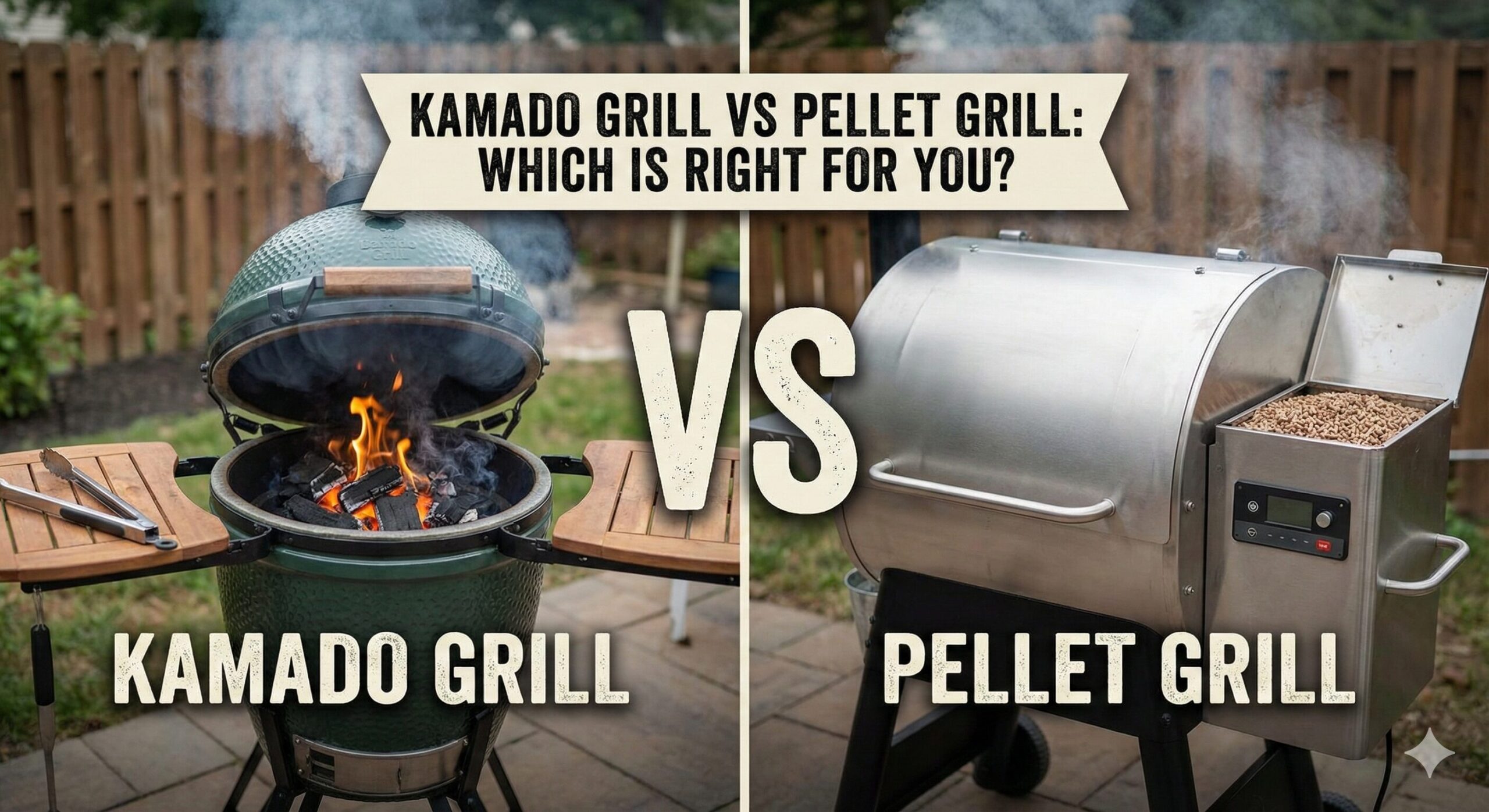
Kamado Grill vs Pellet Grill: The Ultimate Backyard Showdown
The debate between Kamado grills and pellet grills is more than just a choice of fuel—it is a choice between ancient culinary tradition and modern technological convenience. If you are torn between the heavy-duty ceramic insulation of a Kamado and the set-it-and-forget-it ease of a pellet smoker, you aren’t alone. This comprehensive guide breaks down every thermal nuance, flavor profile, and maintenance requirement to help you decide which cooker deserves the prime spot on your patio.
At a Glance: The Tale of Two Grills
Before we dive deep into the mechanics, let’s look at the core differences. Both units are incredibly versatile, capable of smoking, baking, and roasting. However, the path they take to get there is radically different.
| Feature | Kamado Grill | Pellet Grill |
|---|---|---|
| Primary Fuel | Lump Charcoal | Compressed Wood Pellets |
| Temperature Control | Manual (Vents) | Digital (PID Controller) |
| Heat Retention | Excellent (Ceramic Thermal Mass) | Moderate (Steel Body) |
| Max Temperature | 750°F+ (Great for Pizza/Searing) | Usually 500°F (Some hit 700°F) |
| Flavor Profile | Intense Charcoal & Smoke | Mild, Clean Wood Smoke |
| Learning Curve | Steep (Requires Practice) | Easy (Beginner Friendly) |
What is a Kamado Grill?
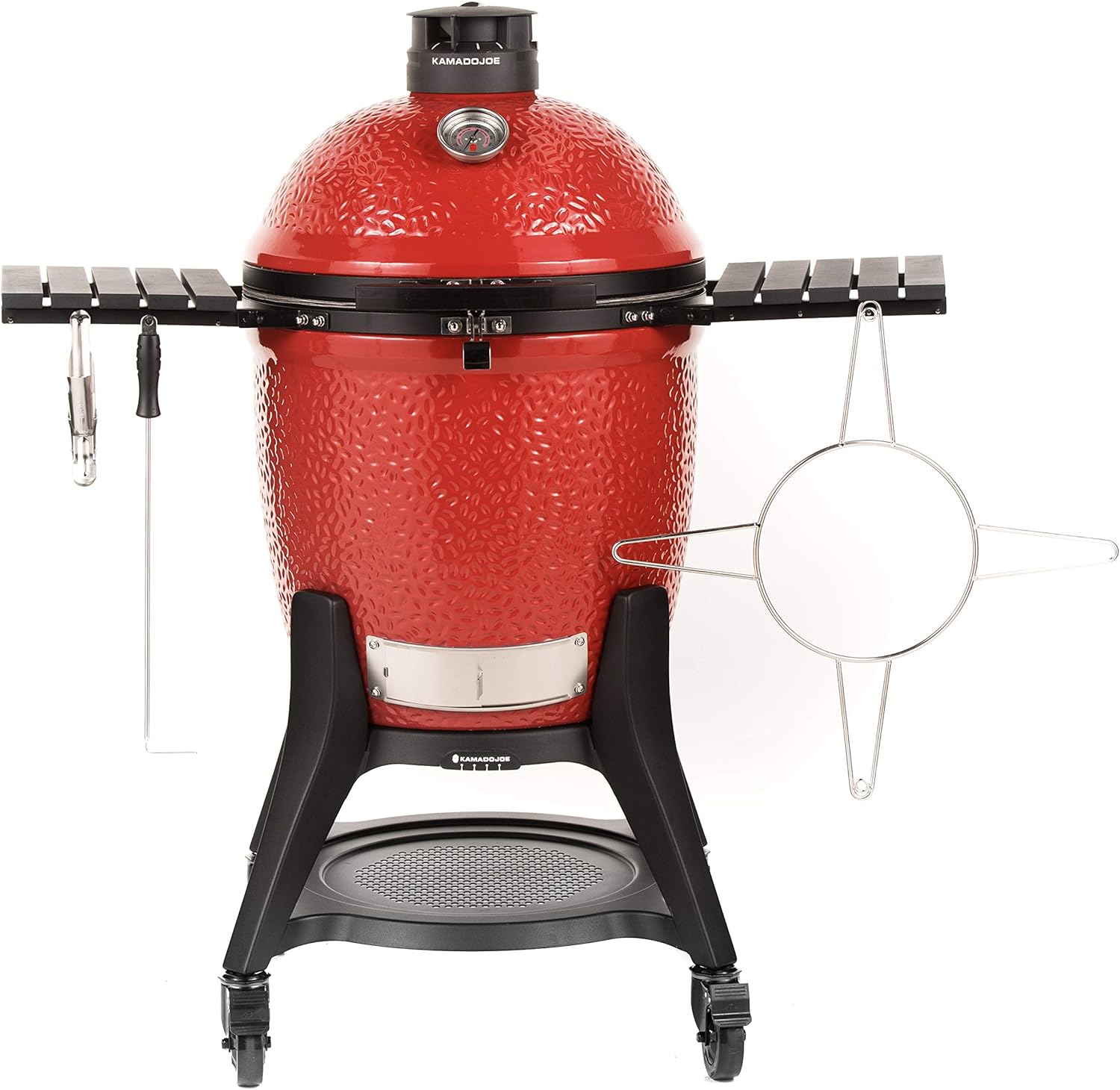
The Kamado is an evolution of the Japanese mushikamado, a round clay rice cooker. Modern iterations, popularized by brands like Big Green Egg and Kamado Joe, are egg-shaped vessels made from high-grade refractory ceramics. These thick walls absorb heat and radiate it back onto the food, creating an environment that locks in moisture exceptionally well.
Because they are fueled by charcoal, they offer a distinct, primal flavor profile. For those wondering about the health implications of charcoal, you can read more about if charcoal grilling is bad for you here. The versatility is unmatched; you can smoke a brisket at 225°F for 18 hours or open the vents wide to flash-sear a steak at 800°F.
Key Characteristics of Kamado Grills:
- Airflow Management: Temperature is controlled by adjusting a bottom draft door and a top vent.
- Fuel Efficiency: Because the ceramic insulation is so efficient, a single load of charcoal can last up to 18 hours.
- Weight: These grills are incredibly heavy and fragile if dropped.
What is a Pellet Grill?
A pellet grill is essentially an outdoor convection oven that burns wood. It uses a mechanized auger to feed compressed sawdust pellets from a hopper into a fire pot. An induction fan strokes the fire and circulates heat and smoke around the food.
Brands like Traeger and Pit Boss have revolutionized this space. If you are comparing brands, you might want to check our Pit Boss vs Traeger comparison. The main selling point here is consistency. You set a temperature on a digital dial, and the grill does the rest, making it the best barbecue smoker for beginners who want consistent results without babysitting the fire.

Deep Dive: Flavor Profiles
When discussing Kamado grill vs pellet grill, flavor is usually the deciding factor for purists.
The Kamado Flavor
Kamados use lump charcoal. This burns cleaner than briquettes but still provides that distinct “grilled” taste. When you add wood chunks to the coals, you get a heavy, thick smoke. Because the airflow is passive (no fans blowing constantly), the smoke lingers around the meat longer. This is ideal if you love a strong bark on your brisket or pork shoulder. If you are curious about how this compares to gas, check out our guide on gas grill vs charcoal grill taste.
The Pellet Flavor
Pellet grills produce a very clean, almost invisible blue smoke. The flavor is subtle. Because the fan is constantly circulating air, the smoke doesn’t settle as heavily on the meat. While you still get a smoke ring—often prompting the question why does smoked meat turn pink?—the intensity is milder. This is great for poultry and fish but might leave hardcore BBQ fans wanting more punch.
Ease of Use and Temperature Control
Pellet Grills: The “Cheater” Mode
We say “cheater” with affection. Pellet grills are incredibly easy. You plug it in, fill the hopper, and set the dial. It functions similarly to your kitchen oven but adds wood flavor. This makes them the best smoker for ribs and brisket if you plan on sleeping through the night while the meat cooks.
Kamado Grills: The Art of Fire Management
Using a Kamado is an active hobby. You must learn how to stack charcoal, how to light it properly, and how to adjust the vents to stabilize temperature. If you overshoot your temperature in a ceramic grill, it can take an hour to cool down because the ceramics hold heat so well. However, once dialed in, a Kamado is rock steady. For tips on managing this, see our guide on preventing flare-ups, as the logic of airflow applies here too.
Versatility: Searing, Baking, and Smoking
This is where the battle heats up.
High Heat Searing
Winner: Kamado.
Most pellet grills max out around 450°F or 500°F. While some newer models have “sear zones,” they rarely achieve the crust you get from direct charcoal exposure. A Kamado can easily hit 700°F to 900°F. This makes it perfect for steakhouse-quality searing and Neapolitan-style pizza. If you struggle with burgers falling apart, high heat is often the cure; read how to keep burgers from falling apart on the grill.
Low and Slow Smoking
Winner: Tie (Context Dependent).
Pellet grills win on convenience. Kamado grills win on moisture retention. Because Kamados have low airflow, meat tends to dry out less. If you use a pellet grill, you might need to employ water pans or spritzing. Learn more about keeping meat moist in a smoker.
Construction, Durability, and Maintenance
When investing hundreds or thousands of dollars, you want equipment that lasts. Understanding the key maintenance requirements for barbecues is vital for both types.
Pellet Grill Durability
Pellet grills are machines. They have moving parts: augers, fans, hot rods, and digital displays. In humid environments, pellets can swell and jam the auger. Electronics can fail over time. Most are made of powder-coated steel, which will eventually rust if not covered. We highly recommend using grill mats for decks to protect your patio from grease drips, which are common with these units.
Kamado Durability
A Kamado is essentially a rock. It has no moving parts (other than the hinge and vent). If you take care of the ceramic, it can last a lifetime. However, ceramic can crack. You cannot drop it, and you must be careful not to overtighten bands. Cleaning is easy: just heat it up to 600°F and everything turns to ash, similar to a self-cleaning oven. If you encounter mold after a long winter, check out how to clean mold from a grill.
Winter Grilling: The Thermal Mass Advantage
If you live in a cold climate, the difference is stark. Thin-walled steel pellet grills lose heat rapidly in the winter, causing them to burn through pellets at an alarming rate to maintain temperature. You might need an insulated blanket accessory.
Kamado grills, with their thick ceramic walls, are impervious to cold. You can smoke a brisket at -10°F outside, and the internal temperature of the grill won’t fluctuate. This makes the Kamado one of the best barbecue grills for year-round cooking.
Pros and Cons Breakdown
🔥 Kamado GrillPros
Cons
|
⚙️ Pellet GrillPros
Cons
|
Essential Accessories
Regardless of which grill you choose, you will need tools to maximize your experience. For a full list, visit our guide on must-have BBQ accessories.
- For Kamado: A good heat deflector (often called a Plate Setter) is mandatory for indirect vs direct grilling. You also need a quality ash tool.
- For Pellet: A shop vac is essential for cleaning out the fire pot. You also want a front shelf for prep space.
- For Both: A high-quality instant-read thermometer. Don’t rely on the dome thermometers; they are notoriously inaccurate. Also, consider best BBQ tool sets for tongs and spatulas that can handle the heat.

Final Verdict: Which One Should You Buy?
The choice between a Kamado and a pellet grill ultimately comes down to your lifestyle and what you enjoy about cooking.
Buy a Kamado Grill if:
- You enjoy the ritual of fire management and want to master the craft of charcoal cooking.
- You want one grill that can do everything from smoking a brisket to searing a steak at 800°F.
- You live in a cold climate and want to grill year-round.
- You want a grill that will likely outlast you.
- You are looking for the best BBQ charcoal grill experience available.
Buy a Pellet Grill if:
- You value convenience above all else and want to cook dinner while watching the game or sleeping.
- You cook for large crowds and need significant rack space.
- You prefer a milder smoke flavor that doesn’t overpower the food.
- You are upgrading from gas and want to try smoking without the learning curve. Comparison: pellet grill vs gas grill.
Frequently Asked Questions
1. Can a pellet grill sear as well as a Kamado?
Generally, no. While some pellet grills can reach 600°F or 700°F, they lack the direct radiant heat of charcoal. A Kamado holds heat in the ceramics, creating an oven-like intensity that sears meat instantly.
2. Are pellet grills safer than Kamados?
Pellet grills are generally safer because the fire is contained and electronically controlled. However, grease fires can happen in both. Check our safety features guide for more details.
3. Which grill imparts more smoke flavor?
The Kamado imparts a stronger flavor due to the combination of charcoal and wood chunks, plus the lower airflow which allows smoke to linger. Pellet grills offer a cleaner, subtler smoke.
4. Can I use regular wood in a pellet grill?
No, you must use food-grade wood pellets. Using logs or chunks will destroy the auger system.
5. Is a Kamado grill worth the high price?
Yes, due to longevity. A cheap metal grill may last 3-5 years, while a high-quality ceramic Kamado can last decades, offering better value over time.
6. Do I need electricity for a Kamado?
No. Kamado grills run entirely on charcoal and airflow. However, you can buy aftermarket blower fans (temperature controllers) that do require electricity.
7. How do I clean a pellet grill auger jam?
You usually have to take the hopper apart to clear the swollen pellets. Prevention is key: never leave pellets in the hopper if the grill will sit unused in humid weather.
8. Can I grill frozen meat on these grills?
Technically yes, but it is not recommended for quality. For best results, thaw your meat. If you must, read our guide on grilling frozen meat.
9. What is the best way to light a Kamado?
Use a chimney starter or electric looftlighter. Never use lighter fluid, as the ceramics will absorb the chemical taste permanently.
10. Why is my pellet grill temperature fluctuating?
Wind is the enemy of pellet grills. Ensure your smoke stack cap is adjusted correctly and try to shield the grill from strong winds. Also, clean the internal temperature probe.
Conclusion
Whether you choose the technological marvel of the pellet grill or the ancient efficiency of the Kamado, you are stepping up your culinary game. Both offer distinct advantages that far surpas standard gas grilling. Assess your patience level, your desire for flavor intensity, and your local weather conditions.
Ready to start cooking? Don’t forget the sauce! Check out our recommendations for the best barbecue sauce and best barbecue rub to compliment your new grill.