Pellet Grill vs Charcoal Grill: The Ultimate Showdown for Backyard Dominance
Introduction: Technology vs. Tradition
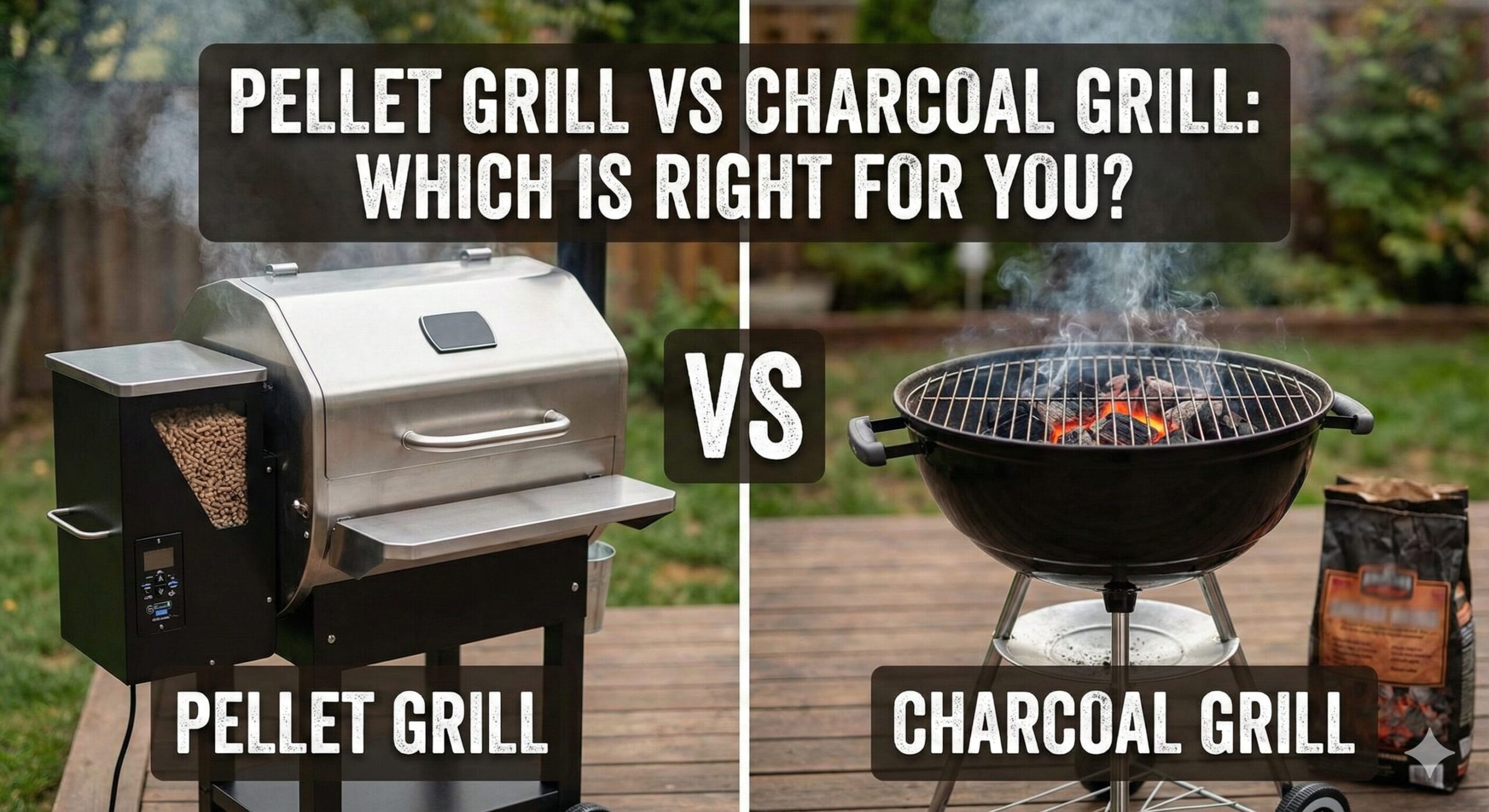
In the world of outdoor cooking, two titans stand apart. On one side, you have the charcoal grill: the primitive, fire-breathing classic that connects us to our caveman ancestors. It requires patience, skill, and a tolerance for playing with fire. On the other side, you have the pellet grill: the technological marvel that promises “set it and forget it” convenience, acting more like an outdoor convection oven fueled by wood.
Choosing between a pellet grill vs charcoal grill is not just about buying an appliance; it is about choosing a lifestyle. Are you the type of person who finds Zen in tending a live fire for 12 hours? Or are you the busy parent who wants perfectly smoked ribs while you run errands or watch the game?
This decision shapes how you cook, what flavors you produce, and how much effort you expend. Whether you are looking for the best barbecue grill for quick weeknight searing or a dedicated rig for low-and-slow smoking, understanding the nuances of these two fuel sources is critical.
In this comprehensive guide, we will break down the mechanics, flavor profiles, costs, and maintenance requirements of both. We will strip away the marketing hype and get down to the cold, hard grates of reality.
Quick Comparison: The Tale of the Tape
Before we dive deep into the smoke, here is a high-level overview of how these two contenders stack up against each other.
| Feature | Charcoal Grill | Pellet Grill |
|---|---|---|
| Fuel Source | Briquettes or Lump Charcoal | Compressed Wood Pellets |
| Flavor Profile | Intense, smoky, distinct “char” | Mild, subtle wood smoke |
| Temperature Range | Extremely High (700°F+) | Moderate (180°F – 500°F) |
| Ease of Use | High learning curve | Easy (Digital control) |
| Startup Time | 20–30 Minutes | 10–15 Minutes |
| Maintenance | Messy ash cleanup | Mechanical parts + ash vacuuming |
| Versatility | Master of searing & direct heat | Master of smoking & baking |
| Price Point | $50 – $500+ | $400 – $2,000+ |
Round 1: Flavor Profile
The primary reason we cook outside is flavor. If it tasted the same as the oven, we wouldn’t bother swatting mosquitoes.
Charcoal: The Heavyweight Champion of Flavor
Charcoal produces a distinct taste that is impossible to replicate. When fat from your burger or steak drips onto hot coals, it vaporizes instantly, sending up clouds of flavor-packed molecules that coat the meat. This is the essence of the “BBQ taste.” Furthermore, charcoal produces Carbon Monoxide and Nitrogen Dioxide during combustion, which contributes to the coveted smoke ring on brisket and ribs.
If you are wondering about the gas grill vs charcoal grill taste, charcoal wins hands down. But against pellet grills? It still holds the edge for intensity. Lump charcoal burns cleaner, while briquettes offer that nostalgic backyard taste.
Pellet Grills: The Subtle Artisan
Pellet grills burn clean. Almost too clean. Because they use a fan to feed oxygen to the fire pot, combustion is highly efficient. This results in a very mild smoke flavor. While you are technically cooking over 100% wood, the food will not have that heavy, acrid bite that charcoal can sometimes impart.
For foods like poultry or fish, this is an advantage. However, for a brisket, you might find the smoke ring is lighter and the bark less pronounced than what you get from a charcoal smoker.
Round 2: Ease of Use and Convenience
This is where the pellet grill shines brighter than a grease fire.
The Pellet Grill Experience
Operating a pellet grill is as easy as using your kitchen oven. You pour pellets into the hopper, select your desired temperature (say, 225°F), and press a button. An auger feeds the pellets, a hot rod ignites them, and a computer maintains the temperature within 5 degrees. You can sleep overnight while your pork butt smokes. You can go to the grocery store. It is the ultimate convenience.
Comparing pellet smokers vs electric smokers, pellet grills offer a similar “set it and forget it” vibe but with better smoke rings.
The Charcoal Ritual
Charcoal requires active participation. You must arrange the coals (using a chimney starter, never lighter fluid), wait for them to ash over, and then manually adjust air vents to control temperature. If the wind picks up, your temperature spikes. If the coals burn down, you lose heat. It is a hands-on craft.
While purists love this ritual, it can be stressful if you are trying to host a party and the fire won’t cooperate. You also have to deal with lighting it. (Tip: Learn how to prevent flare-ups, as similar principles of fat management apply to charcoal).
The King of Convenience

Want to press a button and get perfect BBQ every time? The Traeger Pro Series is the industry standard for easy, wood-fired flavor.
Read ComparisonCheck Price on Amazon
Round 3: Temperature Range and Versatility
Can it sear? Can it smoke? Can it bake a pie?
Searing Power
Charcoal: A kettle grill can easily reach temperatures of 700°F or higher. This creates the Maillard reaction—that beautiful brown crust on a steak—in seconds. If you love searing steaks and burgers, charcoal is the undisputed king. Refer to our guide on indirect vs direct grilling to see how charcoal masters both zones.
Pellet: Most standard pellet grills struggle to get above 450°F or 500°F. Because they use indirect heat (a heat deflector sits over the fire pot), it is difficult to get a true sear. Some brands like Pit Boss offer a “sear slide” to expose the flame, but the surface area is small. If searing is your priority, you will likely be disappointed with a standard pellet grill unless you buy expensive accessories like GrillGrates.
Low and Slow Smoking
Pellet: This is what they were born to do. They hold 225°F with surgical precision for 18 hours straight. No refueling, no vent fiddling.
Charcoal: You can smoke on a charcoal grill (using the “snake method” or a slow ‘n sear), but it requires vigilance. You will be waking up at 3 AM to check the fire.
Round 4: Maintenance and Reliability
Every grill needs cleaning, but the type of mess differs.
Cleaning Charcoal
The byproduct of charcoal is ash. Lots of it. You have to dump the ash catcher after every few cooks. It’s dusty and dirty. You also need to scrub the grates vigorously. However, charcoal grills are mechanically simple. There are no moving parts to break. A Weber kettle can last 20 years with minimal care. (See key maintenance requirements).
Cleaning Pellet Grills
Pellet grills are complex machines with augers, fans, hot rods, and digital controllers. Moving parts mean things can fail. A jammed auger is a nightmare to fix mid-cook. You also need to vacuum the fire pot regularly because ash buildup can choke the fire.
Grease management is also critical in pellet grills to prevent dangerous grease fires. You must clean the large drip tray frequently. If you don’t, you risk a massive flare-up that can ruin the paint and the electronics.
The Durable Classic
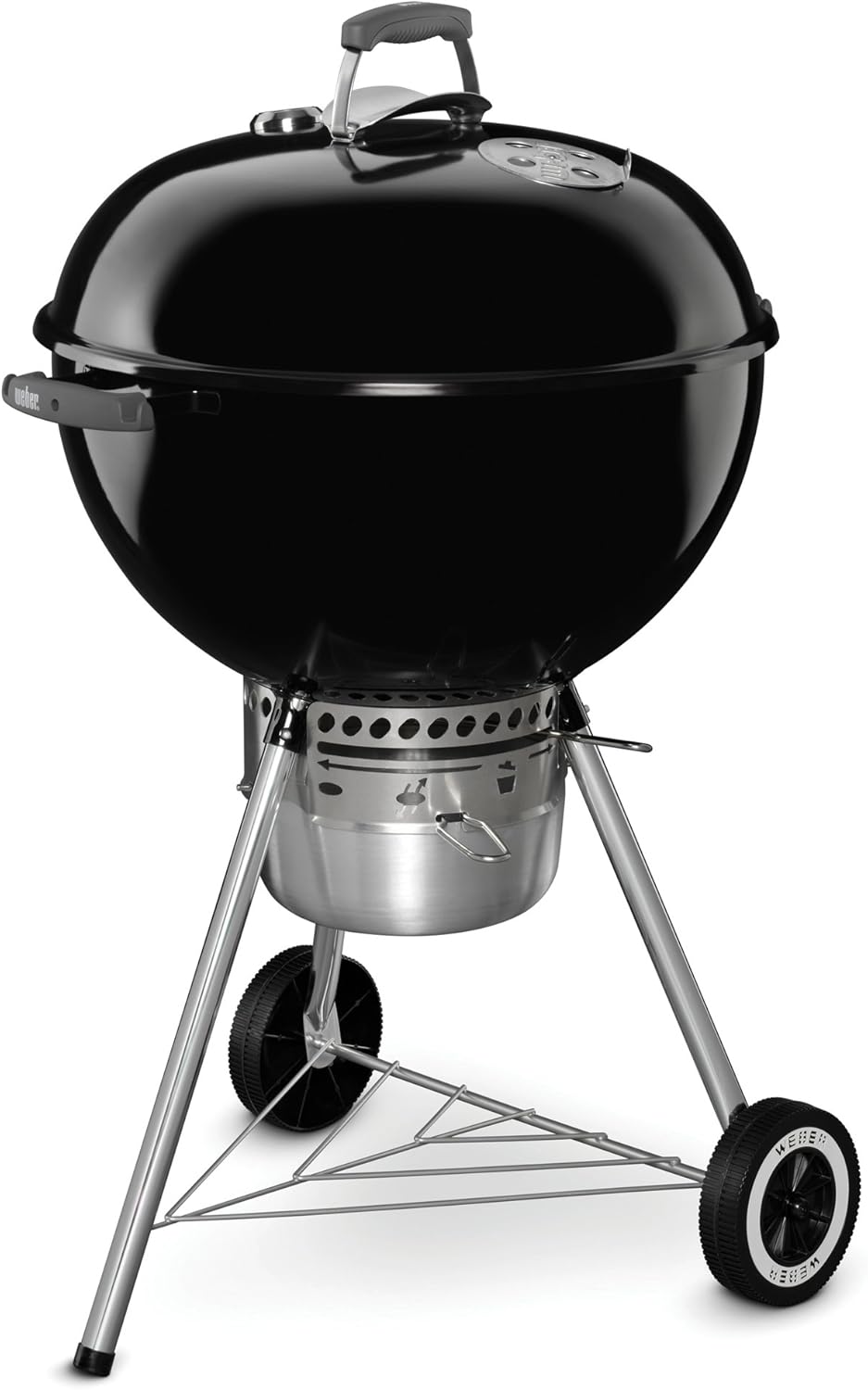
Simple, indestructible, and capable of cooking world-class food. The Weber Kettle is the best entry point for charcoal enthusiasts.
See Best Charcoal GrillsCheck Price on Amazon
Round 5: Cost of Ownership
Let’s talk money. Not just the sticker price, but the cost to run the machine.
Upfront Cost
- Charcoal: You can buy a high-quality kettle grill for under $200. Even a premium ceramic Kamado (like a Big Green Egg) is comparable to a mid-range pellet grill.
- Pellet: Entry-level models start around $400, but for decent build quality and temperature stability (like the Traeger or Pit Boss), you are looking at $700 to $1,500.
Fuel Cost
- Charcoal: A bag of briquettes is cheap, but you burn through it fast, especially on long cooks.
- Pellets: Wood pellets are generally more efficient. A 20lb bag costs $15-$20 and can last for 20 hours of smoking at low temps. However, on high heat, a pellet grill eats pellets rapidly.
Overall, charcoal grills are cheaper to buy, but pellet grills can be surprisingly economical to run if you buy pellets in bulk.
Pros and Cons Breakdown
Charcoal Grill
Pros
- Superior searing capability (High Heat).
- Unbeatable smoky flavor profile.
- Very affordable initial investment.
- Portable (great for tailgating/camping).
- Mechanically simple; fewer things to break.
Cons
- Steep learning curve for temperature control.
- Messy ash cleanup.
- Longer startup time (waiting for coals).
- Requires constant attention during long cooks.
- Health concerns regarding charring (read more).
Pellet Grill
Pros
- Incredible ease of use (Set it and Forget it).
- Precise temperature control (digital).
- Versatile: Smokes, bakes, roasts, and grills.
- Clean burning; less carcinogen production.
- Quick startup compared to charcoal.
Cons
- Expensive upfront cost.
- Requires electricity (limits portability).
- Poor searing performance on most models.
- Milder smoke flavor profile.
- Mechanical parts prone to failure over time.
Health Considerations
Is one safer than the other? When fat drips onto burning charcoal, it creates Polycyclic Aromatic Hydrocarbons (PAHs) and Heterocyclic Amines (HCAs), which are linked to cancer. Because pellet grills use indirect heat and have a drip tray to catch grease, there are fewer flare-ups and less carbonization of the meat.
If you are concerned about whether charcoal grilling is bad for you, a pellet grill is technically the cleaner, healthier option for frequent cooking.
Accessories You Will Need
Regardless of your choice, you need the right tools. Do not ruin your meat by guessing the temperature.
- Meat Thermometer: Essential for both.
- Grill Cover: Protect your investment from rust.
- Quality Fuel: Buy premium lump charcoal or hardwood pellets without fillers.
- Tongs and Spatula: Get a heavy-duty set. See our guide on best BBQ tool sets.
If you choose a pellet grill, consider keeping a smoke tube handy to add extra smoke flavor.
FAQs
1. Can I use charcoal in a pellet grill?
Absolutely not. Pellet grills are designed specifically for compressed wood pellets. Using charcoal would destroy the auger system and likely melt the components.
2. Does a pellet grill taste like charcoal?
No. It tastes like wood fire, which is cleaner and sweeter. It lacks the acrid, chemical-like bite that charcoal briquettes can sometimes have. Some people miss that “dirty” smoke flavor; others prefer the cleaner taste of pellets.
3. Can I leave my pellet grill outside in the rain?
You should not. Pellet grills have sensitive electronics. Furthermore, if water gets into the pellet hopper, the wood pellets will swell, turn into wet sawdust, and dry into a concrete-like substance that will jam your auger permanently. Always use a cover.
4. Which is better for beginners?
A pellet grill is infinitely easier for a beginner to master. It removes the fire management variable, allowing you to focus on food preparation and timing. Charcoal has a higher barrier to entry.
5. Can I grill burgers on a pellet grill?
Yes, but you won’t get the same crust. To fix this, crank the temp to “High,” let it preheat for 20 minutes, and consider using cast iron grates or GrillGrates to amplify the heat. Check our tips on how to keep burgers from falling apart.
6. Do pellet grills require electricity?
Yes. The auger, fan, and digital display all need power. If you want to camp off-grid, you will need a generator or a battery bank, or stick to charcoal.
7. What is the “stall”?
The stall happens on both grills. It’s when a large piece of meat stops rising in temperature for hours as moisture evaporates. Learning how to keep meat moist and wrapping it (the “Texas Crutch”) helps overcome this on both cookers.
8. Why is my charcoal grill not getting hot enough?
This is usually an airflow issue. Open your bottom vents to let oxygen in. Also, ensure your ash catcher isn’t full, choking the fire. Read more on troubleshooting heating issues.
Final Verdict: Which One Should You Buy?
Buy a Charcoal Grill If:
- You love searing steaks and burgers with a crispy crust.
- You enjoy the ritual of building and tending a fire.
- You are on a budget ($100-$300).
- You want the boldest, most intense smoke flavor possible.
Buy a Pellet Grill If:
- You value convenience and time-saving above all else.
- You want to cook brisket, ribs, and pulled pork without waking up all night.
- You want a grill that doubles as an outdoor oven for baking.
- You prefer a milder, cleaner wood smoke flavor.
- You have access to an electrical outlet on your patio.
Ultimately, many serious BBQ enthusiasts end up owning both: a pellet grill for the long, lazy Sunday smokes, and a charcoal kettle for the Friday night steaks. It’s the best of both worlds.
Ready to make your choice? Browse our top recommendations for this year.
The Ultimate Combo Setup?

Can’t decide? Some manufacturers now offer combo units. Or, start with the one that fits your current lifestyle best.
See Best SmokersCheck Price on Amazon