Pellet Grill vs Gas Grill: Which King of Convenience Rules the Backyard?
Introduction: The Battle for Your Patio
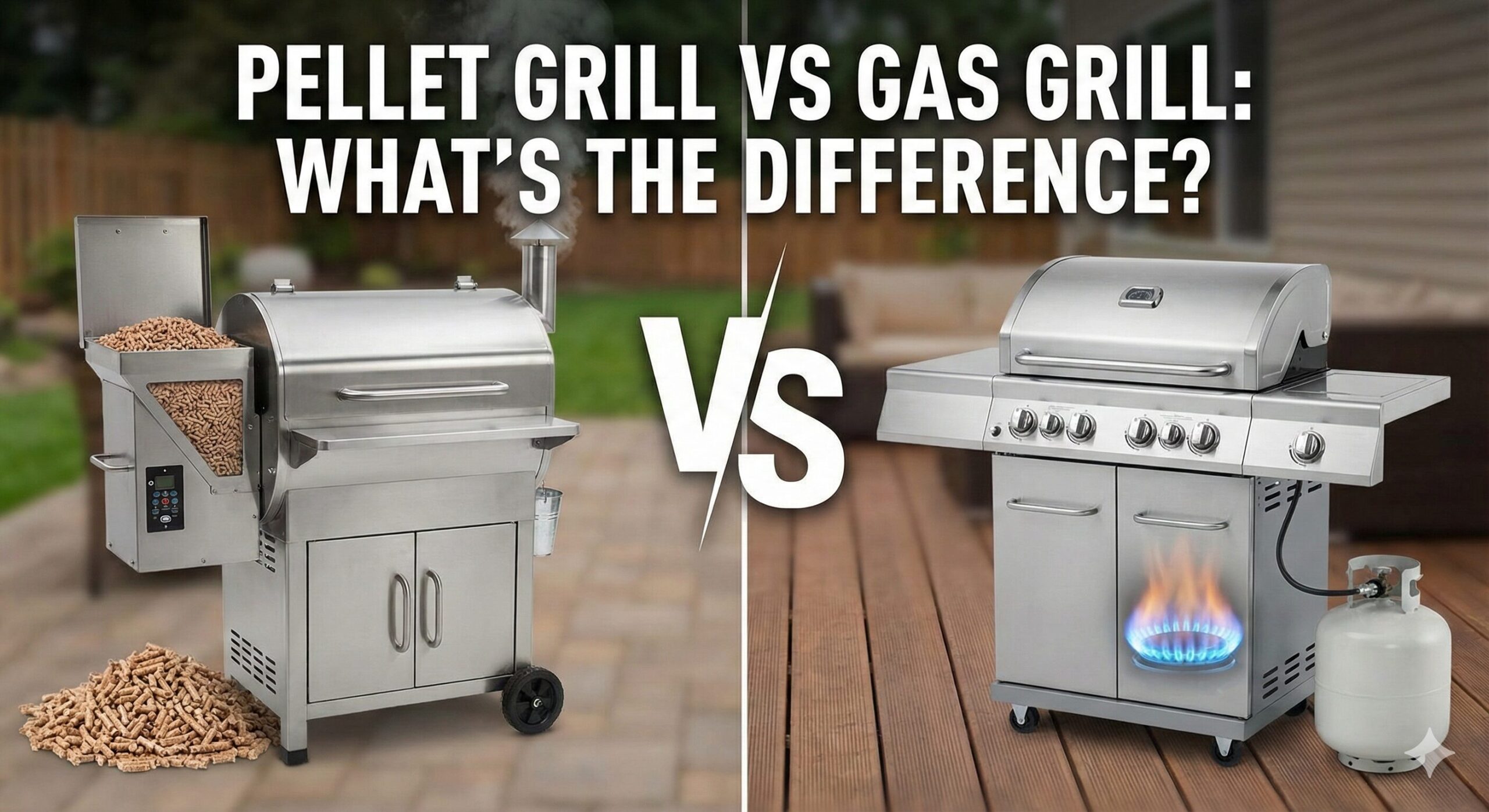
For decades, the backyard barbecue debate was a simple binary choice: charcoal or gas. But in recent years, a challenger has risen from the competition circuit to the suburban patio, disrupting the status quo. The pellet grill has exploded in popularity, promising the ease of an oven with the flavor of real wood.
Now, modern homeowners face a tougher decision. Do you stick with the trusty propane gas grill, known for its searing heat and weeknight speed? Or do you pivot to a wood pellet grill, a “smart” cooker that claims to do it all—smoke, bake, and roast—with the push of a button?
This pellet grill vs gas grill comparison isn’t just about fuel; it’s about two completely different philosophies of cooking. One prioritizes high heat and direct flame, perfect for burgers and steaks. The other prioritizes flavor, low-and-slow tenderness, and technology.
Whether you are looking for the best barbecue grill for quick dinners or a machine capable of producing championship-level brisket, this guide will dissect the mechanics, flavor profiles, maintenance, and costs of both contenders.
Quick Comparison: The Tale of the Tape
Before diving into the nitty-gritty, let’s look at the high-level specs. This table highlights the fundamental differences between these two grilling heavyweights.
| Feature | Gas Grill (Propane/NG) | Pellet Grill |
|---|---|---|
| Primary Fuel | Liquid Propane or Natural Gas | Compressed Wood Pellets (+ Electricity) |
| Startup Time | Fast (5-10 Minutes) | Moderate (10-15 Minutes) |
| Max Temperature | High (500°F – 700°F+) | Moderate (450°F – 500°F typical) |
| Flavor Profile | Neutral; “Grilled” taste | Wood-fired; Smoky |
| Ease of Use | Turn knob, press ignition | Set temp, push start (Automatic) |
| Versatility | Searing & Direct Grilling | Smoking, Baking, Roasting |
| Maintenance | Grease tray & burners | Ash vacuuming & Auger care |
Round 1: How They Work (The Mechanics)
To understand the cooking experience, you have to look under the hood. The engineering differences dictate everything from flavor to texture.
The Gas Grill: Direct Fire Power
A gas grill is essentially an outdoor stovetop with serious horsepower. Gas flows from a tank to burners, creating rows of open blue flame. Above these burners sit “flavorizer bars” or heat tents. When grease drips onto these hot metal tents, it vaporizes, creating that classic BBQ smell and flavor.
The key here is direct radiant heat. Gas grills are designed to get hot fast. This makes them ideal for getting a crust on a steak or quickly cooking hot dogs. Understanding the difference between indirect vs direct grilling is crucial here, as gas grills excel at direct heat but require zone management for indirect cooking.
The Pellet Grill: The Outdoor Convection Oven
Pellet grills are technological marvels. You pour compressed hardwood pellets into a hopper. An auger (a large screw) pushes these pellets into a small fire pot. A hot rod ignites them, and a fan blows oxygen to create a fire.
Crucially, a heat deflector sits over the fire pot, meaning you are almost always cooking with indirect heat. The fan circulates smoke and heat around the food, just like a convection oven. A digital controller (PID) monitors the temperature and feeds pellets automatically to maintain it. It is precise, consistent, and requires electricity to run.
The Tech-Savvy Smoker

Experience precision cooking with modern pellet grills that connect to your smartphone via Wi-Fi.
Compare Top BrandsRound 2: Flavor Profile
This is arguably the most important category. If flavor didn’t matter, we’d all be microwaving our hot dogs.
Pellet Grill: The Taste of Wood
Pellet grills burn 100% hardwood (hickory, mesquite, cherry, etc.). This infuses food with a genuine wood-smoke flavor that gas simply cannot replicate. It is subtler than a heavy charcoal smoker, but distinct. It produces the coveted “smoke ring” (a pink layer under the bark) on meats. If your goal is to make the best ribs and brisket, the pellet grill wins hands down.
Gas Grill: The “Grilled” Taste
Gas itself is odorless and tasteless (after combustion). The flavor from a gas grill comes from the Maillard reaction (browning of meat) and the vaporization of drippings on the heat shields. It’s a savory, greasy, bacon-like smoke profile. While delicious, it lacks the depth of wood smoke.
Pro Tip: You can bridge the gap by using a smoke box. Check out our guide to the best smoke boxes for gas grills to add wood flavor to your propane setup.
Round 3: Temperature Range and Searing
Here is where the two diverge significantly.
The Gas Advantage: High Heat Searing
If you want a steakhouse-quality sear, you need temperatures north of 600°F. Gas grills deliver this effortlessly. You can crank the burners to high and get those perfect grill marks in minutes. For thin cuts like skirt steak or burgers, gas is superior because the radiant heat cooks the exterior without drying out the interior.
Are you struggling with burger integrity? Read how to keep burgers from falling apart on the grill, a technique that often relies on high heat to set the crust.
The Pellet Limitation: Convection Cooking
Because pellet grills use indirect heat, most max out around 450°F or 500°F. While you can bake a pizza or roast a chicken beautifully, getting a dark crust on a steak is challenging. Some manufacturers are adding “sear slides” to expose the fire pot, but the searing area is usually small.
However, pellet grills excel at the low end (180°F – 225°F). They can hold low temperatures for 12+ hours without a single flare-up, which is nearly impossible on a gas grill without constant babysitting.
Round 4: Convenience and Ease of Use
Both grills claim to be convenient, but in different ways.
Gas Convenience: Speed
Gas is about immediacy. You turn a knob, press a button, and you are cooking in 10 minutes. It is the ideal tool for the “Wednesday Night Warrior” who gets home from work at 6 PM and needs to feed the family by 6:30 PM. Shutting it down is instant—just turn off the gas.
Pellet Convenience: Automation
Pellet grills are about automation. It takes longer to heat up (15 mins), but once it’s running, you don’t have to touch it. The computer manages the fire. You can put a pork shoulder on at 10 PM, go to sleep, and wake up to perfect BBQ. It is “Set It and Forget It” at its finest.
However, pellet grills rely on electricity. If you want to tailgate in a parking lot or camp off-grid, you’ll need a generator or a battery bank, whereas a gas grill just needs a tank. For portable options, you might even consider the best electric barbecue grill for ultimate portability.
Round 5: Maintenance and Safety
No one likes cleaning, but it’s part of the game.
Gas Grill Maintenance
The main enemy here is grease. The firebox and drip tray fill with sludge that must be scraped to prevent dangerous grease fires. Flare-ups are also common. You need to know how to prevent flare-ups to keep your eyebrows intact. Burner tubes can also get clogged by spiders or rust over time.
Pellet Grill Maintenance
Pellet grills produce ash. You must vacuum the fire pot every few cooks to ensure proper ignition. Mechanical parts (augers, fans, hot rods) add complexity—if the auger jams, you have to disassemble the hopper. You also need to keep pellets dry; moisture turns them into wet cement that will ruin your auger.
For a detailed breakdown of cleaning, see our guide on best barbecue grill cleaners and tools.
Keep It Clean

Protect your investment. Whether gas or pellet, a clean grill cooks better and lasts longer.
See Maintenance TipsCheck Price on Amazon
Round 6: Cost Comparison
Upfront Cost: You can buy a functional gas grill for $150, though premium models like Weber or Napoleon run $500-$1,500. Pellet grills have a higher floor; decent models generally start around $400 and go up to $2,000+ for brands like Traeger or Yoder.
Running Cost: Propane is relatively cheap and efficient. Wood pellets cost more per hour of operation, especially in cold weather or at high temperatures where the grill burns through fuel rapidly. However, the cost of pellets is comparable to charcoal.
The Verdict: Which One Fits Your Lifestyle?
Choose a Gas Grill If:
- You value speed and want to cook dinner quickly on weeknights.
- You primarily cook burgers, hot dogs, steaks, and veggies.
- You want that high-heat sear and char marks.
- You don’t want to rely on an electrical outlet.
- You are on a tighter budget for the initial purchase.
Choose a Pellet Grill If:
- You want flavor and plan to smoke ribs, brisket, or pulled pork.
- You love the idea of “set it and forget it” cooking.
- You want versatility (baking pies, roasting chickens) more than searing.
- You are intimidated by managing a real fire (like charcoal) but want wood flavor.
- You love gadgets and Wi-Fi connectivity.
Ideally, the serious outdoor chef might own both. But if you must choose one, ask yourself: Do I want to grill (high heat, fast) or do I want to BBQ (low heat, slow, smoky)?
Expert Tips and Accessories
Regardless of your choice, the right gear elevates the experience.
- Thermometers: Never guess. Use a digital probe.
- Grill Mats: Great for keeping decks clean. Check out the best grill mats for decks.
- Rubs and Sauces: The grill provides the heat, but the rub provides the personality. Explore the best barbecue rubs.
- Tools: Don’t use a kitchen fork. Get a proper set. See the best BBQ tool sets.
FAQs
1. Can a pellet grill replace a gas grill?
It can replace it for 90% of tasks. It bakes and roasts better than gas. The only area it falls short is high-heat searing. If you can live without intense char marks, a pellet grill is a viable sole cooker.
2. Does food cook faster on gas or pellet?
Gas cooks faster because it delivers direct heat and reaches higher temperatures quickly. Pellet grills cook via convection, which is gentler and slightly slower, though more even.
3. Are pellet grills healthy?
Pellet grills are often considered healthier than charcoal because they produce fewer carcinogens (HCAs) associated with charring meat. The indirect heat also causes fewer flare-ups, meaning less burnt fat on your food.
4. Can I use a pellet grill in the rain?
It is risky. The electronics are sensitive to water. More importantly, if pellets get wet, they swell and jam the auger, which is a major repair job. Always use a cover or cook under shelter.
5. Is propane cheaper than pellets?
generally, yes. A tank of propane lasts a long time for standard grilling. Pellets burn at a rate of 1-3 lbs per hour depending on temperature. Over a year, heavy users will spend more on pellets.
6. Can I get a smoke ring on a gas grill?
It is very difficult. The smoke ring is a chemical reaction between nitrogen dioxide (from wood combustion) and meat myoglobin. Propane combustion produces water and CO2. You can get smoke flavor with a box, but the pink ring is unique to wood/charcoal.
7. What happens if the power goes out while using a pellet grill?
The fire goes out, but the fan stops too. This can sometimes cause “backburn” into the hopper. You will need to clean out the fire pot before restarting to prevent an explosion of accumulated pellets.
8. Do pellet grills taste like charcoal?
No. Charcoal has a distinct, sharper flavor profile. Pellet smoke is cleaner, lighter, and sweeter. See our pellet vs charcoal comparison for more.
Conclusion
The battle of pellet grill vs gas grill ends in a draw, because they are fighting different wars. The gas grill is the champion of convenience and searing—the perfect tool for the busy family that loves burgers and steaks. The pellet grill is the champion of flavor and technology—the ultimate tool for the aspiring pitmaster who wants effortless brisket and ribs.
Assess your cooking style, your budget, and your craving for smoke. Whichever you choose, the most important thing is that you get outside and cook. If you are ready to make a decision, check out our top-rated picks for this season below.
Ready to Buy?
Whether you choose the speed of gas or the flavor of pellets, we have reviewed the best models on the market.
See Best Gas GrillsSee Best Pellet Grills
Check Price on Amazon