Wood Chips vs Wood Chunks: Which is Better for Smoking?
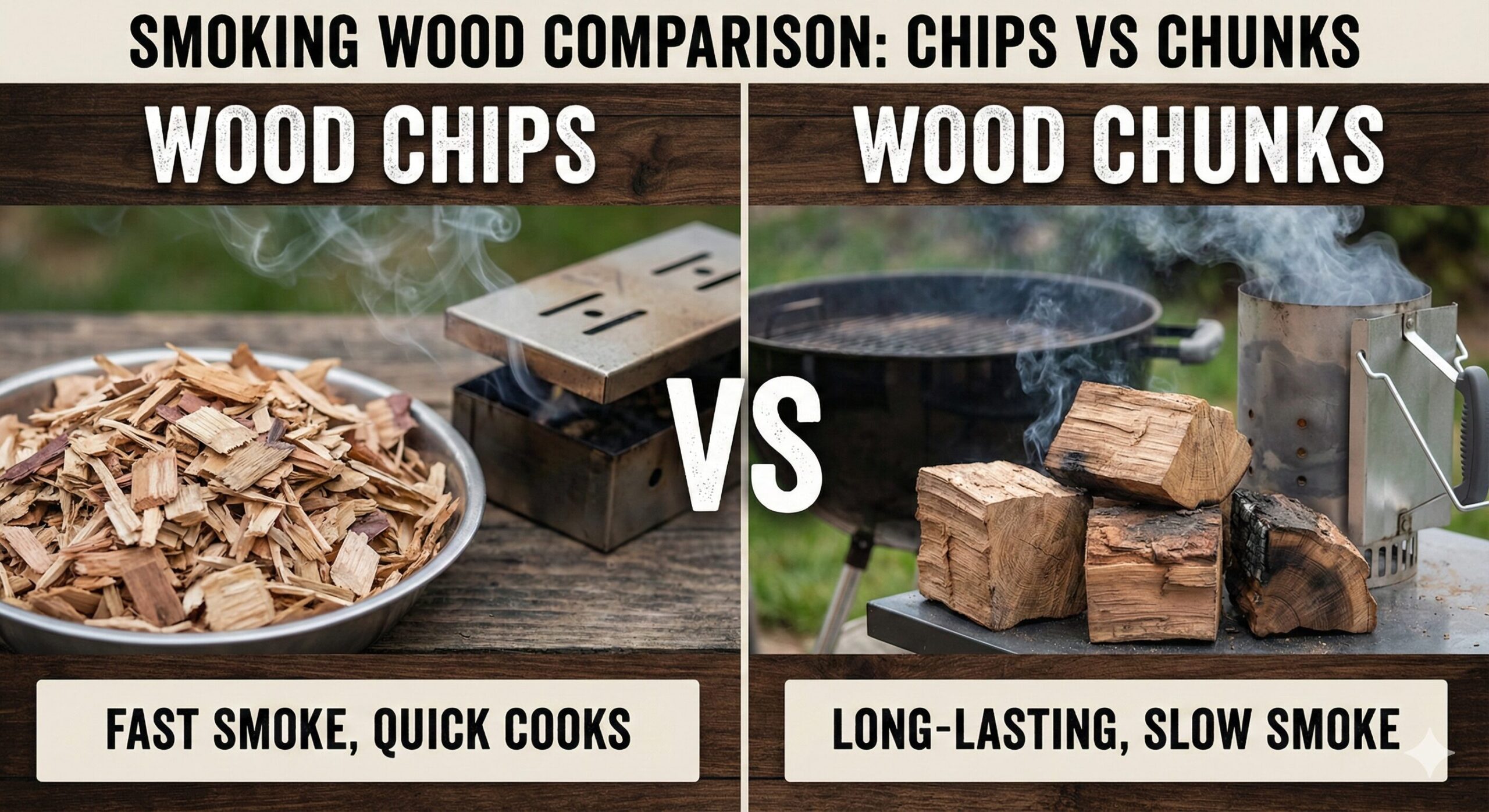
Smoke is the soul of barbecue. It is the invisible ingredient that transforms a simple piece of meat into a culinary masterpiece. However, walking down the aisle of your local hardware store or browsing online can be confusing. You are presented with bags of fine shavings and boxes of fist-sized blocks. This leads to the age-old debate: wood chips vs wood chunks.
Choosing the wrong form of wood can lead to bitter food, rapid burnout, or a complete lack of smoke flavor. The decision isn’t just about preference; it depends heavily on your equipment. Are you using a gas grill for a quick burger, or are you tending a charcoal fire for a 12-hour brisket? In this comprehensive guide, we will break down the combustion physics, flavor profiles, and best use cases for both, ensuring you pick the right fuel for your fire.
At a Glance: Chips vs Chunks
Before we dive deep into the smoke science, here is a quick reference guide to help you identify which product suits your current setup.
| Feature | Wood Chips | Wood Chunks |
|---|---|---|
| Size | Small, thin shavings or scraps (coin-sized) | Large blocks (fist-sized, approx 2–4 inches) |
| Burn Time | Fast (15–30 minutes) | Slow (1–3 hours per chunk) |
| Best Grill Type | Gas Grills, Electric Smokers | Charcoal Grills, Kamados, Offset Smokers |
| Smoke Profile | Quick burst of intense smoke | Steady, long-lasting blue smoke |
| Prep Required | Often soaked (debated) or foiled | No soaking required |
What Are Wood Chips?
Wood chips are small, flat pieces of wood, often the byproduct of processing larger logs or specifically chipped for smoking. They are roughly the size of a large coin or a poker chip. Because they are small and have a high surface-area-to-mass ratio, they ignite incredibly fast.
Chips are the “sprinters” of the smoking world. They provide a quick, intense burst of smoke but burn out rapidly. This makes them ideal for shorter cooks where you only need a kiss of smoke, such as with poultry or fish. If you are learning how to keep chicken from sticking to the grill and want to add flavor quickly before it finishes, chips are your best friend.
Best Use Cases for Wood Chips
- Gas Grills: Chips are perfect for propane or natural gas grills. Since these grills often lack the space for large chunks, chips can be easily placed in a smoker box or a foil pouch directly over the burner.
- Electric Smokers: Many electric barbecue smokers have small loading trays designed specifically for chips. Chunks simply won’t fit or may not ignite properly on the heating element.
- Short Cooks: Steaks, chops, and shrimp that cook in under 45 minutes benefit from the rapid ignition of chips.
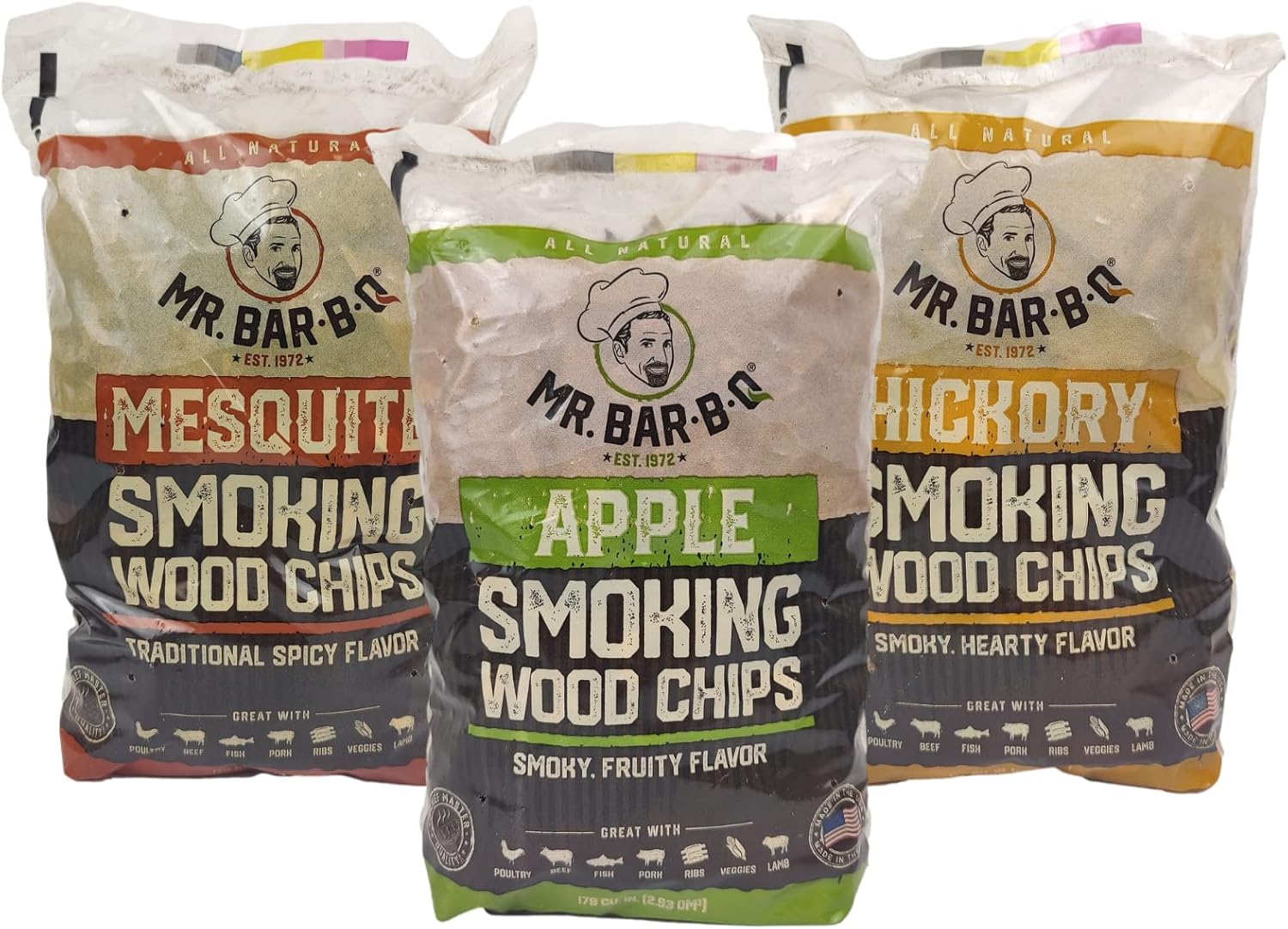
Top Rated Smoking Wood Chips Variety Pack
Includes Hickory, Apple, and Mesquite. Perfect for gas grills and electric smokers.
Check Price on AmazonWhat Are Wood Chunks?
Wood chunks are large blocks of hardwood, typically about the size of a fist or a grapefruit. They are denser and contain much more mass than chips. Because of their size, they take longer to ignite, but once they do, they smolder slowly and release smoke for hours.
Chunks are the “marathon runners.” They are essential for low-and-slow barbecue. When you are smoking a pork butt or learning how to smoke ribs and brisket, you need a steady stream of smoke that lasts without you having to open the lid every 20 minutes to refill the wood. Opening the lid causes heat fluctuations, which is the enemy of good BBQ.
Best Use Cases for Wood Chunks
- Charcoal Kettles: If you are using a standard kettle grill, placing 2–3 chunks directly on the coals provides sustained smoke.
- Kamado Grills: For Kamado owners, chunks are mandatory. You can bury them in the charcoal stack, and they will ignite gradually as the fire spreads, offering automated smoke delivery.
- Offset Smokers: While offset smokers often use full log splits, chunks are great for managing temperature spikes or adding flavor without adding too much heat. See our comparison of offset smoker vs pellet smoker for more on fuel types.

Premium Post Oak Wood Chunks
The gold standard for brisket. Clean burning and long-lasting.
Check Price on AmazonCombustion Science: The Quality of Smoke
The form of the wood affects the quality of the smoke produced. In the world of BBQ, we aim for “Thin Blue Smoke”—a clean, almost invisible smoke that flavors meat without making it bitter.
The Flare-Up Risk with Chips
Because chips are small, they are prone to catching fire rather than smoldering. When wood burns with an open flame, it produces less smoke and more heat. To prevent this, chips often need to be starved of oxygen (using a smoke box or foil packet). If you just throw dry chips on charcoal, they will incinerate in minutes, wasting your money. Using smoke boxes for gas grills is the best way to manage this combustion.
The Slow Smolder of Chunks
Chunks sit on top of the coals. The bottom of the chunk burns while the top smolders. This creates a consistent combustion cycle that produces high-quality smoke. Because they don’t burn up instantly, they allow you to maintain a stable temperature. This is crucial for long cooks where stability is key to preventing dry meat. If you struggle with moisture, check out our guide on how to keep meat moist in a smoker.
The Great Debate: Should You Soak Your Wood?
This is one of the most persistent myths in barbecue.
The Case Against Soaking
Wood is porous, but not that porous. If you soak a wood chunk for 24 hours and saw it in half, you will find the water has barely penetrated the surface. When you put wet wood on a fire:
- It cools your fire: The water must boil off (212°F) before the wood can combust (500°F+).
- It creates steam, not smoke: The white puffy cloud you see initially is steam. Steam doesn’t add flavor; it just wets the bark of your meat.
- It delays flavor: You only get smoke after the wood dries out in the grill.
Verdict: Never soak wood chunks. For chips, it is debatable. On a gas grill, soaking chips might buy you a few extra minutes before they ignite, but using a proper metal smoker box is a more effective solution.
Pros and Cons Breakdown
🔥 Wood Chips Pros
- Ignition: Lights instantly; great for short cooks.
- Versatility: Works in gas grills, electric smokers, and stovetop smokers.
- Variety: Easier to find exotic wood types in chip form.
- Control: Easy to add “just a little” smoke.
⚠️ Wood Chips Cons
- Burn Rate: Burns up very fast; requires constant refilling.
- Temperature Swings: Opening the grill to refill chips causes heat loss.
- Soaking: Often requires soaking or foiling to prevent flare-ups.
- Flavor: Can produce acrid smoke if they catch fire.
🪵 Wood Chunks Pros
- Longevity: Lasts for hours; perfect for brisket and pork shoulder.
- Convenience: “Set it and forget it” smoke management.
- Flavor Quality: Produces cleaner, sustained blue smoke.
- No Prep: No soaking or foil wrapping required.
⚠️ Wood Chunks Cons
- Size: Too large for most gas grill smoker boxes.
- Ignition: Takes time to catch; not good for 15-minute cooks.
- Availability: Sometimes harder to find than chips in local supermarkets.
- Space: Takes up fuel space in small charcoal grills.
Choosing the Right Wood Flavor
Whether you choose chips or chunks, the species of wood matters. The flavor should complement, not overpower, your food.
- Fruit Woods (Apple, Cherry, Peach): Mild and sweet. Perfect for pork, chicken, and turkey. Excellent in chip form for a light kiss of smoke.
- Nut Woods (Pecan, Oak): Medium intensity. The versatile all-rounders. Oak chunks are the legendary fuel for Texas brisket.
- Strong Woods (Hickory, Mesquite): Very intense. Use sparingly. Mesquite chips are great for grilling steaks quickly, but Mesquite chunks can make a long cook taste bitter if overused.
Once you’ve picked your wood, don’t forget the seasoning! Check out our guide to the best barbecue rubs to pair with your smoke choice.
Final Verdict: Which Should You Buy?
Buy Wood Chips If:
- You primarily cook on a Gas Grill or Electric Smoker.
- You are cooking fast meals like steaks, burgers, fish, or chicken breasts.
- You want to experiment with blending different wood flavors without committing to a large bag.
- You are looking for the best barbecue tools and accessories like smoke tubes, which are designed for chips/pellets.
Buy Wood Chunks If:
- You cook on a Charcoal Kettle, Kamado (Big Green Egg/Kamado Joe), or Offset Smoker.
- You plan on smoking large cuts of meat like brisket, pork butt, or ribs.
- You want a hands-off smoking experience without constantly reloading fuel.
- You value a consistent temperature and clean smoke profile.
Still unsure about your grill type? Read our comparisons on Kamado vs Gas grills or Pellet vs Charcoal grills to understand how fuel affects flavor.
Frequently Asked Questions
1. Can I use wood chunks in a gas grill?
Technically yes, but they are often too large to fit under the grate near the burner. You can place a chunk directly on the cooking grate, but it may not get hot enough to smoke effectively. Chips are generally better for gas.
2. Can I mix chips and chunks?
Yes. Some pitmasters use chips to get smoke started immediately while the chunks heat up for the long haul.
3. Do wood chunks mold?
If stored in a damp place, yes. Keep your wood in a dry, ventilated area. If you find mold, do not use it for cooking. Check our guide on BBQ maintenance for storage tips.
4. How much wood should I use?
Less is more. For a long cook, 3–4 chunks are usually sufficient. For chips, one pouch every 30–45 minutes is standard. Over-smoking leads to bitter food.
5. Can I use bark on my wood chunks?
Yes, bark is fine and adds flavor. However, ensure the wood is “seasoned” (dried) and not green, or it will produce acrid smoke.
6. What about wood pellets?
Pellets are compressed sawdust. They are designed for pellet grills but can be used in smoke tubes for gas grills. See pellet grill vs gas grill for more info.
7. Is charcoal bad for you compared to wood?
Both produce carbonization. The health risks are minimal if you avoid charring meat excessively. Read more: Is charcoal grill bad for you?
8. Why is my smoked meat turning pink?
This is the “smoke ring,” a chemical reaction between nitrogen dioxide in the smoke and the myoglobin in the meat. It is a badge of honor! Read more: Why does smoked meat turn pink?
9. How do I clean my grill after smoking?
Ash from wood can be corrosive if it gets wet. Clean out the firebox regularly. See best barbecue grill cleaners.
Conclusion
The battle of wood chips vs wood chunks isn’t about which is superior overall, but which is superior for your specific cook. For the weekend warrior whipping up quick steaks on a gas grill, wood chips offer a convenient path to flavor town. For the pitmaster pulling an all-nighter with a brisket on a charcoal smoker, wood chunks are the reliable fuel that makes the magic happen.
Whichever you choose, remember that smoke is a seasoning. Use it wisely, pair it with the best barbecue sauce, and enjoy the process.