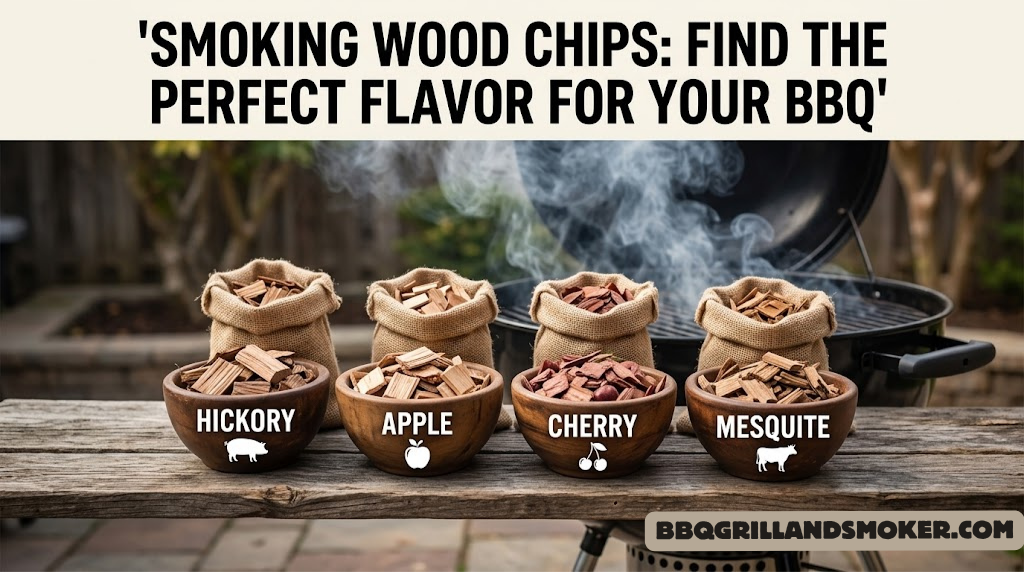
Walk into any pitmaster’s garage and you’ll find a shelf lined with bags, bins, and boxes of wood chips in half a dozen varieties. Ask them which one to use and you’ll get a 20-minute lecture. That’s because wood smoke isn’t a detail — it is the flavor. This guide covers everything: the chemistry behind why smoke tastes the way it does, which wood pairs best with every protein, how to use chips on any type of grill or smoker, and the truth about that persistent soaking debate. Whether you’re a weekend warrior or serious competition pitmaster, this is the only wood chips guide you’ll ever need.
What Are BBQ Wood Chips and Why Do They Matter?
BBQ wood chips are small, irregularly shaped pieces of hardwood — typically ranging from the size of a thumbnail to a half-dollar — that are placed on hot coals, in a smoker box, or directly on gas grill burners to generate smoke. Unlike logs used in traditional offset smokers or pellets used in pellet grills, chips are designed for quick, intense bursts of smoke that infuse food during relatively short cook sessions.
The difference between a mediocre rack of ribs and a transcendent one often comes down not to the rub, the sauce, or even the internal temperature — but to the smoke. Wood smoke deposits hundreds of chemical compounds onto the surface of meat that interact with proteins, fats, and sugars to create what we perceive as “BBQ flavor.” Without the right smoke, you’re just cooking meat outdoors.
Wood chips matter because they give you control over flavor that no sauce, marinade, or rub can replicate. They let you dial in subtle fruitiness for delicate fish, assertive earthiness for brisket, or sweet nuttiness for pork shoulder — all from the same grill. Understanding wood chips is the gateway to understanding BBQ at a deeper level, and it’s why the best pitmasters treat their wood selection as seriously as their spice racks.
Before we get into the specific varieties, it’s important to understand what makes wood produce smoke flavor in the first place. This isn’t just trivia — it directly affects how you choose and use wood chips for different cooks.
The Science of Smoke Flavor: What’s Actually Happening
Wood smoke is far more complex than most people realize. When you place a wood chip on a heat source, it undergoes a sequence of chemical transformations that produce the flavor compounds responsible for BBQ’s distinctive taste and aroma.
Pyrolysis: The Flavor Generator
When wood reaches temperatures between 392°F and 536°F (200–280°C), a process called pyrolysis begins. The wood doesn’t actually burn at this stage — it decomposes thermally, breaking down its three major components: cellulose, hemicellulose, and lignin. Each contributes differently to smoke flavor:
- Cellulose and hemicellulose break down to produce sweet, caramel-like flavor compounds — primarily furans and carbonyls that give BBQ that characteristic sweet smokiness.
- Lignin is the big one. It decomposes into guaiacol and syringol — the two phenolic compounds responsible for the deep, rich, “smoky” flavor note that defines BBQ. Hardwoods with higher lignin content produce more of these compounds, which is why hardwoods are used exclusively in BBQ and softwoods are strictly avoided.
The Smoke Ring: Science, Not Magic
That famous pink smoke ring just below the surface of smoked meat is one of BBQ’s most prized visual achievements. Many beginners think it’s about flavor or a sign of perfect cooking, but it’s actually a specific chemical reaction. Nitrogen dioxide (NO₂) from wood smoke reacts with the myoglobin in meat to form a stable pink compound — nitrosomyoglobin — similar to what gives cured meats their color.
The catch: this reaction only happens when meat is below 140°F internally. Once the proteins set at higher temperatures, the reaction stops. This is why cold meat absorbs more smoke ring than room-temperature meat, and why smoke ring formation requires understanding the connection between temperature and color changes.
Good Smoke vs. Bad Smoke: The Thin Blue Line
Not all smoke is equal. There’s a world of difference between thin blue smoke — the wispy, nearly transparent stream of combustion byproducts that penetrates food cleanly — and thick, white billowing smoke that leaves food bitter and acrid.
Achieving thin blue smoke requires proper airflow, dry wood, and appropriate temperatures. We’ll cover how to dial this in for different cooker types in the section on using wood chips below.
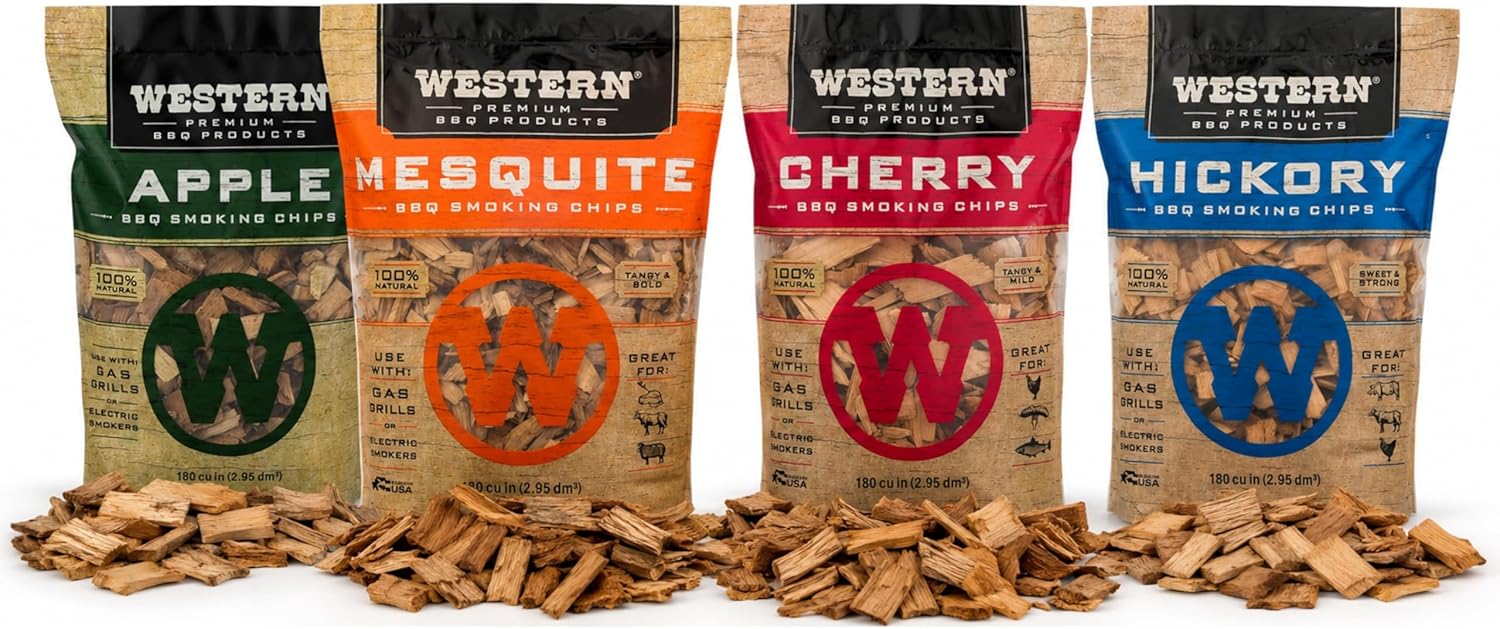
Western BBQ Smoking Chips — Variety Pack (4 Flavors)
Start your wood chip journey with apple, cherry, hickory, and mesquite in one set. Consistently rated the best beginner value on Amazon.
🛒 Check Price on AmazonThe 12 Essential BBQ Wood Chip Types: Complete Flavor Profiles
Every wood variety has a distinct flavor fingerprint shaped by its botanical chemistry — its ratio of lignin, cellulose, and natural sugars. Here’s a deep dive into the 12 woods you’ll encounter most often, with flavor notes, intensity ratings, and ideal food pairings for each.
Hickory
King of American BBQ
Bold, bacon-like, earthy. The most iconic American BBQ smoke. Punchy and assertive with a slightly sweet finish.
Best for: Pork ribs, brisket, pulled pork, chicken. Poor choice for fish.
Mesquite
Texas Grill Warrior
Intense, earthy, slightly bitter. Burns very hot. Can overpower delicate proteins. The most polarizing wood in BBQ.
Best for: Beef steaks (short cooks), fajitas, brisket (blended). Never for fish.
Apple
The People Pleaser
Mild, sweet, slightly fruity. Produces a beautiful golden to pale-mahogany bark. Universally beloved and approachable.
Best for: Pork, poultry, fish, vegetables. Excellent beginner wood.
Cherry
The Color Artist
Mild-medium, sweet, slightly tart. Imparts a gorgeous deep mahogany or ruby-red color to meat. Often blended with stronger woods.
Best for: Pork, poultry, game meats, lamb. Blends beautifully with hickory.
Pecan
Hickory’s Refined Cousin
Medium, nutty, sweet, rich. Similar to hickory but softer and more complex. A favorite for competition pitmasters.
Best for: Pork ribs, brisket, whole chicken, turkey. Competition BBQ staple.
Oak
The Versatile Classic
Medium-strong, earthy, slightly sweet. Post oak is the backbone of Central Texas BBQ. Clean-burning and consistent.
Best for: Beef, brisket, lamb, pork, sausage. Texas BBQ workhorse.
Alder
Pacific Northwest Gem
Very mild, delicate, slightly sweet. The lightest-tasting hardwood used in BBQ. Native to the Pacific Northwest and traditionally used with salmon.
Best for: Fish (especially salmon), shellfish, delicate vegetables, chicken.
Maple
Sweetness Champion
Mild-medium, sweet, clean. Produces a beautiful golden color on poultry skin. Very popular with pork and poultry.
Best for: Poultry, pork, vegetables, ham. Beautiful on turkey.
Black Walnut
The Bold Gambler
Heavy, intense, slightly bitter. Often too overpowering on its own. Best blended at 25% ratio with milder woods like apple.
Best for: Wild game (venison, elk), beef. Blend only.
Grapevine
The Wine Country Secret
Medium, fruity, slightly tangy. Burns hot. Imparts a distinctive wine-country character to food. Excellent for Mediterranean-style BBQ.
Best for: Lamb, chicken, vegetables, fish.
Pear
Mild & Versatile
Very mild, sweet, slightly floral. Very similar to apple wood but with a more subtle, delicate sweetness. Hard to find but worth seeking out.
Best for: Poultry, pork, fish. Great with apple as a blend.
Mulberry
The Underground Favorite
Mild-medium, sweet, slightly berry-like. Similar to apple but with a distinctive twist. Underrated and underused — a hidden gem.
Best for: Poultry, pork, fish, game birds.
A note on regional preferences: Southern BBQ traditions lean heavily on hickory and pecan; Texas Central BBQ is built around post oak; Pacific Northwest BBQ favors alder for salmon; and competition circuits often feature elaborate blends of cherry, hickory, and pecan. Understanding your regional tradition — or intentionally mixing them — is part of developing your BBQ identity.
For a deep-dive comparison on two of the most commonly debated varieties, check out our guide on hickory vs. mesquite for smoking, where we break down exactly which one wins for different cuts and cook styles.
The Ultimate Wood Chip Flavor Pairing Chart
Pairing the right wood to the right protein is the single most important decision you’ll make in smoke cooking. Use this chart as your reference — green means excellent, amber means good with caveats, and gray means avoid.
| Wood | Beef / Brisket | Pork Ribs | Chicken | Fish / Seafood | Lamb | Vegetables | Cheese |
|---|---|---|---|---|---|---|---|
| Hickory | Excellent | Excellent | Good | Avoid | Good | Sparingly | Good |
| Mesquite | Excellent | Short cooks | Avoid | Avoid | Good | Avoid | Avoid |
| Apple | Good | Excellent | Excellent | Excellent | Excellent | Excellent | Excellent |
| Cherry | Excellent | Excellent | Excellent | Good | Excellent | Excellent | Excellent |
| Pecan | Excellent | Excellent | Excellent | Good | Good | Good | Excellent |
| Oak | Excellent | Excellent | Good | Good | Excellent | Good | Good |
| Alder | Too mild | Too mild | Good | Excellent | Too mild | Excellent | Good |
| Maple | Good | Excellent | Excellent | Good | Good | Excellent | Excellent |
| Walnut | Blend only | Avoid | Avoid | Avoid | Blend only | Avoid | Avoid |
The Master Blending Framework
One of the most underutilized skills in wood chip cooking is blending — combining two or more wood varieties to create a flavor profile that’s more nuanced than either wood alone. Here’s how professional competition pitmasters approach it:
| Target Protein | Primary Wood (60–70%) | Secondary Wood (30–40%) | Effect |
|---|---|---|---|
| Brisket | Post Oak | Cherry | Earthy depth + mahogany color |
| Pork Ribs | Hickory | Apple | Bold smoke softened by sweetness |
| Pulled Pork | Pecan | Cherry | Nutty richness with beautiful bark |
| Whole Chicken | Apple | Maple | Sweet, clean, golden skin |
| Salmon | Alder | Apple | Classic Pacific Northwest with sweetness |
| Lamb | Cherry | Grapevine | Fruity, wine-country character |
| Competition Ribs | Pecan | Cherry + tiny Hickory | Layered, complex, candy-like |
Blending is especially important when using smoke boxes on gas grills, where you can add a mix of chips for a more nuanced flavor over the cook.

Napoleon PRO Smoker Box — Heavy Gauge Stainless Steel
The industry-standard smoker box for gas grills. Holds a full cup of chips, distributes smoke evenly, and won’t warp. Built to last decades.
🛒 Check Price on AmazonHow to Use Wood Chips: Step-by-Step for Any Setup
Knowing which wood to choose is half the battle. The other half is knowing how to deploy it effectively. The technique differs significantly depending on your cooking setup. Here’s the complete process for each major grill and smoker type.
Prepare Your Wood Chips
Start with dry chips of the appropriate size. For charcoal grills and gas grills (in a smoke box), use small chips about 1–2 inches in size. For charcoal smokers, slightly larger chips or small chunks work better. Inspect chips for any green or moldy pieces and discard them — these will produce off-flavors.
Decide Whether to Soak (Spoiler: Usually Don’t)
The old conventional wisdom said to soak chips in water for 30 minutes before use. Modern BBQ science has largely debunked this. Wet chips smolder and produce steam — which is white smoke — before they start producing the thin blue smoke you actually want. Dry chips ignite faster and produce better smoke. We cover this in much more detail in the soaking section below.
Place Chips Correctly for Your Cooker
Placement determines everything. For a charcoal grill, place chips directly on hot coals. For a gas grill, use a smoker box placed over the burner. For a dedicated smoker, chips go in the designated chip tray or directly on charcoal. The goal in every case is to get the chips hot enough to pyrolyze — not so hot they flash-combust immediately.
Control Smoke Duration and Quantity
More smoke is not always better. The most common beginner mistake is over-smoking, which produces bitter, acrid food with a harsh aftertaste. As a general rule, you want smoke during the first third of the cook — when the meat surface is cool and most receptive. A brisket at 250°F only needs smoke for the first 3–4 hours even if it cooks for 12–14 total hours. Add chips in small batches (about a handful) every 45–60 minutes during the active smoke phase rather than dumping in a massive pile at once.
Monitor and Adjust Smoke Quality Throughout the Cook
Keep an eye on the smoke color throughout your session. Thin blue or barely visible smoke: you’re cooking right. White or gray billowing smoke: add more airflow, check if chips are smothered, or wait for them to settle. Black or very dark smoke: chips are burning too hot — reduce heat or add more chips at cooler zones. Yellow or brown smoke: incomplete combustion, likely from greens or damp chips — discard and start fresh.
Understanding the mechanics of how heat and time interact with smoke flavor will help you develop an instinct for when to add more chips and when to let the cook run without any additional smoke.
The Soaking Debate: Why Most Experts Now Say Skip It
Few topics generate more argument in the BBQ community than whether you should soak wood chips before using them. The practice became widespread in the 1980s when grilling books universally recommended it as a way to “slow the burn” and “extend the smoke time.” Food science has since caught up, and the verdict is largely against soaking — but the truth is more nuanced than “soaking is always wrong.”
What Actually Happens When You Soak Chips
Wood is not a sponge. Soaking chips in water for 30 minutes results in the water penetrating only the outermost 1–2 mm of the chip’s surface — the interior remains dry. When you place a soaked chip on a heat source, that surface water must evaporate before the chip can reach pyrolysis temperature (around 400°F). This evaporation takes 20–30 minutes and produces steam — that thick, white, billowing smoke that actually impedes flavor deposition and can make food taste bland or even musty.
✓ When Soaking Might Help
- Very fast, high-heat cooks (steaks under 8 minutes) where you want prolonged smoke with delayed ignition
- Preventing chips from immediately catching fire on very high-heat gas grills without a smoke box
- Creating gentle, steamy smoke for cold smoking delicate items like cheese when temperature must stay very low
- Some pitmasters use wine, beer, apple juice, or whiskey soaks to add a subtle flavor nuance
✗ Why Soaking Usually Hurts
- Steam production delays useful smoke by 20–30 minutes
- White steam smoke is not the same as thin blue smoke — it doesn’t deliver the same flavor compounds
- Soaked chips can lower the temperature inside your cooker, extending cook times
- For long cooks (brisket, pork shoulder), the soak benefit disappears — you want immediate smoke output
- The “extended smoke time” claim is largely myth — interior stays dry regardless
If you want to extend smoke time without soaking, the answer is simple: use larger pieces (chunks instead of chips), or add chips in smaller amounts more frequently. Both strategies outperform soaking for most applications.
For more perspective on how different fuel types affect flavor and heat, see our deep-dive comparison between pellet smokers and electric smokers for heat and smoke metrics.
Using Wood Chips on Every Grill and Smoker Type
The technique for using wood chips varies significantly depending on your cooking equipment. Here’s a complete breakdown for each major type.
Gas Grill
Use a dedicated smoker box or make a foil pouch. Place over one burner on high until smoking, then lower heat. Never put chips directly on gas burners — they’ll clog and potentially cause damage.
Charcoal Grill
Sprinkle dry chips directly onto lit coals just before food goes on. Add in small batches every 45–60 minutes. For 2-zone setups, place chips on coals only on the hot side.
Electric Smoker
Fill the chip tray completely. Most electric smokers have a chip loader that adds chips without opening the door. Reload every 45 minutes since electric smokers consume chips faster.
Offset Smoker
Chips alone aren’t ideal here — use chunks or small split logs. Add chips only to supplement between log additions. The firebox runs at higher temperatures where small chips burn too fast.
Kamado Grill
Place chips or chunks directly on lit coals before closing the lid. The sealed ceramic environment is incredibly efficient at trapping and recirculating smoke. Use less than you think you need.
Pellet Grill
Pellet grills generate their own smoke from wood pellets, but you can use a smoke tube or box filled with chips for extra smoke at higher temperatures where the pellet system burns clean.
The Foil Pouch Method for Gas Grills
If you don’t have a smoker box, the foil pouch method works well for occasional smoking on a gas grill. Take a double layer of heavy-duty aluminum foil, add about a cup of dry chips, fold into a packet, and poke 6–8 small holes in the top. Place directly on a lit burner under the grate. It’s less effective than a proper smoker box but completely serviceable.
That said, if you’re serious about smoking on a gas grill, a good smoker box will make a meaningful difference. We’ve done an in-depth look at smoke boxes by material, size, and performance — cast iron holds heat better and produces more consistent smoke than thin stainless boxes.
For those considering a dedicated smoker upgrade, our best BBQ smokers guide covers every category from offset to pellet to electric, with detailed comparisons to help you decide.
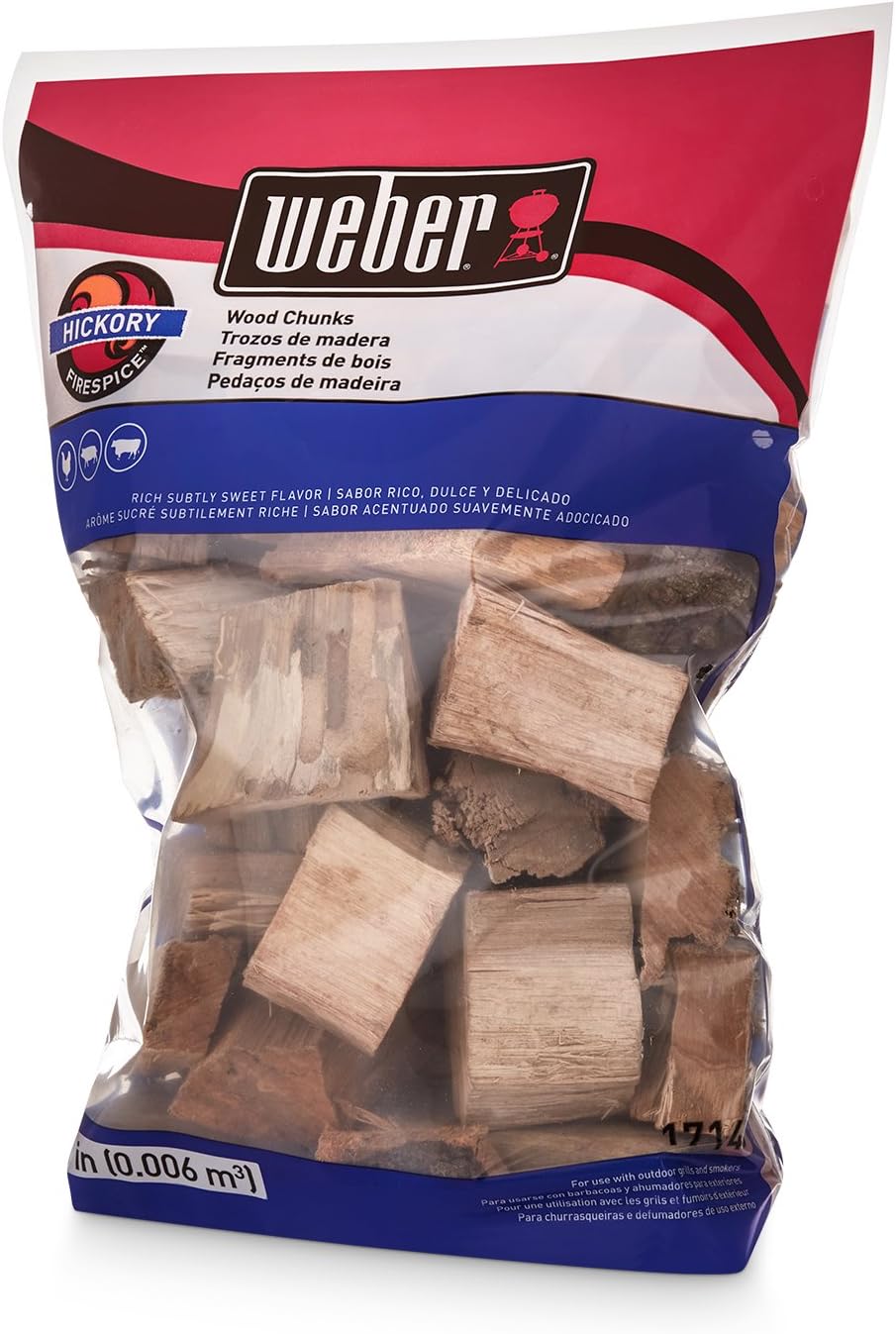
Weber Hickory Wood Chips — 192 cu. in.
Weber’s hickory chips are consistently sized, properly kiln-dried, and clean-burning. If you cook primarily beef and pork, this is the one bag you should always have in your garage.
🛒 Check Price on AmazonWood Chips vs. Chunks vs. Pellets vs. Logs: Which Format Wins?
Wood comes in multiple formats for smoking, and understanding the difference is crucial for choosing the right one for your cook. This isn’t just about size — it’s about burn rate, smoke production duration, and application compatibility.
| Format | Size | Burn Time | Smoke Duration | Best For | Not For |
|---|---|---|---|---|---|
| Chips | Thumbnail–quarter | 15–20 min | 10–15 min effective | Gas grills, quick cooks, electric smokers | Long low-and-slow cooks alone |
| Chunks | Golf ball–fist size | 45–90 min | 30–60 min effective | Charcoal grills, long cooks, offset smokers | Gas grills (won’t fit smoker box) |
| Pellets | ¼ inch diameter, ¾ inch long | Continuous in feeder | Continuous (system dependent) | Pellet grills, supplement smoke tubes | Charcoal grills, electric smokers |
| Splits/Logs | 4–12 inch lengths | 2–3 hours | 60–90 min effective | Offset smokers, stick burners, fire pits | Any closed/sealed cooker |
| Sawdust | Fine powder | 5–10 min | Rapid burst | Cold smoking, smoke guns, stovetop smokers | Hot smoking |
The choice between chips and chunks often comes down to your cooker. If you want to learn more about the full chips vs. chunks debate with practical cook scenarios, we’ve written an in-depth guide on wood chips vs. wood chunks for smoking that covers the format decision in granular detail.
What About Pellet Grills?
Pellet grills generate smoke from compressed wood pellets automatically — which is part of their appeal. However, at higher temperatures (above 325°F), modern pellet grills burn so cleanly and efficiently that the smoke output drops significantly. This is why many pellet grill users add a smoke tube filled with pellets or chips to the cooking chamber when they want more smoke at higher temps.
If you’re weighing pellet grills against other options, our comparisons between pellet grills and charcoal grills and offset smokers and pellet smokers break down the smoke flavor differences in detail.
Advanced Pitmaster Techniques: Next-Level Wood Chip Mastery
Once you’ve mastered the basics, there are several techniques that separate the good backyard cooks from the truly exceptional pitmasters. These approaches take patience to learn but will transform your results.
The Competition Blend Strategy
Competition BBQ teams almost never use a single wood variety — they blend multiple woods in precise ratios to achieve layered, complex smoke profiles that evolve during a long cook. The most common competition framework involves a primary base wood (60–70% of volume) that provides the foundational flavor, a secondary color wood (20–30%) that adds bark color and mild secondary notes, and an accent wood (5–10%) that adds a unique top note that judges notice on first bite.
A popular competition ribs blend: 65% pecan (body and nuttiness) + 25% cherry (color and mild sweetness) + 10% hickory (familiar BBQ backbone). This produces ribs with a deep mahogany bark, complex flavor, and a finish that reads as “classic BBQ” with more nuance than hickory alone.
Temperature Zoning with Multiple Wood Types
On large charcoal grills or kettle setups, you can create different smoke environments in different zones by placing different wood types on different parts of the coal bed. For instance, when cooking a whole chicken alongside pork ribs, use apple on the chicken side and hickory on the ribs side. The two proteins absorb different smoke profiles simultaneously. This requires careful zone management but is incredibly effective.
Cold Smoking with Wood Chips
Cold smoking — keeping the smoking environment below 90°F (32°C) — is used for cheese, cured meats, fish, nuts, and butter. At these temperatures, food absorbs smoke flavor without cooking. For cold smoking with chips, you need a dedicated cold smoking setup: either a separate cold smoke generator that burns chips slowly in a chamber removed from the food, or a stovetop smoker used at very low temperatures. Cold smoking cheese at home is a great entry point for this technique — harder cheeses like cheddar and gouda handle it beautifully.
The Minion Method Adaptation for Chips
The Minion Method is a charcoal management technique where you start a small amount of lit coals and let them slowly ignite an unlit coal bed over many hours. You can adapt this for chips by burying unlit chips in the unlit charcoal portion — as the fire slowly works its way through the charcoal, it gradually ignites new chips, providing consistent smoke for hours without any manual intervention.
Post-Stall Smoke Strategy
Large cuts of meat like brisket and pork shoulder experience a “stall” — a period where the internal temperature plateaus for several hours due to evaporative cooling. Many pitmasters wrap in foil or butcher paper at the stall, which stops smoke absorption but speeds cooking. If you want smoke penetration all the way through the stall, resist the wrap and add a lighter wood (like apple or pecan) during this phase — the moisture released by the meat actually helps smoke absorption at this stage.
For more on moisture control during long smokes, see our guide on keeping smoked meat moist through temperature and moisture control.
Regional Style Immersion
If you want to authentically replicate a specific regional BBQ style, wood selection is non-negotiable:
- Central Texas BBQ: Post oak, period. Nothing else. Salt and pepper rub, post oak smoke, rendered fat — that’s the style.
- Memphis BBQ: Hickory for pork ribs, served dry or wet. The smoke is assertive.
- Kansas City BBQ: Hickory or a hickory/oak blend, often with fruit wood accents. Heavily sauced.
- Carolina BBQ: Hickory for the wood smoke, though oak is also used. The style is about smoke on whole hog or shoulder, finished with vinegar-based sauce.
- Alabama BBQ: Hickory primarily, especially for smoked chicken.
- Pacific Northwest: Alder for salmon, apple or cherry for other proteins.
For a full exploration of how gas grills compare to charcoal grills for flavor outcomes, we’ve run extensive side-by-side comparisons — the results might surprise you.

Cameron’s Products Smoking Wood Chips — 8 Flavor Variety Pack
Kiln-dried, 100% natural, no additives. This 8-pack covers alder, apple, cherry, hickory, mesquite, oak, pecan, and whiskey oak. The best tasting kit on the market for exploring wood flavor profiles.
🛒 Check Price on AmazonThe Definitive BBQ Wood Chips Buying Guide: What to Look For
Not all wood chips are created equal. The wood chip market contains some excellent products and some genuinely terrible ones — and the bag art doesn’t always tell the story. Here’s exactly what to evaluate before buying.
Quality Indicators to Look For
✅ What Good Chips Look Like
- Kiln-dried or properly seasoned: Moisture content should be below 20%. Green or undried chips produce poor smoke and inconsistent results. Reputable brands specify kiln-dried on the packaging.
- 100% natural hardwood: No adhesives, binders, bark (in excess), chemicals, or fillers. Read ingredient lists — good chips have one ingredient: wood.
- Consistent sizing: A bag full of wildly different sizes will produce wildly inconsistent results. Look for mostly uniform chip size appropriate to your cooking method.
- Clean, dry appearance: Chips should look tan to brown depending on species, not dark gray, moldy, or obviously damp. Press into the bag — chips should feel firm and dry.
- Species clarity: The label should specify exact wood species (e.g., “Carya illinoinensis” or “pecan hickory”) not just vague descriptors like “fruit wood blend.”
- Country of origin: Premium chips are sourced in the USA from their named regions. Hickory from the Appalachians and oak from the Hill Country of Texas have different chemical compositions than imported equivalents.
Top Wood Chip Brands Compared
| Brand | Specialty | Drying Method | Consistency | Best Value Pick | Rating |
|---|---|---|---|---|---|
| Weber | Hickory, Apple, Cherry | Kiln-dried | ⭐⭐⭐⭐⭐ | Hickory 192 cu.in. | 9.2/10 |
| Western BBQ | Variety packs, Apple, Peach | Kiln-dried | ⭐⭐⭐⭐ | 4-Flavor Variety Pack | 8.8/10 |
| Cameron’s | 8-pack variety, Whiskey Oak | Kiln-dried | ⭐⭐⭐⭐⭐ | 8-Flavor Variety Kit | 9.0/10 |
| Smokehouse Products | Alder, Mesquite | Kiln-dried | ⭐⭐⭐⭐ | Alder for fish | 8.5/10 |
| Fire & Flavor | Premium single-origin | Air & kiln | ⭐⭐⭐⭐ | Cherry or Pecan | 8.7/10 |
| Mr. Bar-B-Q | Budget mesquite, hickory | Variable | ⭐⭐⭐ | Casual/budget only | 7.0/10 |
How Much Wood Do You Need?
Quantity depends on cook duration and cooker type. As a practical guide: gas grill sessions (1–2 hours) need about 2–3 cups total. Charcoal grill sessions (2–4 hours) need about 3–5 cups. Long low-and-slow cooks on a charcoal or electric smoker (8–14 hours) need 1–2 lbs of chips total if you’re supplementing with chunks, or 4–6 lbs if chips are your primary smoke source. Most home cooks do well buying 2–3 lb bags of their primary wood and smaller 1 lb bags of their secondary/accent varieties.
Storage Best Practices
Proper storage dramatically extends chip life and maintains quality. Store chips in a cool, dry location in an airtight container or their original sealed bag. Garage storage is fine if temperature-controlled — avoid areas with humidity fluctuations (near HVAC units or garage doors that see moisture). Never store chips in the same area as chemicals, fuels, or paint — wood absorbs odors and will transfer them to your food. Properly stored, quality kiln-dried chips maintain good quality for 2–3 years.
For the grills and smokers that best utilize wood chips, see our full roundups of the best BBQ grills and best BBQ smokers currently available.
11 Common Wood Chip Mistakes and How to Fix Them
Even experienced grillers make these errors. Recognizing and correcting them will immediately improve your food.
| # | Mistake | Why It Hurts | The Fix |
|---|---|---|---|
| 1 | Using softwood chips | Resin produces toxic, acrid smoke | Hardwoods only — always check the label |
| 2 | Over-smoking | Food becomes bitter and unpleasant | Add chips only in first third of cook time |
| 3 | Smothering chips in ash | Chips can’t reach pyrolysis temperature | Clear ash, place chips on live coals |
| 4 | Using bark-heavy chips | Bark produces bitter, tannic smoke | Buy debarked chips or remove excess bark |
| 5 | Wrong wood for the protein | Flavor clash — mesquite on fish, hickory overload on delicate chicken | Use the pairing chart in this guide |
| 6 | Dumping all chips at once | Spike then nothing — uneven smoke | Add in small batches every 45–60 minutes |
| 7 | Soaking chips for long cooks | Steam delays useful smoke 20–30 min | Use dry chips for any cook over 30 minutes |
| 8 | Using chips in offset smokers alone | Chips burn too fast; no sustained smoke | Use chunks or supplement splits in offset setups |
| 9 | Storing wet/damp chips | Mold growth, musty smoke flavor | Airtight container in dry location only |
| 10 | Not letting smoke settle before adding food | Initial startup smoke is dirty white smoke | Wait until thin blue smoke appears before cooking |
| 11 | Ignoring grill temperature when adding chips | Chips may flash-burn too fast or not ignite | Add chips at 300–400°F sweet spot for controlled burn |
Avoiding these mistakes also ties into proper grill maintenance. Clean grates and a well-maintained firebox help wood chips perform better. Our guides on how to clean BBQ grates and barbecue maintenance essentials are required reading alongside any smoking guide.
If you’re also running into issues like grease fires or temperature spikes when using chips on a gas grill, our guide on how to prevent flare-ups on a gas grill addresses the root causes directly.
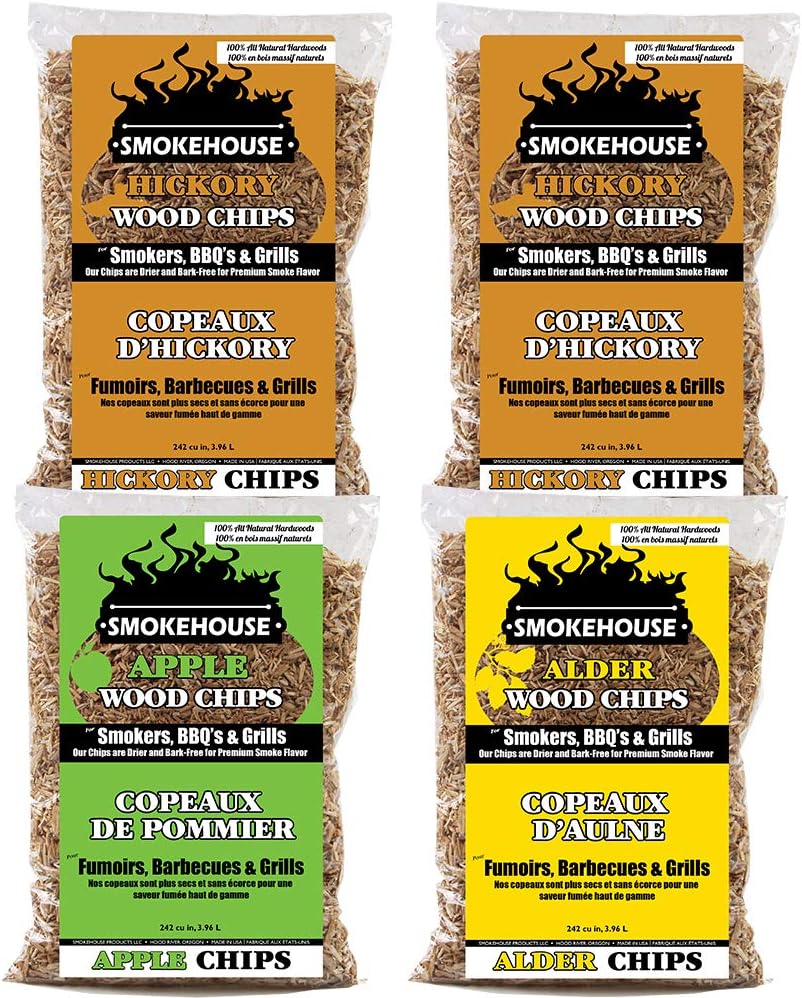
Smokehouse Products All Natural Wood Chips — 4 Flavor Sampler
Alder, apple, cherry, and hickory in perfectly sized portions. Consistently dry, kiln-quality chips. Excellent for both gas grill smoker boxes and electric smokers.
🛒 Check Price on AmazonFrequently Asked Questions About BBQ Wood Chips
How many wood chips should I use per cook?
For a gas grill session of 1–2 hours, start with about 1 cup (approximately 2 handfuls) of dry chips in your smoker box and add another half-cup at the 45-minute mark. For charcoal setups, use 2–3 handfuls directly on live coals, repeating every 45–60 minutes during the active smoke phase. For electric smokers, fill the chip tray completely and reload when smoke diminishes. The golden rule: start conservative — you can always add more smoke, but you can never take it away from already-cooked food.
Can I mix different wood chip flavors together?
Absolutely — and many experienced pitmasters consider blending essential to achieving complex flavor. The most successful blends use a dominant wood (60–70%) for the base flavor and a secondary wood (30–40%) for color, sweetness, or complexity. Some examples: hickory + apple (bold smoke with sweetness), pecan + cherry (nutty richness with mahogany color), oak + cherry (Central Texas base with color boost). Avoid blending two very strong woods like hickory and mesquite — they tend to clash and overwhelm rather than complement each other.
Are there wood chips I should absolutely never use?
Yes. Never use wood from the following for food smoking: any softwood (pine, cedar, spruce, fir, Douglas fir, hemlock) — their resins produce toxic, carcinogenic compounds; any treated, painted, or chemically preserved wood; wood from elderberry or black locust trees (toxic); oleander (extremely toxic); and any wood you cannot positively identify by species. When in doubt about a wood’s identity, don’t use it. Stick to commercially sold, clearly labeled hardwood chips from reputable brands. Also see our article on why pine wood is dangerous for smoking for a full explanation of the chemistry involved.
Do wood chips work on a propane grill?
Yes, wood chips work effectively on propane grills when used correctly. The key is using a dedicated smoker box or a foil pouch rather than placing chips directly on burners (which can cause damage and clogs). Place the smoker box over one burner set to high until chips begin producing thin blue smoke, then reduce that burner to low or medium. Keep the lid closed and add fresh chips every 45 minutes. The results are genuinely good — not quite the same depth as a dedicated charcoal smoker, but absolutely capable of producing properly smoked food.
What’s the difference between wood chips and wood pellets for smoking?
Wood chips are irregular hardwood fragments used primarily in gas grills (via smoker box), charcoal grills, and electric smokers. Wood pellets are compressed sawdust cylinders designed specifically for pellet grill feed systems. Chips burn less uniformly and produce faster, shorter bursts of smoke. Pellets burn more consistently and are engineered for specific temperature ranges. You can use pellets in a smoke tube on any cooker for supplemental smoke, but you shouldn’t use standard wood chips in a pellet grill’s hopper — they won’t feed properly through the auger system.
How long do wood chips last in storage?
Properly stored, kiln-dried wood chips maintain excellent quality for 2–3 years. The enemies of chip quality are moisture, humidity, temperature fluctuations, and exposure to odors. Store in airtight containers or original sealed bags in a cool, dry location away from chemicals and fuels. Check chips before each use — good chips are firm, tan to brown in color, and have a pleasant wood smell. Discard any chips that show mold, feel damp, smell musty or off, or have turned noticeably darker than when purchased.
Can wood chips catch fire and ruin my cook?
Yes, this can happen — especially on high-heat gas grills or when chips are placed too close to direct flames. If chips flash-combust instead of smoldering, they produce acrid black smoke rather than useful flavorful smoke. Prevention strategies: use dry chips (paradoxically, very dry chips in a proper smoker box are less prone to flare-up than you’d think); ensure your smoker box is stainless steel or cast iron to diffuse heat properly; use a 2-zone setup on charcoal grills and place chips only over coals on the indirect side; close grill lid to limit oxygen supply. If chips catch fire on a gas grill, briefly reduce burner to minimum until flames die down.
Which wood chip is best for a beginner?
Apple wood is the near-universal recommendation for BBQ beginners. It’s mild enough that over-smoking is hard to achieve, pairs well with almost every protein including chicken, pork, fish, and vegetables, produces a beautiful golden bark color, and is widely available in quality form from major brands. After you’re comfortable with apple, add cherry for a color boost or pecan for more complexity. Hickory and mesquite are best appreciated after you have a solid sense of smoke intensity management — they’re unforgiving when used in excess.
How do I stop my wood chips from smoldering instead of smoking properly?
Proper smoldering (pyrolysis producing thin blue smoke) requires the chips to reach around 400–500°F without being smothered in ash or starved of oxygen. On a charcoal grill: make sure coals are at peak heat (ashed over gray) before adding chips, and ensure vents are open enough for airflow. On a gas grill: your smoker box may be too thick — cast iron boxes heat faster than thin stainless ones. On an electric smoker: make sure the heating element is fully functional and chips are in contact with the element, not piled loosely above it.
Is there a difference between BBQ wood chips and cooking wood chips?
These terms are often used interchangeably, but there can be subtle differences depending on the brand. “BBQ wood chips” typically refers to chips for outdoor grills and smokers — slightly larger, meant for higher-heat applications. “Cooking wood chips” sometimes refers to smaller chips designed for indoor stovetop smokers, stove-top smoking pans, or compact smoking appliances. Always check the intended use on the packaging and select appropriately sized chips for your application. Using indoor smoking chips on a high-heat charcoal setup will result in chips burning too fast; using oversized BBQ chips in a small stovetop smoker may not produce good smoke contact.
Conclusion: Your Wood Smoke Journey Starts Here
BBQ wood chips are the single most impactful and underappreciated variable in outdoor cooking. They transform grilled food into something with genuine depth, history, and regional character. The difference between good BBQ and unforgettable BBQ is often a small pile of well-chosen, dry hardwood chips smoldering at exactly the right temperature, releasing exactly the right amount of thin blue smoke into a perfectly managed cooking environment.
Start with apple wood if you’re new — it’s forgiving, universally appealing, and pairs with almost anything. Experiment with cherry for color and pecan for complexity. When you’re ready to commit to a regional style, post oak for Texas brisket or hickory for Southern ribs will take you deep into the tradition. Learn to blend, learn to read smoke color, and never over-smoke your food.
The pairing charts, brand comparisons, and technique guides in this article give you everything you need to go from confused chip buyer to confident smoke artist. Now it’s time to light the coals, choose your wood, and get cooking.
Explore our related resources to keep leveling up: the complete beginner’s smoker guide, our smoked pulled pork recipe, and the 3-2-1 ribs method guide are great next steps.
🔥 Explore All BBQ Guides →
BBQR’s Delight Smoking Pellets — 6-Flavor Variety Pack
Works in smoke tubes on any grill type, including pellet grills that need extra smoke. Apple, cherry, hickory, mesquite, pecan, and Jack Daniel’s oak. A full flavor lab in one box.
🛒 Check Price on Amazon