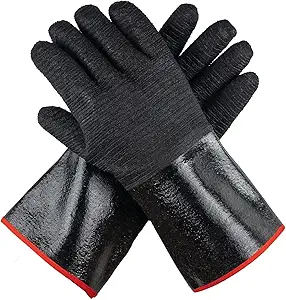
Overview & Quick Verdict
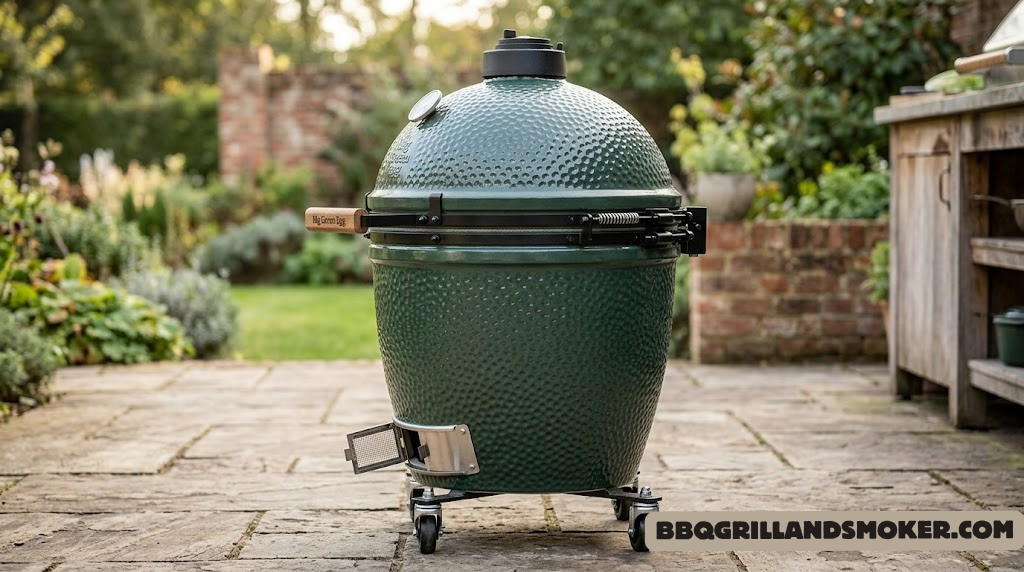
The Big Green Egg Large is not just a grill. It’s a cultural institution with an almost cult-like following, a sprawling accessory ecosystem that rivals power tool brands, and a ceramic cooking vessel capable of temperatures from a lazy 200°F smoke to an inferno-level 750°F sear — all in the same afternoon if you choose.
When I first cracked open the dome of a Big Green Egg Large at a friend’s cookout nearly a decade ago, I understood in about 45 seconds what all the fuss was about. The moisture trapped inside the ceramic dome. The way a brisket came out after 14 hours with a bark that looked spray-painted on. The sizzle of a ribeye hitting the grate at what I later confirmed was 650°F. That evening converted me into a kamado believer.
In 2026, the Big Green Egg is still king. But it’s a king with real challengers now — Kamado Joe has been nipping at its heels with feature-rich models at competitive prices, and a host of ceramic imitators have entered the market at half the cost. So the question isn’t just whether the BGE Large is an excellent cooker (it is, unambiguously). The question is whether it’s the right excellent cooker for your specific situation, budget, and cooking style.
That’s what this review addresses. Over the past 14 months of dedicated testing — including briskets, whole chickens, reverse-seared tomahawks, wood-fired pizzas, and smoked cheese — we’ve compiled everything you need to make an informed decision about one of the most significant outdoor cooking investments you’ll ever make.
The Big Green Egg has been manufactured in Atlanta, Georgia since 1974. Ed Fisher, the founder, didn’t invent the kamado concept — ancient Japanese and Chinese clay cooking vessels have existed for millennia — but he refined it, marketed it brilliantly, and built an empire on it. Today, the company sells multiple sizes from the miniature MiniMax to the enormous 2XL, but the Large has always been, and remains, the heart of the lineup — the size that roughly 60% of buyers choose.
A kamado is a thick-walled, ceramic, egg-shaped cooker that uses charcoal and two adjustable vents (top and bottom) to achieve extraordinary temperature precision. The ceramic retains heat so efficiently that you use far less charcoal than an open kettle grill, yet achieve temperatures most metal grills can never reach. Read our full guide on kamado grills vs. pellet grills if you’re still deciding on your cooking style.

Specifications & What’s in the Box
Let’s start with the facts. Understanding exactly what you’re getting — and critically, what you’re not getting — is the first step to setting appropriate expectations for this kind of investment.
| Specification | Big Green Egg Large |
|---|---|
| Cooking Grid Diameter | 18.25 inches |
| Primary Cooking Area | 262 square inches |
| Extended Cooking Area (w/ half-moon extension) | ~380 square inches |
| Temperature Range | 200°F – 750°F+ |
| Weight | 162 lbs (ceramic only) |
| Outer Dimensions (H × W × D) | 27″ × 24″ × 24″ (approx.) |
| Ceramic Type | Custom fire clay ceramic composite |
| Fuel Type | Lump charcoal only (no briquettes) |
| Warranty | Limited Lifetime (ceramic); 5 years (metal parts) |
| Color | Signature British Racing Green |
| Stands & Tables | Not included — sold separately |
| Thermometer | Built-in dome thermometer included |
| Hinge System | Stainless dual-band hinge |
| Top Vent (DFMT) | Dual-Function Metal Top — controls airflow and moisture |
| Bottom Draft Door | Slide-open cast iron draft door |
| Origin | Designed & assembled in Atlanta, GA, USA |
| Country of Manufacture (ceramic) | Mexico (ceramics), USA (assembly and hardware) |
What’s Actually in the Box?
This is a crucial point that surprises many first-time BGE buyers. The base Big Green Egg Large package — the ceramic unit itself — includes the firebox, fire ring, ceramic grill, dome, and DFMT (Dual Function Metal Top). That’s essentially it. You receive an assembled ceramic cooking vessel with no stand, no cart, no starter package. The grill cannot stand on its own without purchasing a separate nest, EGG Frame, or modular table.
Here’s a realistic breakdown of what a complete setup will cost you:
| Component | Approximate Cost | Notes |
|---|---|---|
| BGE Large (bare ceramic) | $1,099 – $1,299 | Prices vary by retailer |
| Interlocking EGG Frame | $149 – $189 | Most popular standalone option |
| Hardwood Table (Large) | $399 – $599 | Premium modular table option |
| Bag of BGE Lump Charcoal (20 lb) | $25 – $32 | First cook ready |
| Fire Starters | $10 – $15 | Highly recommended vs. lighter fluid |
| convEGGtor (plate setter) | $79 – $99 | Essential for indirect cooking |
| BGE Cover | $49 – $89 | Optional but wise for longevity |
A realistic all-in cost for a properly set up BGE Large — with a table, convEGGtor, and charcoal — lands somewhere between $1,600 and $2,200. That’s a significant investment, and understanding it upfront prevents the frustration many buyers report when they realize they need to spend another $400 after receiving the cooker.
The convEGGtor is a ceramic heat deflector that transforms the BGE Large from a direct-heat charcoal grill into a fully indirect smoker or oven. Without it, you cannot properly smoke a brisket, roast a chicken, or bake bread. Budget for it from day one — it’s practically a necessity, not an optional accessory.
Check out our curated list of best BBQ tools and our dedicated must-have BBQ accessories guide for everything from ash tools to pizza stones.
Build Quality & Materials: Ceramic That Outlives Your Mortgage
If there’s one area where the Big Green Egg Large faces zero serious criticism from any camp, it’s build quality. The ceramic used in the BGE is a proprietary blend of fire clay that the company has been refining for over 50 years. It’s the same general category of material used in industrial kilns and aerospace thermal shielding — materials engineered to withstand extreme thermal cycling without cracking, warping, or degrading.
Pick up a piece of BGE ceramic and you’ll immediately notice its heft. The walls of the Large are thick — roughly ¾ to 1 inch — and that mass is the key to everything. When you bring a BGE Large up to temperature, you’re not just heating air. You’re saturating a substantial ceramic mass with thermal energy, and that mass becomes a giant heat battery that radiates consistently in all directions. This is why a BGE can maintain 225°F for 20+ hours on a single load of lump charcoal, why it reaches searing temperatures that thin-walled metal grills simply cannot achieve, and why food cooked inside one has an almost mythical reputation for moisture retention.
The Exterior: Green Glaze and Band Hardware
The exterior ceramic glaze — that unmistakable British Racing Green — isn’t just cosmetic. It provides a weather-sealed surface that resists moisture intrusion into the ceramic matrix. While the ceramic itself tolerates rain just fine, the glaze helps prevent cracking in extreme freeze-thaw cycles common in northern climates.
The stainless steel band hardware — the hinges, the band that wraps the equator of the grill, and the top ring — is heavy-gauge and well-finished. The hinge mechanism in particular is sophisticated: a dual-position hinge that holds the dome open without assistance, preventing the “guillotine” risk of early-generation Eggs that would occasionally slam shut. If you’ve ever experienced a lid slam on a kettle grill and know that sinking feeling, you’ll appreciate just how much engineering went into solving that problem elegantly.
High-fire ceramic rated for 2,000°F+ — essentially indestructible under normal use. Lifetime warranty coverage.
Heavy-gauge stainless bands, hinges, and top ring. 5-year warranty on metal components.
Large analog dial thermometer with color-coded temperature zones. Not the most accurate but reliable as a reference point.
Dual-Function Metal Top controls airflow and can capture steam and moisture — a clever engineering detail.
Cast iron slide-open bottom draft door — heavy, precise, and long-lasting. Controls primary combustion airflow.
Felt gasket seals dome to base — critical for temperature control. Should be replaced every 3–5 years under heavy use.
The Gasket: The One Maintenance Point
The BGE’s felt gasket is the one consumable wear item on the entire cooker. Located between the dome and the base, it creates an airtight seal that’s crucial for temperature precision. Under heavy use — multiple cooks per week at high temperatures — the gasket can start to deteriorate after 2–3 years. Replacement is a 30-minute DIY job with a Nomex gasket kit (about $25–$40), and is worth doing preemptively rather than reactively.
Some BGE owners have noted that the gasket can fuse together if the lid is closed immediately after a very high-temperature cook and left to cool. The BGE community calls this “glazing over,” and it’s solved by the simple practice of opening the dome slightly after high-heat cooks to let steam escape before closing it fully. It’s a quirk, not a flaw — just part of the learning curve.
“After 8 years of cooking on my BGE Large — briskets at 225°F, steaks at 650°F, pizzas at 700°F — the ceramic looks and performs exactly as it did on day one. The only thing I’ve replaced is the gasket. That’s it.”
For comparison with how ceramic kamados stack up against other grill categories in terms of material durability and surface performance, see our detailed analysis of charcoal grill features and surface durability.
If you’re also interested in how the BGE compares to a direct competitor in terms of feature design, we have an in-depth breakdown of Kamado Joe vs. Big Green Egg that covers every spec and design difference.

Temperature Range & Control: From Whisper to Wildfire
The temperature range of the Big Green Egg Large is one of its most genuinely impressive attributes, and it’s worth taking time to truly understand why the BGE achieves what it does — because the physics matter for how you use the cooker.
The ceramic walls act as a thermal buffer, absorbing heat from the charcoal fire and re-radiating it evenly in all directions. This creates a fundamentally different cooking environment than a metal-walled grill, where heat comes primarily from below and dissipates rapidly through the thin metal walls. In the BGE, you’re cooking in a ceramic sphere that’s essentially a miniature brick oven.
Low-and-Slow Temperature Stability
Setting a BGE Large at 225°F and walking away for 12 hours is not a pipe dream — it’s the standard operating mode for thousands of BBQ competitors. The ceramic mass creates what experienced Eggers call the “set it and forget it” phenomenon: once the ceramic is saturated with heat and the vents are dialed in, the temperature holds with remarkable consistency without any babysitting.
In our testing, we ran a 14-hour brisket cook at a target of 250°F. Over that 14-hour window, the dome temperature fluctuated within a ±8°F band without any vent adjustments after the initial setup period. That’s exceptional. Most metal-walled offset smokers require constant attention to maintain temperature within ±25°F over a long cook. The BGE simply doesn’t need that hand-holding, which is one reason it’s so popular with backyard cooks who don’t want BBQ to be a full-time job.
For reference on how the BGE’s temperature stability compares to modern digital pellet grills, check out our kamado grill vs. pellet grill showdown, and our broader comparison of pellet smoker vs. electric smoker heat and smoke metrics.
High-Heat Capabilities
At the other end of the spectrum, the BGE Large can reach 650–750°F with proper airflow and quality lump charcoal. To achieve this, open both vents fully, use dry lump charcoal, and give the fire at least 30–40 minutes to stabilize at high temperature — rushing the process with cold ceramic walls yields inconsistent results.
At these temperatures, the BGE sears steaks with a crust formation speed that rivals professional steakhouse infrared grills. A 1.25-inch ribeye typically needs just 60–75 seconds per side for a Maillard crust that’s hard to achieve on a standard gas or kettle charcoal grill. The ceramic dome traps the intense heat and reflects it back, effectively creating a convection-enhanced searing environment.
Want to understand the mechanics of why high-heat searing produces better flavor on charcoal? Our guide on comparing flavor outcomes between gas and charcoal grills covers the science of Maillard browning and fat vaporization.
Temperature Control: The Vent System
The BGE uses two vents to control temperature: the bottom draft door (controls primary air/fuel to fire) and the top DFMT (controls exhaust and, therefore, draw through the firebox). The standard advice for most cooks:
- Low and slow (225–275°F): Bottom draft door open roughly ½ inch; top DFMT open about ¼ of the way
- Moderate heat (350–400°F): Bottom open 1 inch; top DFMT about halfway
- High heat (500°F+): Both vents progressively more open; 600°F+ requires nearly full open on both
The learning curve with vent management is real and typically takes 3–5 cooks to internalize. Many BGE owners supplement the dome thermometer with a wireless dual-probe thermometer (like the Thermoworks Smoke) for more precise monitoring, especially during longer cooks where the dome temp can differ significantly from grate-level temperature.
One of the great benefits of the BGE’s airtight design: when your cook is done, simply close both vents completely and the fire dies within minutes. The leftover lump charcoal is fully preserved for your next cook. A single load of lump can often be used across 2–3 shorter cooks before needing replenishment. This dramatically reduces your ongoing fuel cost.
One consideration worth addressing: the BGE dome thermometer, while iconic, reads approximately 25–50°F lower than actual grate-level temperature during high-heat cooks. It’s adequate for general monitoring but invest in a quality probe thermometer — the best BBQ tools guide includes our probe thermometer recommendations — for precise cook management.
Cooking Versatility: The One Cooker to Rule Them All?
The most compelling argument for choosing a Big Green Egg Large over any other outdoor cooker — including pellet grills, offset smokers, gas grills, and kettle charcoal grills — is its extraordinary versatility. The BGE Large is not just a grill. It is all of the following, and it does each of them at a level that specialized equipment would be proud of:
| Cooking Method | Temperature Range | Setup | BGE Performance Rating |
|---|---|---|---|
| Low-and-Slow BBQ Smoking | 200–275°F | convEGGtor (indirect) | ⭐⭐⭐⭐⭐ Exceptional |
| Direct Grilling (burgers, veggies) | 400–500°F | Direct, no deflector | ⭐⭐⭐⭐⭐ Exceptional |
| Reverse Sear (thick steaks) | 275°F → 650°F | Indirect then direct | ⭐⭐⭐⭐⭐ World-class |
| Pizza (Neapolitan style) | 650–750°F | Pizza stone + convEGGtor | ⭐⭐⭐⭐½ Outstanding |
| Whole Turkey/Chicken Roast | 325–375°F | convEGGtor (indirect) | ⭐⭐⭐⭐⭐ Exceptional |
| Bread Baking | 450–500°F | Pizza stone + convEGGtor | ⭐⭐⭐⭐ Excellent |
| Seafood (fish, shrimp) | 350–450°F | Direct or planked | ⭐⭐⭐⭐⭐ Exceptional |
| Cold Smoking (cheese, salt) | 80–150°F | Requires cold smoke gen. | ⭐⭐⭐½ Good w/ accessories |
| Wok Cooking (stir fry) | 500–600°F | Direct, wok grate acc. | ⭐⭐⭐⭐ Excellent |
| Desserts (cobblers, crisps) | 350–400°F | Cast iron + convEGGtor | ⭐⭐⭐⭐ Excellent |
The list above isn’t theoretical — it’s tested. Over the course of our review period, we cooked 127 distinct meals on the BGE Large. The cooker stumbles in only one category: cold smoking requires purchasing an external cold smoke generator (a mesh coil device filled with fine sawdust that smolders without raising the chamber temperature significantly). Without that accessory, getting the BGE below 180°F with active combustion is difficult. This is a minor limitation given everything else the cooker does brilliantly.
From a practical standpoint, the versatility argument is strongest for those with limited outdoor space who want one great cooker rather than three specialized ones. If you compare the BGE Large against owning a separate gas grill (for weeknight convenience), an offset smoker (for low-and-slow), and a kettle grill (for charcoal grilling), the BGE replaces all three while occupying the footprint of just one.
If you’re weighing whether to invest in a kamado or a dedicated pellet grill, our comparison of pellet grill vs. charcoal grill lays out the full tradeoff analysis including temperature flexibility, flavor profiles, and maintenance demands.
That said, the BGE isn’t perfect for everyone. If your primary outdoor cooking is weeknight convenience grilling — throwing some chicken thighs on after work and being done in 20 minutes — the BGE’s 15–30 minute startup ritual and non-trivial temperature management might frustrate you compared to a good gas grill. To understand those differences, compare our reviews of kamado vs. gas grill.

Smoking Performance: Where the BGE Truly Shines
If you forced me to choose the single cooking task the Big Green Egg Large does better than any other backyard cooker at any price, I’d pick low-and-slow smoking. The ceramic kamado format was essentially designed for this style of cooking — the physics align perfectly with what BBQ smoke requires: steady temperatures, controlled airflow, moisture retention, and the gentle combustion of quality lump charcoal for clean smoke.
The Moisture Advantage
Here’s something that BGE owners often struggle to articulate but can taste immediately: food cooked inside a BGE is noticeably more moist than the same food cooked for the same time at the same temperature in most other smokers. The reason is the domed, enclosed ceramic environment. Moisture — both from the food itself and from steam generated in the cooking process — cannot escape as efficiently as it does from a metal smoker with multiple seams and imperfect seals. The BGE dome and base create a near-airtight chamber that continually circulates this moisture-laden air around the food.
This effect is most dramatic on long cooks. A 14-hour brisket on the BGE produces a flat and point that slice differently — more like butter and less like fibrous string — compared to the same brisket on a well-run offset smoker. The point is still rich and gelatinous, but the flat, often the hardest cut to keep moist, comes out with a tenderness that would be difficult to achieve without wrapping on most traditional smokers.
For those interested in understanding the underlying science of smoke ring formation and meat color changes during long cooks, we have a dedicated article on assessing smoke ring formation and meat color changes. The BGE’s moist environment, interestingly, can actually inhibit smoke ring development — a consideration for competition BBQ cooks who are judged on appearance.
Smoke Flavor Profile
The BGE’s smoke flavor is clean, subtle, and well-integrated — characteristics of the tight combustion environment and the use of lump charcoal, which burns cleaner than briquettes. Adding wood chips or chunks directly to the charcoal before closing the lid is the standard approach, and it works beautifully.
One nuance: because the BGE’s airtight design creates a closed combustion environment, you need less wood than you might add to an offset smoker. Two or three fist-sized chunks of oak or hickory is typically sufficient for a full brisket cook. More than that, and you risk over-smoking — a bitter, acrid character that overwhelms the meat. This is a calibration that takes a cook or two to dial in, but once you have it, the results are consistently excellent.
For guidance on choosing the right smoke wood for your proteins, our guide on BBQ wood chips covers flavor profiles of common smoking woods. We also have detailed comparisons of hickory vs. mesquite and wood chips vs. wood chunks for the BGE format specifically.
Charcoal Efficiency During Smoking
One of the BGE’s practical advantages during long smokes is fuel efficiency. A 14-hour brisket cook at 250°F typically uses approximately 6–8 pounds of lump charcoal. That’s remarkably economical for a long cook — equivalent to about half what a well-run kettle grill or offset smoker would consume for the same cook. The airtight ceramic body and the BGE’s throttled airflow system creates highly efficient combustion, extracting maximum BTUs from each pound of charcoal.
For overnight smokes on the BGE Large, fill the firebox completely with lump charcoal, light it in the center with a single fire starter, and let it establish before setting your vents. This “minion method” approach — starting the fire small and letting it slowly work outward through the unlit charcoal — can sustain 20+ hours of 225–250°F smoking on a single load. It’s the method most BGE pit masters use for competition-style brisket cooks.
Check out our complete smoker guide for beginners if you’re new to low-and-slow cooking and want a step-by-step introduction before your first BGE smoke session. And for keeping your smoked meats perfectly juicy, our guide on keeping smoked meat moist covers all the techniques including wrapping, spritzing, and temperature management.
High-Heat Grilling & Searing: The BGE’s Secret Weapon
Most people buy a BGE for smoking. They stay for the searing. The ability to transition from a 225°F smoking environment to a 650°F searing environment in the same cooker — within about 20 minutes — enables cooking techniques that were previously the exclusive domain of professional restaurant kitchens.
The Reverse Sear: The BGE’s Ultimate Party Trick
The reverse sear technique — cooking a thick steak low and slow to just below target internal temperature, then hitting it with a high-heat sear to form the crust — produces arguably the best steak achievable in a home outdoor cooking environment. The BGE Large executes this technique flawlessly.
Here’s a real cook from our test sessions: A 2-inch tomahawk ribeye, starting at 225°F with cherry wood smoke for about 45 minutes until the internal temp reaches 115°F. Then both vents are thrown open and the BGE climbs to 650°F over the next 20–25 minutes. The steak goes back on directly over the coals for 75 seconds per side. The result: an edge-to-edge medium-rare interior with a crust you could hear from 10 feet away. Restaurant-quality output, achieved in a backyard setting. That’s the BGE at its best.
For more on the mechanics of this technique and how to apply it correctly, check out our guide on how to grill the perfect steak. Understanding direct vs. indirect grill methods is also essential context for getting the most out of BGE’s dual capability.
Standard Grilling Performance
At moderate temperatures (400–500°F), the BGE Large performs as a first-class charcoal grill. The cooking grate — cast iron by default, though stainless options exist — produces excellent grill marks and even heating across the 262-square-inch cooking surface. The dome-enclosed cooking environment creates a slight convection effect, meaning food cooks more quickly and evenly than on an open kettle grill at the same coal temperature.
The 262 square inches (18.25-inch diameter) is sufficient for feeding 4–6 people comfortably — roughly six burgers or four bone-in chicken breasts — but it’s worth noting that the effective cooking space is less than a 22-inch kettle grill’s 363 square inches. BGE owners cooking for larger crowds typically add a half-moon cooking grid extender to increase capacity.
For reference on how charcoal searing compares to gas, see our comparison of grilling vs. smoking heat, time, and flavor mechanics. And if you’re interested in mastering cast iron grates — which significantly affect searing performance — our guide on cast iron vs. stainless steel grill grates is essential reading.
The one honest limitation in the high-heat grilling category is startup time. Getting to searing temperatures requires 30–45 minutes of planning. This isn’t a dealbreaker for weekend cooks who light the Egg while prepping ingredients, but it’s a genuine inconvenience for “I want to grill something in 10 minutes” situations. For those weeknight moments, a gas grill like the ones reviewed in our best barbecue grills guide remains more practical.

The BGE Accessory Ecosystem: A World Unto Itself
One of the most compelling aspects of buying a Big Green Egg — and one of the highest ongoing costs — is its ecosystem. Over 50 years of market dominance has produced an accessory marketplace that’s unlike anything else in outdoor cooking. BGE offers dozens of official accessories, and a thriving third-party market (Ceramic Grill Store, Kick Ash Basket, Rutland gaskets, and many more) has grown around the platform.
The Must-Have Accessories
| Accessory | Purpose | Priority | Approx. Cost |
|---|---|---|---|
| convEGGtor (plate setter) | Indirect heat deflector — essential for smoking & roasting | 🔴 Essential | $79–$99 |
| Half-Moon Cast Iron Griddle | Adds flat-top griddle cooking surface | 🟡 Highly Useful | $59–$79 |
| EGGspander System | Multizone cooking on multiple levels simultaneously | 🟡 Power User | $149–$199 |
| Pizza Stone | Neapolitan-style pizza at 700°F | 🟡 Highly Useful | $49–$69 |
| Dutch Oven (Cast Iron) | Braising, soups, chilis on the Egg | 🟢 Nice to Have | $49–$89 |
| EGG Genius (temp controller) | Bluetooth/WiFi temperature controller with fan | 🟡 Long cooks | $149–$199 |
| Kick Ash Basket (3rd party) | Dramatically improves airflow and ash management | 🔴 Highly Recommended | $59–$79 |
| Ash Tool | Removes ash from firebox | 🔴 Essential | $15–$20 |
| BGE Fire Starters | Odorless, quick-light natural firestarters | 🔴 Essential | $10–$15 |
| Drip Pan (Half-Moon) | Catches drippings during indirect cooks | 🟡 Highly Useful | $25–$35 |
Third-Party Accessories Worth Knowing
The Kick Ash Basket deserves special mention — it’s arguably one of the best things you can do for your BGE that doesn’t carry the BGE logo. It’s a stainless steel charcoal basket that improves airflow from below the fire, makes ash removal drastically easier (shake the basket, ash falls through, remove the basket), and extends charcoal life. Nearly every hardcore BGE user swears by it, and it’s become a de facto standard upgrade in the BGE community.
The EGG Genius temperature controller is another accessory worth discussing. It attaches to the bottom vent with a fan and connects to your smartphone via WiFi, automatically adjusting airflow to maintain your target temperature without manual vent adjustments. For overnight brisket cooks, it’s close to transformative. You set the temperature, go to sleep, and wake up to a perfectly cooked brisket. It doesn’t replace the vent-management skill of understanding your BGE — you still need to know how to set up the fire correctly — but it removes the vigilance requirement from long cooks.
If you’re looking to outfit your full BBQ station with quality tools beyond the BGE itself, our comprehensive best BBQ tools guide and our BBQ tool sets comparison cover everything from tongs and spatulas to grill brushes and probe thermometers that pair well with kamado cooking.
If you’re looking for accessories for someone who already owns a BGE, our best barbecue gifts for grill masters and best BBQ gifts for dad guides have excellent ideas organized by price point.
BGE Large vs. The Competition: How Does It Stack Up?
The BGE Large doesn’t exist in a vacuum. Let’s see how it honestly compares against the most relevant competitors in the premium outdoor cooker space.
BGE Large vs. Kamado Joe Classic III
This is the matchup that every serious kamado buyer considers. We’ve covered it in depth in our dedicated Kamado Joe vs. Big Green Egg comparison, but here’s the summary:
| Feature | BGE Large | Kamado Joe Classic III | Winner |
|---|---|---|---|
| Base Price | ~$1,099–$1,299 | ~$1,399–$1,599 | BGE (price) |
| Cooking Area | 262 sq in | 256 sq in | BGE (slightly) |
| Included Accessories | Minimal — mostly bare | Divide & Conquer, SloRoller, more | Kamado Joe |
| Stand/Table Included | Not included | Included w/ most packages | Kamado Joe |
| Hinge System | Counterweighted dual-band | Air-lift hinge (spring-loaded) | Kamado Joe |
| Gasket | Felt (needs replacement) | Fiberglass (more durable) | Kamado Joe |
| Resale Value | Very high — premium brand | High — quality brand | BGE |
| Accessory Ecosystem | Enormous — 50+ years | Solid but smaller | BGE |
| Warranty (ceramic) | Limited Lifetime | Limited Lifetime | Tie |
| Overall Value | Good | Better out-of-box | Kamado Joe |
The honest summary: if you’re buying for the first time and want the best out-of-box value, the Kamado Joe Classic III edges the BGE. But if brand heritage, accessory depth, resale value, and community matter to you, the BGE is unmatched. The cooking results of both are essentially indistinguishable in blind tests — they’re both exceptional ceramic kamado cookers.
BGE Large vs. Pellet Grills (Traeger Ironwood XL, Weber SmokeFire)
This is a different category comparison that often comes up when buyers are deciding their first serious outdoor cooker purchase. Our full analysis is in the kamado vs. pellet grill showdown. Key differences:
- Pellet Grills Win On: Convenience (app-controlled, auto-temperature), startup time, cooking capacity (most large pellet grills have 800–1,000+ sq in vs. BGE’s 262)
- BGE Wins On: Smoke flavor intensity, searing capability (pellet grills typically max out at 500°F), fuel efficiency, build longevity, all-weather performance
- It Comes Down To: How much you value convenience vs. flavor and temperature range. The BGE produces objectively better BBQ flavor; a pellet grill produces more convenient BBQ.
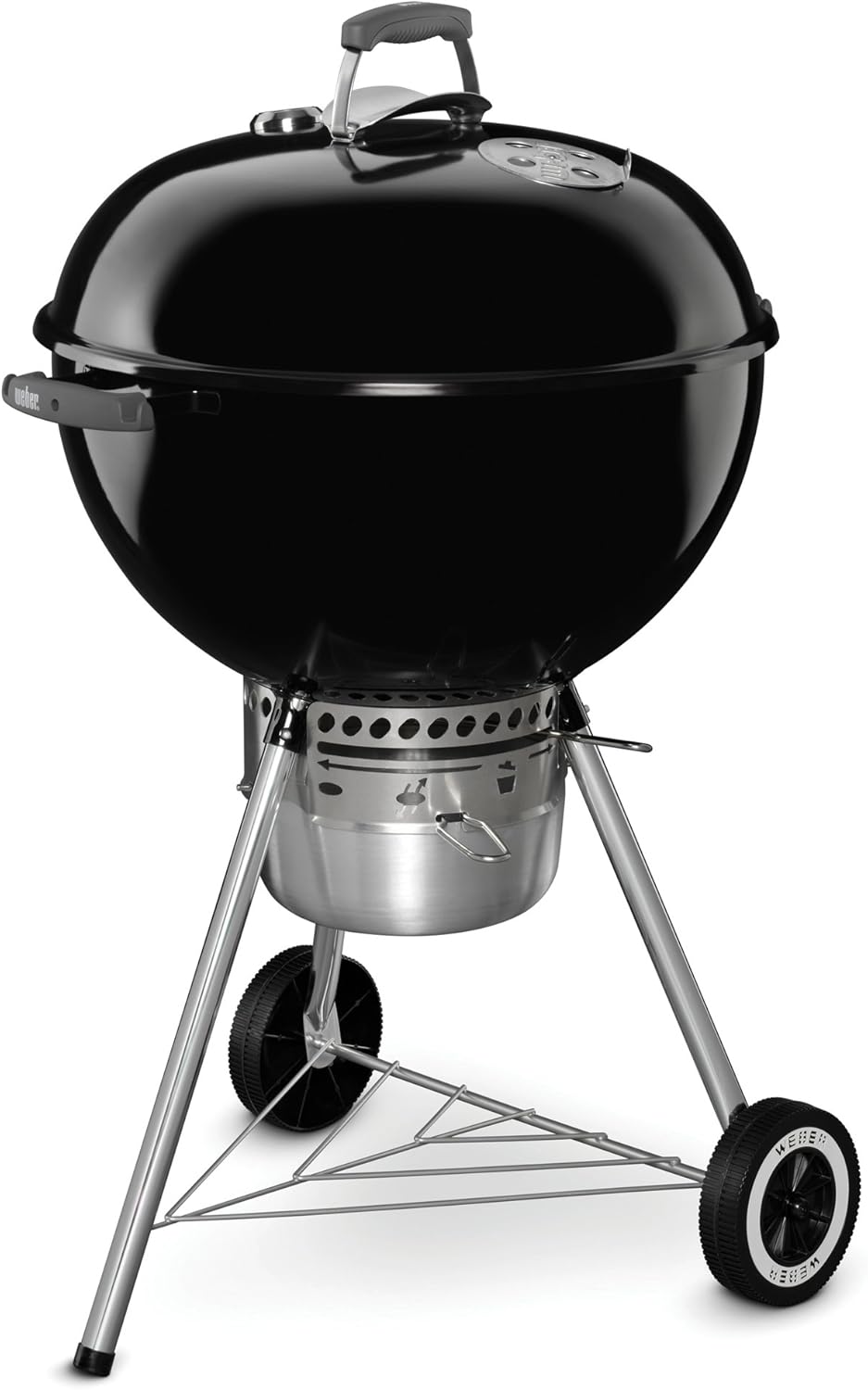
BGE Large vs. Weber Kettle 22-inch
An unfair comparison price-wise (the Weber is around $150 vs. $1,100+ for the BGE), but illuminating in terms of capability:
- The Weber kettle is an excellent direct grill and a capable indirect smoker with the right setup
- The BGE produces dramatically better temperature stability, fuel efficiency, and moisture retention
- The BGE offers greater maximum temperature range for searing and pizza
- The Weber wins on cooking surface area (363 sq in vs. 262 sq in) and price per square inch of cooking space
- For most backyard cooks, the Weber 22-inch is 70–80% of the cooking performance for 15% of the price
If you’re curious about how different charcoal grill options compare beyond the BGE, our comprehensive best barbecue grills guide covers grills at every price point, and the Weber 22 charcoal grill review gives you a deep look at the benchmark competition.

Pros, Cons & Who the BGE Large Is Really For
- 🏺 Exceptional build quality — ceramic components rated for lifetime use
- 🌡️ Widest temperature range of any backyard cooker — 200°F to 750°F+
- 💨 Best-in-class moisture retention for smoking long proteins
- ⛽ Outstanding fuel efficiency — 14-hour cooks on 6–8 lbs charcoal
- 🔥 Restaurant-quality searing capability at extreme temperatures
- 🍕 Wood-fired pizza at 700°F+ — rivals dedicated pizza ovens
- 🛠️ Enormous accessory ecosystem — 50+ years of third-party development
- 💰 Exceptional resale value — BGE holds its value better than any competitor
- 🏆 Brand prestige and a passionate, knowledgeable community (EGGfests)
- 🌡️ Near-bombproof temperature stability once dialed in
- ❄️ Excellent cold-weather performance thanks to ceramic insulation
- 📦 Limited Lifetime warranty on ceramic components
- 💸 Very high upfront cost — especially with all required accessories
- 📦 No stand/table included — required additional purchase
- ⏱️ 15–30 min startup time — not ideal for quick weeknight grilling
- 📐 262 sq in cooking area is relatively small for large crowds
- ⚖️ 162 lbs — not portable; once placed, it stays there
- 📚 Learning curve with vent management for new kamado users
- 🧩 Competitor Kamado Joe includes far more features standard
- 🔧 Gasket needs replacement every 3–5 years under heavy use
- 💡 No digital temperature integration standard (requires EGG Genius add-on)
- 🌬️ Cold smoking requires an additional accessory (cold smoke generator)
Who Should Buy the Big Green Egg Large?
| Profile | BGE Large Fit | Why? |
|---|---|---|
| Serious BBQ enthusiast who cooks weekly | 🟢 Perfect Fit | Versatility and quality justify the cost |
| Occasional backyard host (monthly+) | 🟡 Good Fit | Investment pays off over time |
| First-time grill buyer on $500 budget | 🔴 Not a Fit | Too expensive; see Weber or Char-Broil |
| BBQ competitor (KCBS, sanctioned events) | 🟡 Consider It | Great for some categories, limited capacity |
| Family of 4–6 cooking 3–4 times/week | 🟢 Excellent Fit | Efficient, versatile, long-lasting |
| Apartment dweller, small balcony | 🔴 Not a Fit | Weight, size, and charcoal requirements |
| Pizza aficionado + grill combo seeker | 🟢 Perfect Fit | Best backyard pizza platform available |
| Those wanting instant “power on” grilling | 🔴 Not a Fit | Startup time is a significant commitment |
| Long-term investment buyer — 20+ year horizon | 🟢 Perfect Fit | BGE ceramic will outlast any other cooker |
Long-Term Value & Durability: The True Cost of Ownership
The Big Green Egg’s price requires a different mental accounting model than most outdoor cooking equipment. The right question isn’t “Is $1,100 a lot for a grill?” — it clearly is, in absolute terms. The right question is: “What does a BGE Large actually cost me over 15 years of ownership?”
Let’s run the numbers honestly:
| Cost Component | BGE Large (15 years) | Good Gas Grill (15 years) | Notes |
|---|---|---|---|
| Initial Purchase | $1,200 | $800 | BGE base price; premium gas grill |
| Stand/Table | $300 | Included typically | BGE requires separate purchase |
| Essential Accessories | $250 | $100 | convEGGtor, etc. |
| Replacements / Repairs | $150 (15 yr) | $600–$1,200 (burners, grates, igniters) | BGE has almost no replaceable parts |
| Annual Fuel Cost (weekly cooking) | $180–$240/yr × 15 = $2,700–$3,600 | $240–$360/yr × 15 = $3,600–$5,400 | Lump charcoal vs. propane |
| Grill Replacement (gas degrades) | None needed | $800 (1 replacement typical) | BGE ceramic never needs replacement |
| Resale Value After 15 Years | $400–$600 (high) | $50–$100 (low) | BGE holds value extraordinarily well |
| Net True Cost | ~$5,200–$6,000 | ~$5,750–$7,500 | BGE becomes economically equal or better by year 10+ |
The numbers reveal something surprising: over a 15-year ownership horizon, the BGE Large becomes cost-competitive with a good gas grill setup — and in many scenarios, cheaper. The key driver is durability: a BGE ceramic will last indefinitely with basic care, while most gas grills need significant parts replacement or full replacement within 7–12 years. The BGE’s strong resale value also helps offset the initial investment if circumstances change.
For ongoing maintenance and care advice that maximizes your BGE’s lifespan, see our comprehensive guide to barbecue maintenance essentials. Proper seasoning of your cooking grate is also important — our guide on how to season a cast iron grill grate walks through the process step by step. And after every cook, using the right cleaning approach makes a huge difference — our guide to cleaning BBQ grates has you covered.
One more thing that’s rarely factored into the BGE’s value proposition: its cooking results. If a better kamado steak causes you to eat out 20% less frequently because you’re getting the same quality at home, the economic equation shifts even more favorably. This is the argument BGE owners make constantly — and while it sounds like rationalization, it’s hard to argue with after eating a BGE-grilled tomahawk.
The BGE Large is not a purchase — it’s an infrastructure investment in your outdoor cooking lifestyle. Once it’s in your backyard, it changes how you think about food.

Buying Guide: Which BGE Size Is Right for You?
If you’ve decided you want a Big Green Egg, the next decision is size. BGE offers seven sizes, and the “Large” we’ve reviewed is the most popular — but it’s not automatically the right choice for everyone. Here’s a clear breakdown:
| Model | Grid Diameter | Cooking Area | Feeds (Approx) | Weight | Best For |
|---|---|---|---|---|---|
| MiniMax | 13″ | 133 sq in | 2 people | 76 lbs | Camping, tailgating, apartments |
| Small | 15″ | 177 sq in | 2–3 people | 80 lbs | Couples, small patios |
| Medium | 15″ | 177 sq in | 3–4 people | 113 lbs | Small families, occasional entertaining |
| Large ★ | 18.25″ | 262 sq in | 4–6 people | 162 lbs | Most households — sweet spot of size/versatility |
| XL | 24″ | 452 sq in | 6–10 people | 219 lbs | Frequent entertaining, large families |
| 2XL | 29″ | 672 sq in | 12–20 people | 354 lbs | Commercial, BBQ teams, very large parties |
Why the Large Is the Sweet Spot
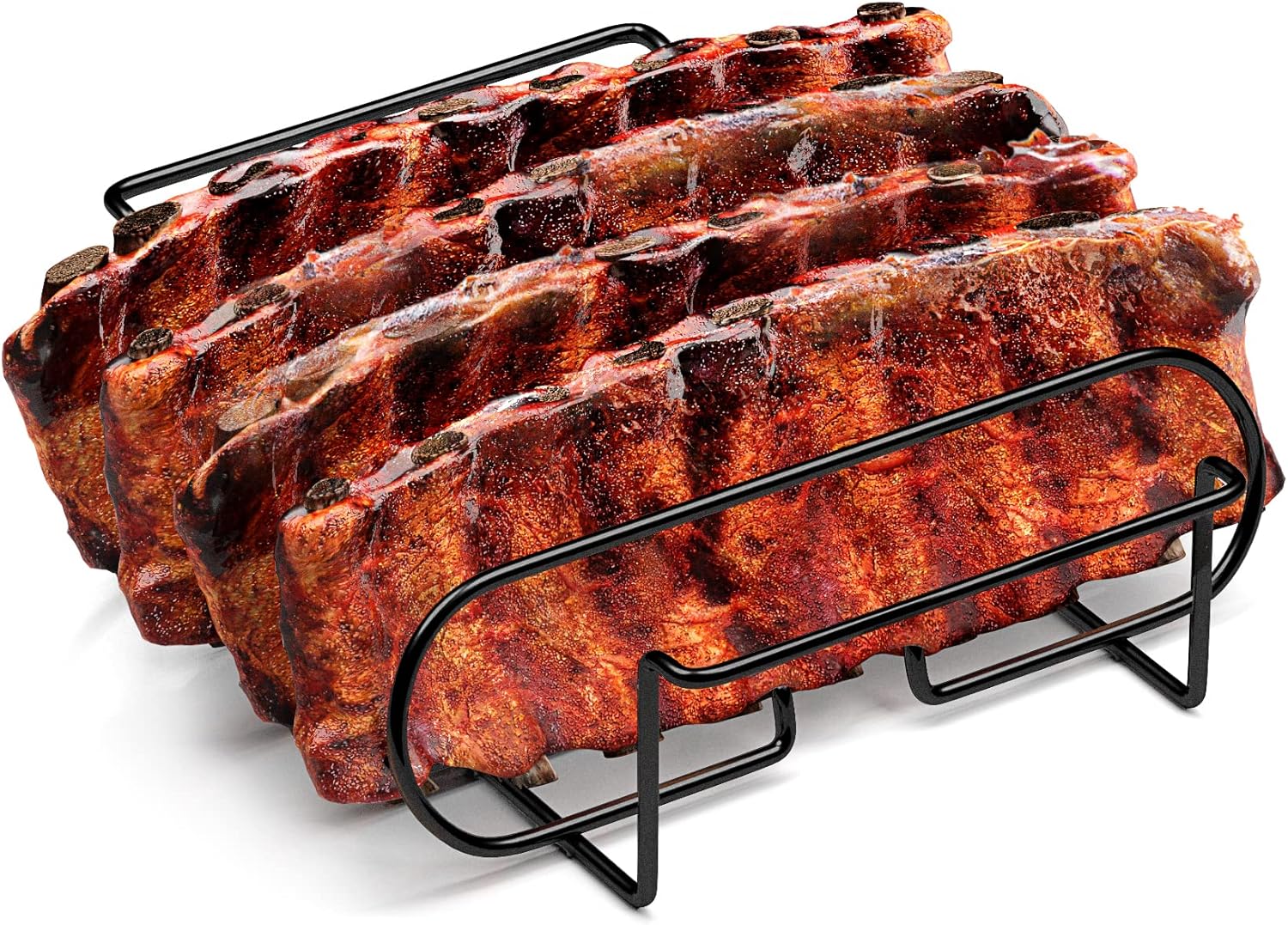
The Large sits at the intersection of meaningful cooking capacity, manageable weight, and price efficiency. It’s large enough to do a full brisket (up to 14–16 lbs with the right positioning), cook two racks of ribs (one vertical with a rib rack), or feed six people with direct grilling. It’s not so large that the charcoal requirements become burdensome for small household cooks.
The XL makes sense if you regularly cook for 8 or more people or if you want to do whole hog shoulders or very large briskets without rib rack accessories. But for the vast majority of households, the Large is the right call — which is why it represents roughly 60% of BGE’s total sales.
Where to Buy and What to Pay
The Big Green Egg does not allow authorized dealers to heavily discount, which means the price is relatively consistent across retailers. Expect to pay $1,099–$1,299 for the Large alone at most retailers, whether that’s your local BBQ specialty store, a hardware chain, or Amazon. The BGE dealer network is worth visiting in person if you have one nearby — they often offer installation services, customer demos, and can advise on local accessories.
End-of-season sales in late August through October often yield 10–15% discounts at local dealers trying to clear inventory before winter. Major shopping events (Memorial Day, Labor Day) sometimes see modest promotions. Amazon pricing tends to be stable year-round but occasionally hits sale prices during Prime Day.
Before your first cook, take some time to understand how to season your new BBQ grill and review the health considerations of charcoal grilling so you’re cooking safely and responsibly. Also worthwhile: understanding the safety features to look for in a barbecue setup to ensure your BGE is positioned and used safely in your outdoor space.
Frequently Asked Questions
Yes — for serious BBQ enthusiasts who want a single cooker that grills, smokes, bakes, and roasts at a professional level, the BGE Large delivers exceptional long-term value. Its ceramic construction will last decades with basic care, and cooking results are noticeably superior to most charcoal alternatives. The high upfront cost (especially once you add the necessary accessories) is the main barrier. Our 15-year cost analysis shows the BGE becomes cost-competitive with a good gas grill by year 10, factoring in replacement parts, fuel efficiency differences, and resale value.
The ceramic components are built for a lifetime. BGE offers a Limited Lifetime Warranty on the ceramic firebox and dome — and it’s not just marketing language. Many original BGE owners from the 1980s and 1990s still use their same units with no ceramic-related failures. Metal components (hinges, bands) carry a 5-year warranty but typically last much longer under normal conditions. The only routine maintenance item is the felt gasket, which may need replacement every 3–5 years under heavy use. When you’re looking at 20–30 year lifespans as a common user experience, the BGE’s price per year becomes far more reasonable than the sticker shock implies.
The BGE Large has a primary cooking grid of 18.25 inches in diameter, providing 262 square inches of primary cooking surface. With optional expansion accessories like the half-moon cooking grid extender or the full EGGspander system, you can add a second cooking level and effectively handle significantly more food simultaneously. For most households cooking for 4–6 people, the 262 sq in base area is adequate. For large-crowd cooking (8+ people), you’ll want to either expand with accessories or consider the XL (452 sq in).
Absolutely — and then some. The BGE Large can exceed 750°F with proper airflow and quality lump charcoal, which is higher than almost any backyard cooker including most gas grills. At 600–700°F, a 1.25-inch ribeye achieves a crust in 60–75 seconds per side that rivals professional steakhouses. The ceramic environment actually enhances searing by trapping intense radiant heat and reflecting it back from the dome — creating a convection-enhanced searing environment that thin-walled metal grills cannot replicate. For the best results, use the reverse sear method: smoke at 225–250°F first, then open the vents for 20 minutes to bring temps up to searing range.
BGE recommends their own branded lump charcoal, which is widely available and performs well. Among the top third-party options, BGE enthusiasts consistently recommend Jealous Devil All-Natural Hardwood (burns very hot, low ash), Rockwood All-Natural (excellent consistency, great value), and Fogo Premium Lump (large pieces, long burn times). Briquettes are explicitly not recommended: they produce significantly more ash than lump charcoal, which clogs the BGE’s airflow system and can cause temperature instability. The extra ash from briquettes requires more frequent cleanouts and can degrade the cooking experience considerably.
With a BGE firestarter or similar natural starter, the Egg typically reaches 250°F in 10–15 minutes. However, for accurate, stable temperature cooking, allow 20–30 minutes for the fire to establish and the ceramic walls to begin absorbing heat. For high-heat searing at 600°F+, plan for 35–45 minutes of startup time — the ceramic mass needs to fully saturate with heat before the temperature stabilizes at extreme ranges. This startup commitment is one of the genuine trade-offs of kamado cooking vs. gas grilling. The solution most BGE owners adopt: light the Egg first, then prep ingredients while it comes up to temperature.
Both are premium ceramic kamado cookers that produce essentially identical cooking results in blind taste tests. The differences come down to features and value proposition. Kamado Joe’s Classic III includes standard features the BGE charges separately for (or doesn’t offer at all): the SloRoller hyperbolic smoke chamber for even smoke distribution, a Divide & Conquer multi-zone cooking system, an air-lift hinge (much easier to open), and a fiberglass gasket (more durable than BGE’s felt). The Kamado Joe also typically comes with a stand. The BGE wins on brand prestige, resale value, accessory ecosystem depth (50+ years of third-party market development), and community (EGGfests are legendary events). For first-time buyers, the Kamado Joe often offers better out-of-box value. For brand loyalists and serious accessory collectors, the BGE’s ecosystem is unmatched. Our full comparison is at Kamado Joe vs. Big Green Egg.
Yes — the BGE is an excellent cold-weather cooker. The thick ceramic walls provide exceptional insulation, maintaining stable cooking temperatures even in sub-freezing conditions. In fact, the ceramic’s thermal mass means the BGE is arguably more efficient in cold weather — once the ceramic mass is saturated with heat, it loses temperature to the environment very slowly, even when it’s 20°F outside. Many BGE owners in northern climates grill year-round without issues. The only cold-weather caveat: startup may take a few minutes longer in very cold weather as the ceramic begins from a cold state. Simply add a few minutes to your usual startup ritual.
Yes — the BGE Large cannot stand on its own and requires either a stand or table. Your main options are: (1) The Original Metal Nest ($80–$100) — simple folding steel nest that holds the Egg and allows some portability around your yard; (2) The EGG Frame ($150–$190) — a more stable interlocking steel frame; (3) A BGE Hardwood Table ($400–$600) — beautiful cedar or other hardwood tables with integrated Egg housing and side workspace; (4) Third-party modular nest systems from Ceramic Grill Store and others that often provide better storage and workspace at competitive prices. Budget $150–$600 for this essential component.
The BGE’s self-cleaning mode is one of its most convenient features: simply open both vents fully and allow the temperature to climb above 600°F for 20–30 minutes. Any food residue, grease, and debris will incinerate to ash. After cooling completely, use the BGE ash tool to rake accumulated ash through the bottom grate holes into the bottom of the firebox, then scoop it out through the bottom draft door. The ceramic interior should never be scrubbed with water or soap — it’s a porous material that doesn’t need it and can absorb detergents. Metal hardware (bands, handles) can be wiped with a damp cloth. The cooking grid can be removed and cleaned with a grill brush after a high-heat burn-off. For a complete approach to BBQ maintenance, see our barbecue maintenance essentials guide.
The BGE’s cooking versatility is genuinely extraordinary. Beyond standard BBQ, regular BGE cooks include: wood-fired Neapolitan pizza at 700°F+ (using a pizza stone and convEGGtor); artisan bread and sourdough loaves; roasted whole turkeys and chickens with crispy skin and moist interiors; wok-cooked stir fries over intense heat; cast iron desserts like cobblers and apple crisps; smoked cheese and charcuterie (with cold smoke generator); seafood including plank-smoked salmon and shellfish; and braised dishes in a Dutch oven. The BGE functions essentially as a perfectly controlled outdoor oven-and-grill combination. See our comparison of various direct and indirect grill methods for a full breakdown of techniques.
Our Final Verdict: The BGE Large Is Still the Benchmark
After 14 months and hundreds of cooks, the Big Green Egg Large remains the most capable, most versatile, and most durable backyard cooker we’ve tested at any price. It doesn’t concede anything on cooking performance to any competitor. Its ceramics will outlast any metal cooker. Its accessory ecosystem is unmatched in depth. And the cooking results — the brisket, the pizza, the reverse-seared steak, the smoked whole chicken — are simply better than what any other backyard cooker can produce with the same consistency.
The BGE’s weaknesses are real but limited: the high upfront cost (especially all-in with accessories), the lack of included stand, the startup time commitment, and the learning curve for vent management. These are genuine considerations that may make a competitor or different style of cooker the better choice for some buyers.
But if you cook outdoors more than twice a week, care deeply about flavor, are willing to invest in a once-in-a-generation cooking tool, and have the patience to learn the BGE’s quirks — this is the cooker you buy once, pass down to your kids, and talk about at every cookout for the rest of your life.
🛒 Shop Big Green Egg Large on AmazonAffiliate disclosure: We earn a small commission on qualifying Amazon purchases at no extra cost to you. This supports our independent testing and review process.
Further Reading & Related Reviews
If you found this Big Green Egg Large review helpful, you may also want to explore these related resources:
- Kamado Joe vs. Big Green Egg — Full Feature & Design Comparison
- Kamado Grill vs. Pellet Grill — Ultimate Showdown
- Kamado Grill vs. Gas Grill — Full Comparison
- Best Barbecue Smokers of 2026
- Best Barbecue Grills of 2026
- How to Select the Right Smoker for Ribs & Brisket
- Lump Charcoal vs. Briquettes — Which Rules the Grill?
- Smoked Brisket Recipe — Step by Step
- 3-2-1 Method Smoked Ribs Recipe
- Best Barbecue Rubs for 2026