Why Grilled Lamb Chops Belong in Your BBQ Rotation
Lamb chops have an unfair reputation for being difficult. They’re not. What they require is understanding a handful of non-negotiable principles: good marinating, a very hot grill, precise temperature management, and — perhaps most critically — knowing when to stop. Overcooking is the only real enemy of a lamb chop, and this guide eliminates that risk entirely.
Unlike brisket or pulled pork that demands hours of patience, grilled lamb chops are a weeknight-viable luxury. From refrigerator to table in under an hour if you’ve marinated ahead (or even with a quick 30-minute marinade in a pinch). The payoff-to-effort ratio is extraordinary.
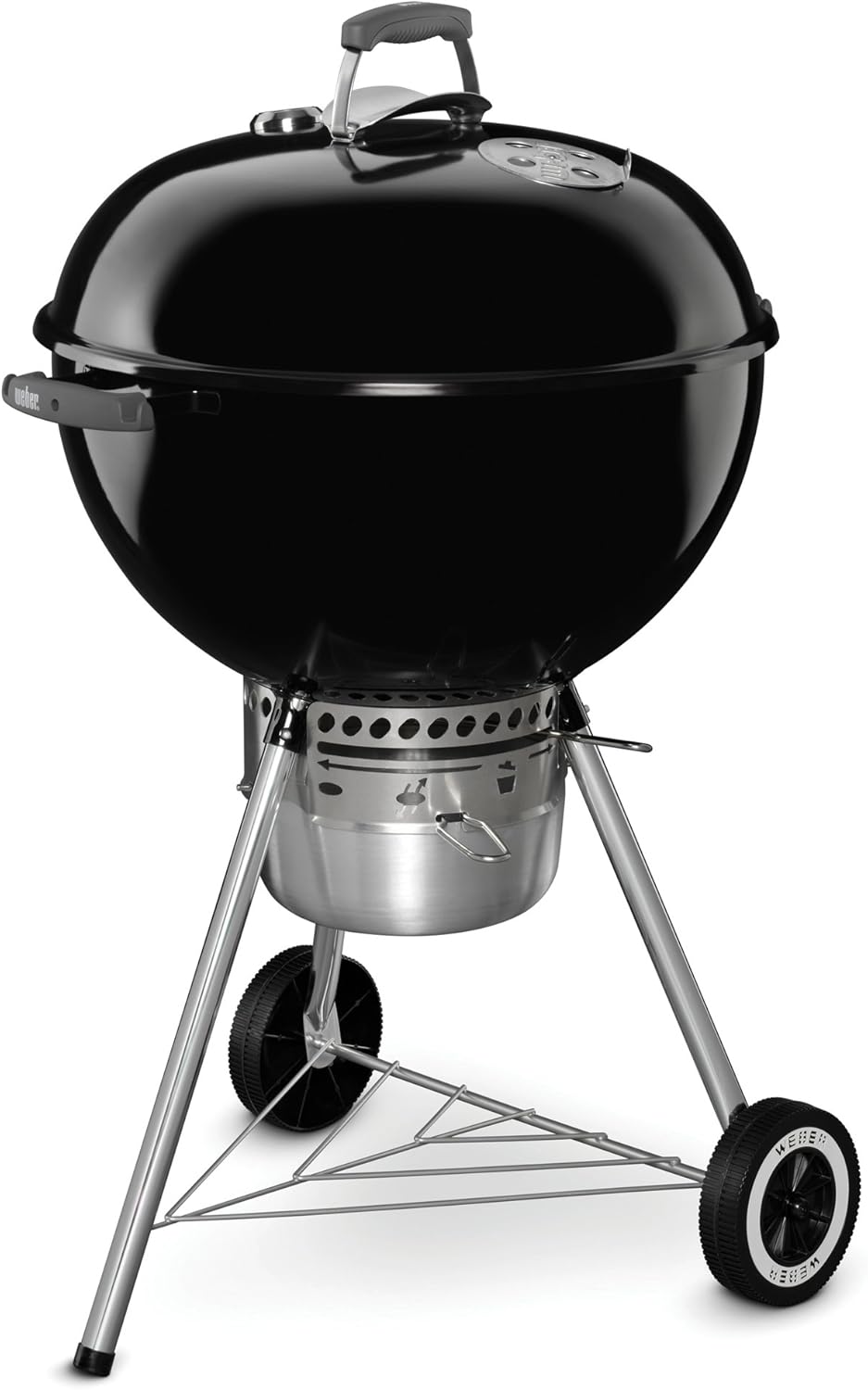
This guide covers everything: the best cuts, the science of the marinade, step-by-step grill technique with visual diagrams, a full internal temperature chart, grill setup for charcoal and gas, flavor variations, side dish pairings, and the ten mistakes that turn a beautiful rack into a disappointment. Whether you’re firing up a top-rated BBQ grill or a simple kettle, the technique translates perfectly.

ThermoPro TP19H Digital Instant-Read Thermometer
Reads in 2 seconds, accurate to ±0.9°F. Foldable probe, waterproof, with a backlit display. The most essential tool for perfect lamb chops every time.
🛒 Check Price on AmazonThe Four Lamb Chop Cuts — Which One Should You Grill?
Not all lamb chops are the same, and the cut you choose shapes everything from cook time to flavor intensity. Here’s a breakdown of the four main cuts you’ll encounter at the butcher or supermarket, with specific guidance on which is best suited for high-heat grilling.
Loin Chops
The “T-bone steak” of lamb. Tender loin on one side, tender tenderloin on the other, separated by the T-shaped bone. Even thickness makes them ideal for precise grilling. Rich but not gamey.
Rib Chops
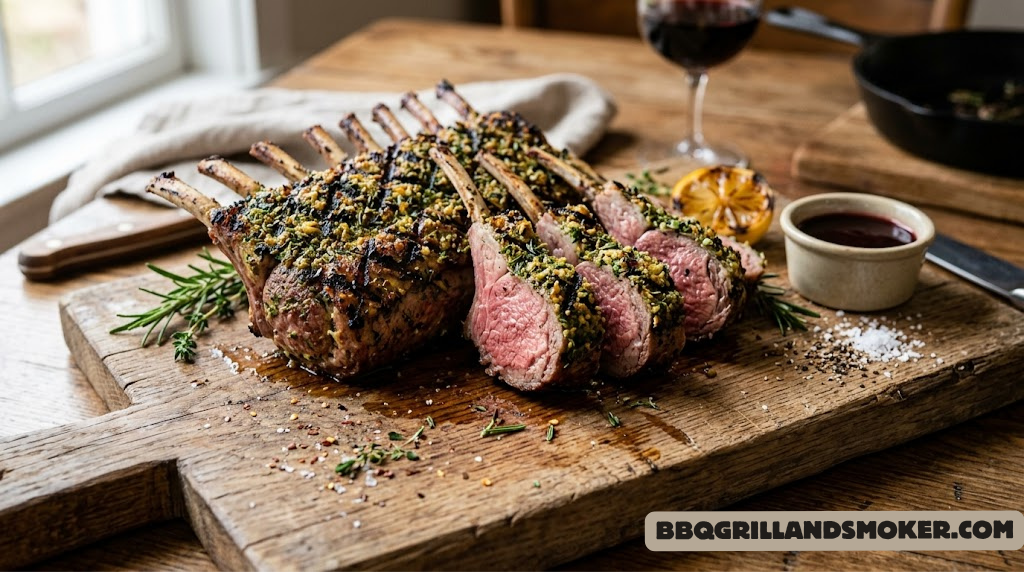
Cut from the rack, these have the long rib bone (often Frenched for elegance) and a tender, relatively lean eye. Slightly less fat than loin chops. The most photogenic cut — perfect for entertaining.
Shoulder Chops
More connective tissue and fat marbling. Much cheaper. Can be excellent on the grill with a longer marinade, but requires more careful cooking to avoid toughness. Best for experienced grillers.
Sirloin Chops
Cut from between the loin and the leg. Good fat content, meaty flavor. Often thicker than rib or loin chops, which means slightly longer cook times. Excellent value for weeknight grilling.
For this recipe, we’re using loin chops and rib chops — they deliver the most consistent results on a hot grill, have beautiful fat distribution, and respond perfectly to a herb marinade. If you’re buying a full rack and cutting it yourself, aim for chops about 1 to 1.5 inches thick. Anything thinner and you’ll overcook the center before the exterior gets any char; anything thicker and you risk burning the outside while the inside is still raw.
What to Look For at the Butcher
Quality starts at the point of purchase. When selecting lamb chops, look for: meat that is bright pink to red (not gray or brownish), fat that is white or creamy (not yellow, which indicates old animal), and a fresh, mild smell — lamb has a distinctive but not offensive aroma when fresh. American lamb tends to be milder in flavor than imported New Zealand lamb; both work beautifully for grilling, but American lamb’s slightly richer flavor is our preference for herb-marinated preparations.
Ingredients & The Garlic-Herb Marinade: Every Component Explained
This recipe uses a classic Mediterranean marinade built around garlic, fresh rosemary, lemon, and olive oil — ingredients that have been paired with lamb for thousands of years for good reason. Each element plays a specific chemical and flavor role. Understanding why they’re here will help you adapt and improvise with confidence.
Lamb Chops (8)
Loin or rib chops, 1–1.5 inches thick. At room temperature before grilling. Pat completely dry before adding marinade.
Garlic (6 cloves)
Minced or pressed. Provides allicin compounds that form new flavor molecules under heat. Non-negotiable. Use fresh, never powder.
Fresh Rosemary (2 tbsp)
The traditional lamb herb. Its piney, camphor notes cut through lamb’s richness. Must be fresh — dried rosemary becomes woody and harsh.
Lemon (1 whole)
Both zest and juice. Zest provides aromatic oils; juice provides acid that breaks down surface proteins for better crust formation.
Olive Oil (3 tbsp)
Extra virgin for flavor, though regular olive oil handles the grill heat better. Carries fat-soluble flavor compounds and prevents sticking.
Kosher Salt (1.5 tsp)
Applied generously. Draws out moisture, then reabsorbs to season the interior. Diamond Crystal or Morton kosher — not table salt.
Black Pepper (1 tsp)
Coarse-cracked, not pre-ground powder. Holds its aromatic compounds better and creates textural contrast in the crust.
Fresh Thyme (1 tbsp)
Woody-floral notes that support rosemary without competing. Strip leaves from stems directly into the marinade.
Red Pepper Flakes (¼ tsp)
Optional heat layer. Doesn’t dominate but adds warmth in the finish. Omit for a milder, more child-friendly version.
The oil-to-acid ratio in this marinade is deliberately moderate — too much acid (lemon) will begin to denature the surface proteins before the heat can create a proper crust, giving you a mealy texture at the edges. We’re using lemon primarily for its aromatic compounds (especially limonene from the zest) rather than as a tenderizer.
If you want to explore other rub options for this recipe, our guide to the best barbecue rubs has excellent options that work beautifully on lamb as a dry alternative to this wet marinade.
The Complete Grilling Technique — Step by Step
The recipe above gives you the ingredients and quick-reference steps. This section goes deeper into each stage of the process, explaining the why behind each action so you can adapt intelligently when conditions change. Every great pitmaster cooks by feel and understanding, not just by following instructions blindly.
Dry, Score, and Prepare the Chops
Pat every surface of each lamb chop completely dry with paper towels. This is not optional — surface moisture is the enemy of crust formation. Wet meat steams; dry meat sears. Then use a sharp knife to score the fat cap (the white strip along the edge) at 1-inch intervals, cutting only through the fat and into the silver skin, not the meat itself. This prevents the chop from curling under heat as the fat contracts, keeping the meat flat against the grill for even contact.
Build and Apply the Marinade
Combine all marinade ingredients — garlic, rosemary, thyme, olive oil, lemon zest, lemon juice, Dijon mustard, salt, pepper, and red pepper flakes — in a bowl and whisk vigorously until it forms a rough paste. The Dijon acts as an emulsifier, binding the oil and acid into a cohesive coating that adheres to the meat rather than sliding off. Coat each chop on all surfaces, working the marinade into the score marks and the spaces around the bone. Place in a zip-lock bag or non-reactive container, press out air, and refrigerate.
Set Up the Grill for High-Heat Direct Grilling
Lamb chops are a high-heat, quick-cook protein. You need your grill running between 500°F and 550°F at the grate level — this is hotter than most people think is safe, but it’s absolutely necessary for proper Maillard reaction (crust formation) in the short window before the interior overcooks. For charcoal, use a full chimney of lit coals arranged for two-zone cooking: a blazing hot direct side and a cooler indirect zone as an escape route. For gas, preheat all burners on high for 15 minutes with the lid closed.
Place and Grill — The Crosshatch Technique
Shake excess marinade off each chop — loose wet herbs will burn and create acrid smoke rather than flavor. Place chops at a 45-degree angle to the grill grates. Close the lid immediately. Let them cook undisturbed for 3 minutes. After 3 minutes, rotate each chop 45 degrees (without flipping) and cook for 1 more minute — this creates the classic diamond crosshatch pattern. Then flip and repeat on the second side for 2–3 minutes. The entire cook should take between 6–8 minutes for medium-rare chops at 1 to 1.5 inches thick.
Check Temperature and Pull at the Right Moment
Insert your instant-read thermometer horizontally into the thickest part of the meat, avoiding the bone (bones conduct heat differently and give false readings). For medium-rare, pull the chops when the thermometer reads 125°F — carryover cooking during the 5-minute rest will raise the internal temperature to 130°F. This is the most critical moment in the entire cook. Set the thermometer on the grill edge so you see it without fumbling. One overcooking incident is usually enough to commit this temperature to memory forever.
Rest, Finish, and Serve
Transfer chops to a warm plate (run hot water over it and dry it before plating — this prevents heat loss). Tent loosely with foil — not tightly, or steam will soften the crust you worked hard to build. Rest for exactly 5 minutes. Do not cut into them early; the rest period is when muscle fibers relax and juices redistribute from the center to the whole chop. Cutting early sends all that juice onto the cutting board. After resting, finish with a generous pinch of flaky sea salt, a squeeze of fresh lemon, and a scattering of fresh rosemary leaves. Serve immediately — lamb chops do not hold well and should go from grill to table as quickly as possible.
Understanding when to use direct versus indirect grilling methods for different proteins will sharpen your instincts for every cut of meat, not just lamb.

Weber Rapidfire Chimney Starter — 7416
The fastest way to get charcoal screaming hot for high-heat lamb chop grilling. Lights in 15 minutes, no lighter fluid needed. A fundamental tool for any serious grill cook.
🛒 Check Price on AmazonInternal Temperature & Doneness: The Definitive Lamb Chop Chart
Unlike beef, where doneness preferences vary wildly from blue-rare to well-done, lamb has a tighter ideal window. Below we break down every doneness level with the pull temperature (the reading at which you remove from the grill), the final temperature after resting, what the interior looks like, and our recommendation for each.
| Doneness | Pull Temp | Final (after rest) | Color Inside | Texture | Our Rating |
|---|---|---|---|---|---|
| Rare | 115°F | 120°F | Bright red | Very soft, bouncy | ⭐⭐ |
| Medium-Rare | 125°F | 130°F | Deep pink | Tender, very juicy | ⭐⭐⭐⭐⭐ |
| Medium | 130°F | 135°F | Light pink | Tender, juicy | ⭐⭐⭐⭐ |
| Medium-Well | 140°F | 145°F | Barely pink | Firmer, less juicy | ⭐⭐⭐ |
| Well Done | 155°F+ | 160°F+ | Gray throughout | Dry, tough | ⭐ |
Grill Setup & Equipment: Charcoal, Gas, and Kamado
Lamb chops work beautifully on virtually any grill format — the key is always achieving that high-heat direct zone. Here’s how to set up each major grill type, with notes on their advantages and trade-offs for this specific recipe.
✓ Charcoal Grill
- Highest heat potential (600°F+ possible)
- Wood smoke adds complexity to lamb flavor
- Two-zone setup gives excellent control
- Better Maillard reaction due to radiant heat
- Adds authentic char that gas can’t replicate
Consider These Trade-offs
- Requires 20–30 min preheat with chimney starter
- Less precise temperature control than gas
- Flare-ups from lamb fat require attention
- Cleanup more involved than gas
| Grill Type | Max Temp | Smoke Flavor | Setup Time | Flare Risk | Best For Lamb? |
|---|---|---|---|---|---|
| Charcoal Kettle | 600°F+ | ● High | 20–25 min | Medium | ● Excellent |
| Gas Grill (3+ burner) | 500–550°F | ● Low | 12–15 min | Medium | ● Very Good |
| Kamado / Big Green Egg | 700°F+ | ● High | 25–30 min | Low | ● Exceptional |
| Pellet Grill (sear mode) | 450–500°F | ● Medium | 20–25 min | Low | ● Good |
| Infrared Grill | 700°F+ | ● None | 5–10 min | Very Low | ● Good (fast) |
The kamado-style ceramic grill deserves special mention for lamb. The intense radiant heat from ceramic walls, combined with the oxygen-controlled environment, produces an extraordinary crust while keeping the interior juicier than any other grill format. If you haven’t explored this style, our kamado grill vs. gas grill comparison is an excellent starting point.
For those who want to add a touch of smoke flavor to gas-grilled lamb chops, a small chunk of apple or cherry wood in a smoker box adds a beautiful, subtle fruity note that complements the herb marinade. See our guide on smoke boxes by material and performance to find the right one for your gas grill setup.
Essential Tools for This Recipe
- Instant-read thermometer — non-negotiable. ThermoPro TP19, Thermoworks Thermapen, or equivalent.
- Long-handled tongs — for turning chops without piercing. At least 16 inches long for safety at high heat.
- Grill brush or scraper — clean grates are essential for good grill marks and preventing sticking. See our roundup of the best grill cleaners.
- Chimney starter — for charcoal setups. Much faster and more reliable than lighter fluid.
- Grill mat (optional) — for smaller chops or when grates are worn. Check our comparison of deck grill mats by material and thickness.

OXO Good Grips 16-Inch Locking Tongs
Scalloped tips grip lamb chops securely without piercing. Long enough for safety at high heat. The single most-used tool on a high-heat lamb chop cook.
🛒 Check Price on AmazonThe Marinade Deep-Dive: Science, Timing & Variations
The garlic-herb marinade in this recipe has been refined over hundreds of cooks. Every ingredient is deliberate. But understanding why each element is there — and what happens to it under heat — lets you customize with confidence rather than guesswork.
How Long to Marinate: The Timing Science
Marinade absorption is not linear. In the first 30 minutes, the marinade coats the surface and begins penetrating the outermost millimeter of meat through osmosis. By 4 hours, flavor compounds have reached about 3–4mm deep. By 8 hours, you’ve reached maximum practical penetration depth — roughly 5–6mm. Beyond 12 hours, the citric acid from the lemon begins to denature proteins at the surface, creating a mushy, grayish exterior that won’t form a proper crust. The sweet spot is 4–8 hours.
The Dijon Mustard: The Secret Weapon
If you’ve made this recipe before without Dijon and with it, you’ll never skip it again. Dijon acts as both an emulsifier (keeping the oil and acid suspended uniformly) and a binding agent that makes the marinade dramatically more adhesive to the meat surface. Additionally, Dijon contains isothiocyanate compounds that have their own mild pungent-spicy character which fades during cooking but leaves a pleasant complexity in the crust.
Rosemary vs. Thyme: Why Both?
Rosemary dominates in this marinade because it has the botanical architecture to survive high-heat grilling — its piney compounds are volatile but resilient enough to last through a 500°F cook. Thyme, more delicate, provides bridging notes between the rosemary and the garlic, softening the transition. Using only rosemary can feel almost medicinal in intensity; thyme softens the blend.
| Marinade Type | Key Flavors | Best Lamb Cut | Time Needed | Difficulty |
|---|---|---|---|---|
| Garlic-Herb (this recipe) ★ Default | Rosemary, garlic, lemon | All chops | 4–8 hrs | Easy |
| Harissa & Honey | Smoky heat, sweet balance | Loin, shoulder | 2–6 hrs | Easy |
| Mint & Yogurt | Tangy, cooling, bright | Rib chops | 4–12 hrs | Easy |
| Za’atar & Olive Oil | Earthy, sesame, sumac | All chops | 1–4 hrs | Easy |
| Soy & Ginger (Asian) | Umami, ginger, sesame | Loin chops | 2–4 hrs | Easy |
| Red Wine & Herbs | Bold, tannin, herbal | Shoulder chops | 8–12 hrs | Medium |
If you prefer a dry approach, applying a well-built dry rub 1 hour before grilling works excellently on lamb chops. Our homemade BBQ rub recipe can be easily adapted with cumin, coriander, and sumac for a Middle Eastern lamb profile.
Five Lamb Chop Flavor Variations to Master Next
Once you’ve nailed the base recipe, these five variations give you a complete repertoire for any occasion — from a casual summer grill to an impressive dinner party centerpiece.
1. Harissa-Honey Lamb Chops
Replace the rosemary and lemon with 2 tablespoons of harissa paste, 1 tablespoon of honey, 1 teaspoon of cumin, and the juice of half an orange. The harissa’s smoky heat is beautifully balanced by the honey’s sweetness, and the orange juice provides acidity without overwhelming the spice. These chops develop an extraordinary caramelized crust under high heat. Serve with couscous and preserved lemon.
2. Mint-Yogurt Marinated Chops
Mix ¾ cup of full-fat Greek yogurt with ¼ cup fresh mint (chopped), 3 garlic cloves, 1 tablespoon lemon juice, 1 teaspoon cumin, and salt. Coat chops and refrigerate 4–8 hours. The yogurt tenderizes the surface while its lactic acid adds complexity. Shake off excess yogurt before grilling — it burns quickly and needs to be reduced to a thin coating. These are lighter in character, excellent for summer entertaining.
3. Za’atar and Olive Oil
The simplest variation on this list and one of the most elegant. Mix 3 tablespoons of high-quality za’atar (the herb blend, not just thyme) with 3 tablespoons of good olive oil, 2 crushed garlic cloves, and a generous pinch of salt. Coat chops and let rest even just 1 hour. Za’atar’s combination of thyme, sesame, sumac, and salt creates a crust unlike anything else. The sesame seeds toast beautifully on the grill.
4. Soy-Ginger-Sesame Asian-Style
Whisk together: 3 tablespoons soy sauce, 1 tablespoon sesame oil, 1 tablespoon rice wine vinegar, 1 tablespoon fresh ginger (grated), 2 garlic cloves, 1 teaspoon honey, and ½ teaspoon white pepper. Marinate 2–4 hours maximum (soy salt draws moisture aggressively). Finish with toasted sesame seeds and sliced scallions. Pairs beautifully with steamed jasmine rice and pickled vegetables.
5. Red Wine and Herb (Provençal Style)
A more dramatic marinade: ½ cup of dry red wine (Syrah or Grenache preferred), 3 tablespoons olive oil, 4 garlic cloves, 2 tablespoons herbes de Provence, 1 tablespoon balsamic vinegar, and black pepper. This works best on thicker shoulder chops that benefit from the wine’s tenderizing tannins over an 8–12 hour marinade. The alcohol burns off completely during grilling, leaving behind fruit-tannin depth that feels very French.
Side Dishes & Serving Ideas: Building the Complete Plate
Grilled lamb chops have robust flavor that pairs best with sides that either complement their richness or cut through it with acidity and brightness. Here are the best companions across several categories.
Greek Salad
Cucumber, tomato, feta, olive, oregano. Acid and freshness cut through lamb’s richness perfectly.
Roasted Garlic Hummus
A creamy, earthy contrast. The chickpea base is the classic lamb accompaniment across the Mediterranean.
White Bean Puree
Silky, subtle, and rich enough to stand up to lamb. Season with rosemary and olive oil to echo the marinade.
Grilled Corn
Smoky sweetness from the grill while the chops rest. Our BBQ corn recipe is a crowd favorite.
Crushed Lemon Potatoes
Boiled, crushed, roasted with olive oil and lemon until crispy. Greek-style — perfect vehicle for lamb juices.
Tabbouleh
Fresh parsley, bulgur, tomato, mint. Light and bright — balances the char on the chops beautifully.
Roasted Eggplant
Smoky, silky, rich. Especially good with the harissa variation. Try it alongside grilled vegetables.
Mint-Yogurt Sauce
Cool, creamy, herby. The brightness cuts lamb’s gaminess and provides a textural contrast with the crust.
The Mint-Yogurt Sauce Recipe
This sauce takes 5 minutes and transforms the serving experience. Combine: 1 cup full-fat Greek yogurt, ¼ cup fresh mint (finely chopped), 1 small garlic clove (grated), 1 tablespoon lemon juice, ½ teaspoon salt, and a drizzle of olive oil. Whisk together, taste for seasoning, and refrigerate until serving. The sauce holds well for 3 days. It also doubles beautifully as a salad dressing or dipping sauce for pita.

Cuisinart 3-Piece Stainless Steel BBQ Tool Set
Spatula, tongs, and basting brush. Everything you need for a lamb chop cook in one well-built set. Solid stainless steel handles, dishwasher-safe heads.
🛒 Check Price on AmazonTen Common Grilled Lamb Chop Mistakes — and How to Avoid Every One
Every mistake on this list is something experienced cooks have made at least once. Most of them are easy to avoid once you know they exist.
| # | Mistake | Why It Hurts | The Fix |
|---|---|---|---|
| 1 | Grilling cold chops straight from the fridge | Exterior overcooks before center reaches temp | Rest 30 min at room temp before grilling |
| 2 | Not drying the surface before marinating | Marinade diluted; crust formation impaired | Pat completely dry with paper towels first |
| 3 | Marinating over 12 hours | Acid breaks down surface proteins — mushy texture | 4–8 hours is the sweet spot |
| 4 | Grill not hot enough | Chops steam instead of sear; pallid, gray crust | 500°F+ at grate before food goes on |
| 5 | Leaving excess marinade on chops | Wet marinade burns and creates acrid smoke | Shake off excess before placing on grill |
| 6 | Moving chops too early | Crust tears; stick to grates; uneven marks | Chops release naturally when crust forms (3 min) |
| 7 | Pressing down on chops with spatula | Forces out moisture; dry, tough result | Use tongs only; never press |
| 8 | Pulling at the wrong temperature | Overcooked or undercooked; no second chance | Instant-read thermometer; pull at 125°F for med-rare |
| 9 | Not resting before cutting | Juice runs onto board; dry chop on plate | 5-minute rest, loose foil tent |
| 10 | Letting lamb sit after plating | Carryover continues; overcooked by the time you eat | Grill → rest → serve within 10 minutes total |
Flare-ups from lamb fat dripping on burners are one of the more dramatic challenges in this cook. If you’re on a gas grill, our guide on how to prevent flare-ups on a gas grill covers every management strategy in detail. Having your two-zone setup ready with a cool escape zone is your best insurance policy.
Frequently Asked Questions About Grilled Lamb Chops
How long do I grill lamb chops on each side?
For 1 to 1.5-inch thick loin or rib chops on a grill running at 500°F+, plan for approximately 3–4 minutes on the first side (including a 45-degree rotation at the 3-minute mark for crosshatch marks), and 2–3 minutes on the second side. Total cook time is usually 6–8 minutes. Always verify with an instant-read thermometer — time is a guide, temperature is the truth. Thickness, starting temperature, and grill hot spots all affect actual cook time.
Can I use dried rosemary instead of fresh?
You can, but the result will be noticeably different and not as good. Fresh rosemary has volatile aromatic oils (particularly borneol and camphene) that give the herb its distinctive piney freshness. Dried rosemary has lost most of these oils and tends to become coarse and woody when exposed to high heat, creating a harsh, almost medicinal character. If you must use dried, reduce the quantity by half and chop it very finely. Alternatively, substitute with fresh thyme alone — it’s a gentler, more forgiving choice when fresh rosemary isn’t available.
What is the best wood to smoke lamb chops?
If you’re using a charcoal grill and want to add smoke flavor, the best wood choices for lamb are apple, cherry, and grapevine — all mild, slightly fruity varieties that complement rather than overpower the herb marinade. Avoid strong woods like hickory or mesquite for lamb chops; their intensity clashes with the herb profile and can make the flavors feel muddled. Even a small chunk of apple wood added to hot coals in the final minute of preheat is enough for noticeable, elegant smoke flavor.
Can I cook lamb chops on a gas grill?
Absolutely — gas grills produce excellent lamb chops when preheated properly. The key is getting all burners on high for 15 minutes with the lid closed before you cook, ensuring the grates are screaming hot. Clean the grates, oil them with a high-smoke-point oil (avocado or refined grapeseed), and proceed exactly as you would with charcoal. The main trade-off versus charcoal is the absence of smoke flavor, which you can partially compensate for with a smoker box filled with apple wood chips over one burner.
Why are my lamb chops tough and chewy?
Toughness in lamb chops is almost always caused by one of three things: overcooking (the most common cause — lamb gets tough above 145°F), cooking cold chops directly from the refrigerator (cold center means the exterior overcooks before the center reaches the right temperature), or using the wrong cut (shoulder chops have more connective tissue and require longer, lower-heat cooking methods rather than high-heat grilling). Check your temperatures, let chops come to room temp before grilling, and choose loin or rib chops for this preparation.
How should I store and reheat leftover lamb chops?
Store cooked lamb chops in an airtight container in the refrigerator for up to 3 days. For reheating, the best method is a hot cast-iron pan with a small amount of butter or olive oil — sear for 60–90 seconds per side over medium-high heat, just enough to warm through without continuing to cook the center. Microwaving is strongly discouraged; it makes lamb tough and develops an unpleasant off-flavor from the fat. Alternatively, slice the leftover chops cold and use in a sandwich or salad — cold lamb chop meat is exceptional.
Is it better to grill lamb chops bone-in or boneless?
Bone-in is almost universally better for grilling, for several reasons. The bone acts as a heat conductor that helps cook the meat adjacent to it more evenly. The marrow inside the bone melts during cooking and bastes the nearby meat from within. Bone-in chops are easier to hold while eating — especially for the “lollipop” style rib chops. And visually, bone-in chops are simply more striking and elegant. Boneless lamb chops cook faster and can be easier to manage for beginners, but you sacrifice flavor complexity and visual impact.
How do I reduce the “gamey” flavor of lamb?
Lamb’s characteristic flavor comes from branched-chain fatty acids — particularly 4-methyloctanoic acid — that are especially concentrated in older animals and in fat. To reduce gaminess: buy younger lamb (American lamb is generally younger and milder than imported), trim excess external fat before marinating, marinate with acidic ingredients like lemon or yogurt that break down these fatty acid compounds, and cook to medium-rare rather than well-done (higher temperatures make these compounds more volatile and more perceptible). Fresh rosemary, mint, and garlic also naturally mask lamb’s distinctive notes.
Can I grill frozen lamb chops?
You can, but the results are significantly inferior to thawed chops. Frozen meat releases large amounts of moisture as it thaws under heat, which creates steam and impedes crust formation. The exterior tends to be overcooked by the time the center reaches a safe temperature. If you must grill from frozen, add 50% more cook time and use an indirect setup initially to bring the center temperature up before moving to direct heat for the final crust. Our detailed guide on grilling frozen meat safely covers this in full.
What’s the difference between lamb chops and rack of lamb?
A rack of lamb is the full rib section — typically 8 or 9 ribs — left intact before cutting. When you slice a rack into individual portions, each piece is a rib chop. Cooking a whole rack (as one piece) on the grill allows for reverse-sear techniques and more precise temperature control, and it’s a more dramatic presentation. Individual chops cook much faster (6–8 minutes versus 20–25 minutes for a full rack) and develop more crust surface area per serving. For weeknight cooking, individual chops win easily; for special occasions, a Frenched rack is hard to beat visually.
Fire Up the Grill — Perfect Lamb Chops Are Closer Than You Think
Grilled lamb chops are one of those recipes that look far more impressive than the effort they require. With a well-built garlic-herb marinade, a properly preheated grill, and the discipline to pull the chops at exactly 125°F, you’ll produce food that rivals any restaurant — on a weeknight, in under 30 minutes of active cooking.
The techniques you’ve learned here translate directly to other proteins. The high-heat direct method, the crosshatch technique, the carryover resting principle — these are foundational grilling skills. Master them on lamb chops, and everything else you put on the grill gets better too.
If you’re ready to keep exploring, our full collection of BBQ recipes covers grilling the perfect steak, BBQ chicken thighs, and grilled shrimp skewers — each technique-forward and calibrated for real home cooks. And if you’re shopping for a new grill, check out our definitive best BBQ grills guide.
Now light the coals, unwrap those chops, and get cooking. Medium-rare, herb-crusted perfection is waiting.
🔥 Explore All BBQ Recipes & Guides →
Kingsford Original Charcoal Briquettes — 16 lb
Consistent heat, reliable light, clean burn. The go-to charcoal for high-heat lamb chop grilling. Trusted by home grillers for generations.
🛒 Check Price on Amazon