Why Grilling Salmon Is One of the Greatest Things You Can Do Over an Open Flame
Salmon is the rare ingredient that’s both deeply forgiving and breathtakingly easy to ruin. Get it right and you have something extraordinary — burnished, smoky edges giving way to silky, buttery flesh that practically melts on the tongue. Get it wrong and you have sad, gray, stuck-to-the-grates protein that belongs in a dumpster, not on a dinner plate.
This guide exists to make sure you always get it right. After years of grilling salmon on everything from gas grills to charcoal setups to pellet smokers, we’ve distilled every hard-won lesson into one comprehensive resource — covering the exact fish to buy, the science of the perfect sear, five killer marinades, eight common mistakes and how to fix them, and a master technique that works regardless of what kind of grill is sitting on your patio.
Salmon is one of the most popular items on American grills for good reason: it cooks in under 15 minutes, it pairs with dozens of flavor profiles, it’s packed with omega-3 fatty acids and protein, and it bridges the gap between weeknight dinner and impressive weekend entertaining. Whether you’re a complete beginner who just bought their first grill or a seasoned pitmaster looking to expand beyond brisket and ribs, this guide has something for you.
“The difference between mediocre grilled salmon and truly great grilled salmon comes down to four things: temperature control, moisture management, grate preparation, and the restraint not to touch it too soon.”
— BBQ Grill & Smoker Test KitchenWe’ll also look at the science behind why salmon behaves the way it does on high heat, how fat content affects your final result, which salmon species works best for different grilling methods, and how regional traditions across the Pacific Northwest, New England, and the American South approach this beloved fish. By the end, you’ll understand salmon on the grill well enough to improvise confidently — no recipe card required.
Before we dive in: if you’re also interested in pairing your salmon with other backyard BBQ recipes, check out our complete guide to grilled chicken thighs, or explore the world of grilled shrimp skewers for a surf-and-turf summer spread that’ll genuinely impress.
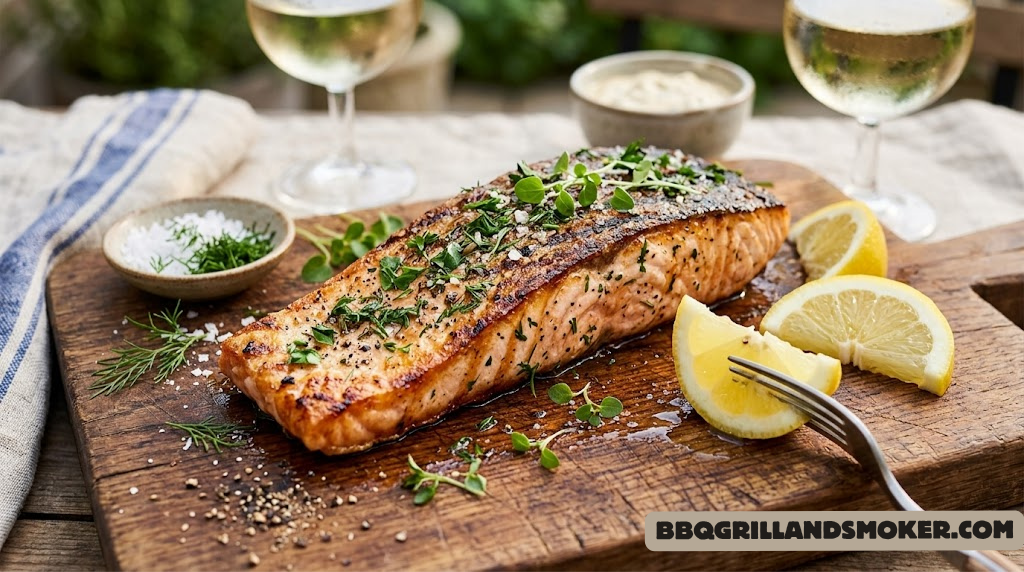
Salmon’s naturally high fat content — particularly in species like King and Atlantic — acts as a built-in basting mechanism, keeping the flesh moist during the high heat of grilling. This is fundamentally different from leaner fish like tilapia or cod, which dry out rapidly if overcooked. Understanding this gives you a real edge: it means salmon is more forgiving than most fish, and it means you can push the grill temperature a little higher to get that gorgeous char without immediately destroying the interior texture.
The key flavor development on grilled salmon comes from the Maillard reaction — the same browning chemistry responsible for the crust on a seared steak or the golden top of a baked roll. Proteins and sugars in the salmon’s surface layer react under high heat to create hundreds of complex flavor compounds. This is why grill temperature matters so much: if your grates aren’t hot enough, you’ll steam rather than sear the fish, and you’ll miss out on that deep, caramelized flavor that makes grilled salmon so much more interesting than pan-cooked or baked versions.

Weber Spirit II E-310 — Ideal for Salmon Grilling
Consistent heat output, porcelain-enameled grates, and 529 sq. in. of cooking space make this the top pick for grilling salmon to perfection.
Check Price on AmazonChoosing the Best Salmon: Species, Grade, Wild vs. Farmed
Walking up to the fish counter and asking for “salmon” is like walking into a wine shop and asking for “red.” You’ll get something, but you might not get what you actually want. There are five major salmon species commonly sold in North American markets, each with distinct fat content, flavor profile, and suitability for grilling.
The Five Species and How They Grill
| Species | Fat Content | Flavor Profile | Best Grilling Method | Grill Rating |
|---|---|---|---|---|
| King (Chinook) | Very High (18–20g/4oz) | Buttery, rich, complex | Direct, high heat | ★★★★★ |
| Sockeye (Red) | High (12–15g/4oz) | Bold, robust, earthy-sweet | Direct or cedar plank | ★★★★★ |
| Coho (Silver) | Medium (8–10g/4oz) | Mild, slightly sweet | Foil packet or plank | ★★★★☆ |
| Atlantic (Farmed) | High (13–17g/4oz) | Mild, clean, neutral | Any method | ★★★★☆ |
| Pink (Humpback) | Low (5–6g/4oz) | Light, delicate, mild | Foil, low heat | ★★★☆☆ |
Wild-Caught vs. Farmed: What Actually Matters on the Grill
This debate generates more heat than most salmon ever will. Here’s the practical reality: for grilling purposes, high fat content matters more than provenance. Farmed Atlantic salmon is higher in fat than wild-caught pink or chum salmon, meaning it will often grill better in terms of moisture retention. Wild King and wild Sockeye are exceptional because they combine the best of both worlds: the clean flavor of wild fish with fat levels that support high-heat grilling.
✓ Wild-Caught Pros
- Deeper, more complex flavor
- Firmer, denser flesh texture
- Higher omega-3 ratio
- No antibiotics or artificial coloring
- Environmental preference for many diners
✗ Wild-Caught Cons
- Often 2–3x the price of farmed
- Seasonal availability limitations
- Leaner = dries out faster if overcooked
- Thinner fillets can cook unevenly
How to Buy Salmon for Grilling
Regardless of species or farming method, the freshest salmon you can find will always grill best. Here’s what to look for at the counter:
- Color: Deep orange-red for sockeye, rosy-pink to deep salmon for king and Atlantic. Avoid pale, washed-out flesh or gray-brown edges.
- Smell: It should smell like the ocean — briny and clean. Any “fishy” or ammonia-like odor means it’s past its prime.
- Texture: The flesh should spring back when pressed gently. Mushy or slimy texture is a red flag.
- Thickness: For direct grilling, 1-inch thick fillets are ideal. Thinner fillets cook so fast they can easily overcook; thicker ones can leave the center raw while the outside overcooks.
- Skin-on vs. skinless: Always buy skin-on for grilling. The skin protects the flesh, prevents sticking, and crisps up beautifully.
Ask the fishmonger for a center-cut fillet rather than the tail end. Center cuts are more uniform in thickness, which means they cook more evenly on the grill. Tail pieces taper to a thin point that will be overcooked by the time the thick end reaches the right temperature.
Fresh vs. Frozen Salmon for Grilling
High-quality frozen-at-sea salmon is often fresher than “fresh” fish that’s been sitting on ice during extended shipping. Much of what’s labeled “fresh” at grocery stores was actually previously frozen and thawed. If you have access to a good fish market, buy fresh. Otherwise, don’t hesitate to buy frozen — just thaw it properly in the refrigerator overnight, never in warm water or on the counter.
One practical benefit of frozen salmon: it’s easier to remove pin bones from slightly frozen flesh. Run your finger along the centerline of the fillet and use needle-nose pliers or fish tweezers to pull out any bones you feel. This takes 30 seconds and makes for a vastly more enjoyable eating experience.
Grill Equipment Guide: What You Need and What Actually Helps
The good news about grilling salmon is that it works on virtually any type of grill — gas, charcoal, pellet, or even a cast iron pan on a camp stove. Each grill type has its own strengths and the right setup makes all the difference between fish that sticks and salmon that sears beautifully.
Gas Grills
Gas grills are the most common choice for salmon because they offer precise, consistent heat control. You can dial in your temperature with confidence and maintain it throughout the cook. The best gas barbecue grills with three or more burners let you set up a two-zone fire — high heat on one side for searing and a cooler zone for finishing. This is invaluable for thicker fillets. The main limitation of gas is flavor: there’s no inherent smokiness, though you can add wood chips in a smoker box to compensate.
Charcoal Grills
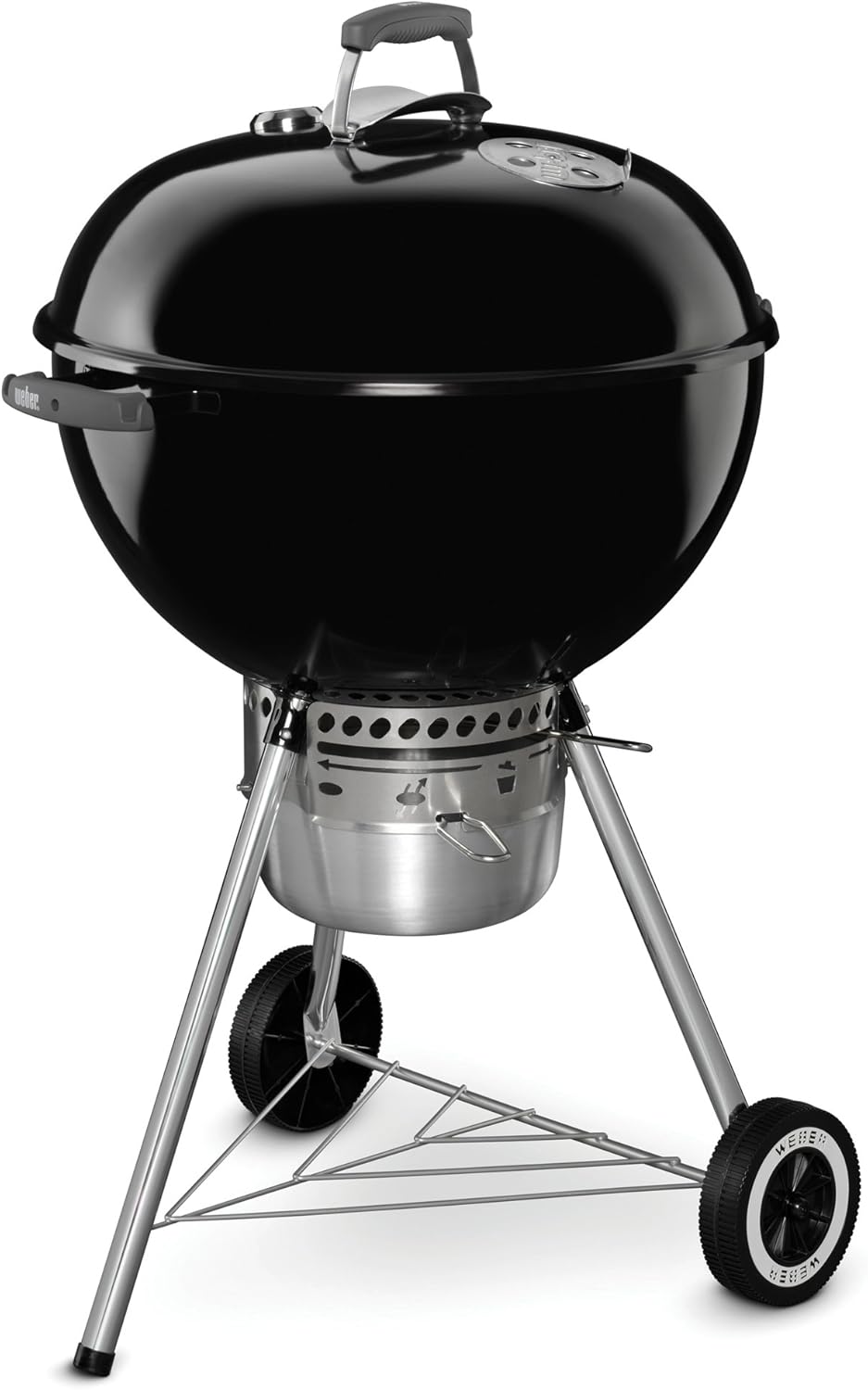
Charcoal grills produce superior flavor — the combination of direct heat and ambient smoke creates a complexity that gas simply can’t match. The challenge is heat management. Charcoal temperatures fluctuate more than gas, which takes experience to manage. If you’re learning to grill salmon on charcoal, a charcoal temperature control guide is essential reading. Use a chimney starter to get your coals fully lit, then arrange them for a two-zone setup.
Pellet Grills
Pellet grills are arguably the most foolproof option for salmon. They maintain precise temperatures electronically and infuse the fish with gentle wood smoke flavor automatically. The lower temperature ceiling on some pellet grills (typically 450–500°F max) is actually fine for salmon — you’ll get good sear marks without risk of burning. Our guide on how to smoke salmon on a pellet grill covers this method in dedicated depth.
Essential Gear for Grilling Salmon
Grate Type Matters More Than You Think
The grate material directly affects how salmon behaves. Cast iron grates retain more heat and create better sear marks, but they require seasoning and careful maintenance — our guide on how to season cast iron grill grates walks you through this. Stainless steel grates are easier to maintain and heat up faster, though they don’t retain heat quite as well. Our in-depth cast iron vs. stainless steel grate comparison can help you decide which is right for your setup.

OXO Good Grips Fish Turner — The Spatula Salmon Demands
Thin, flexible, offset blade glides under salmon without tearing. The single most impactful tool for perfect salmon flipping.
Check Price on AmazonPrep & Seasoning Techniques: The Decisions Made Before the Grill Ignites
The difference between good grilled salmon and spectacular grilled salmon is largely determined before the fish touches the grates. The preparation steps — drying the fish, tempering it, seasoning it properly, and preparing the grill itself — are where most home cooks lose points without realizing it.
Step 1: Pat It Dry (More Important Than You Think)
Remove Surface Moisture
Use paper towels to pat the salmon thoroughly dry on all surfaces, including the skin side. Surface moisture creates steam instead of sear, and it dramatically increases sticking. This is the step most beginners skip, and it’s the one that costs them the most.
Step 2: Bring to Room Temperature
Temper the Salmon
Take the salmon out of the refrigerator 15–20 minutes before grilling. Cold fish placed directly on a hot grill cooks unevenly — the outside overcooks before the cold center comes up to temperature. Tempering produces dramatically more even results. Don’t go longer than 30 minutes to avoid food safety issues.
Step 3: Score the Skin
Make Three Shallow Cuts in the Skin
Using a sharp knife, make 2–3 diagonal cuts through the skin, stopping just before you reach the flesh. This prevents the skin from curling up during cooking (which causes uneven contact with the grates) and allows heat to penetrate more evenly. It takes five seconds and makes a visible difference in results.
Step 4: Oil Both Surfaces
Brush Salmon With Oil Before Seasoning
Use a high-smoke-point oil — avocado oil (smoke point 520°F), refined coconut oil, or plain vegetable oil all work well. Brush a light coat on both sides. This creates a barrier that helps seasoning stick, promotes even browning, and adds a final layer of protection against sticking. Extra-virgin olive oil has too low a smoke point for direct high-heat grilling — save it for finishing or dressings.
Step 5: Season at the Right Time
Season Just Before Grilling
If you’re using a dry rub or simple salt-and-pepper seasoning, apply it just before placing the fish on the grill — not hours ahead. Salt draws moisture out of the flesh over time, which can work against you. If you want a deeper seasoned crust, season 30–45 minutes ahead and let the moisture release and then reabsorb. For marinades, see the dedicated section below.
Don’t marinate salmon in an acid-heavy marinade (lemon juice, vinegar) for more than 30 minutes. The acid begins to denature the proteins — essentially “cooking” the fish in a process similar to ceviche — and you’ll end up with mushy, grainy texture even before the grill touches it.
For those who want to explore more of the science behind effective grilling prep, our comprehensive analysis of direct vs. indirect grilling methods provides a solid theoretical foundation that applies equally to fish, meat, and vegetables.
The 5 Best Marinades and Rubs for Grilled Salmon
A great marinade does three things: it seasons the fish throughout (not just on the surface), it adds complementary flavor complexity, and it promotes browning and caramelization on the grill. The best marinades for salmon balance fat, acid, salt, and aromatics — but the proportions and specific ingredients create wildly different flavor profiles.
- 3 tbsp olive oil
- 2 tbsp fresh lemon juice
- 2 garlic cloves, minced
- 1 tbsp fresh dill
- 1 tbsp fresh parsley
- Salt & white pepper
- 2 tbsp soy sauce (or tamari)
- 1 tbsp honey
- 1 tbsp sesame oil
- 2 garlic cloves, minced
- 1 tsp fresh ginger
- 1 tsp rice vinegar
- 1.5 tsp smoked paprika
- 1 tsp garlic powder
- 1 tsp onion powder
- 0.5 tsp cayenne pepper
- 0.5 tsp dried thyme
- 0.5 tsp dried oregano
- 1 tsp salt, 0.5 tsp black pepper
- 2 tbsp white miso paste
- 1 tbsp mirin
- 1 tbsp sake (or dry sherry)
- 1 tsp soy sauce
- 1 tsp sesame oil
- 1 tsp honey
- 2 tbsp brown sugar
- 1 tbsp olive oil
- 1 tbsp Dijon mustard
- 1 tsp soy sauce
- 1 tsp fresh thyme
- 1 tsp lemon zest
Flavor Profiles at a Glance
For maximum flavor penetration, make shallow diagonal cuts (scoring — see Step 3 above) before applying any marinade. The marinade will soak in through the cuts rather than just coating the surface. This is especially effective with thicker fillets over 1.5 inches.
The Role of Salt: Dry Brine vs. Wet Brine
Before we move to the master recipe, it’s worth understanding an advanced technique that separates good grilled salmon from great grilled salmon: the dry brine. Rather than marinating in a liquid mixture, you simply coat the flesh side of the salmon with kosher salt (about 1/2 teaspoon per 6-ounce fillet), set it uncovered on a wire rack in the refrigerator for 30–45 minutes, then rinse, pat dry, and proceed to oil and season. The salt draws out surface moisture initially, then gets reabsorbed back into the fish carrying flavor deeper into the flesh. The result is a firmer, more flavorful fillet with dramatically improved moisture retention during grilling. If you’re serious about grilled salmon, the dry brine is worth building into your regular process.
For more on building a complete BBQ seasoning toolkit, take a look at our guide to the best BBQ rubs — many of the principles for meat rubs translate effectively to fish with appropriate adjustments.

Traeger Pro 575 — Wood-Fired Salmon on Every Cook
Set-and-forget temp control with genuine hardwood smoke. Alder pellets + this grill = the best salmon you’ve ever made. Read our full Traeger Pro 575 review.
Check Price on AmazonThe Master Grilled Salmon Recipe (Works on Any Grill)
This is the recipe we return to week after week — simple enough for a Tuesday night, impressive enough for a dinner party. It uses the lemon-herb flavor profile as a baseline that you can customize infinitely with the marinade options above.
Classic Grilled Salmon
- 4 × 6oz salmon fillets, skin-on, 1″ thick
- 2 tbsp avocado oil or vegetable oil
- 1 tsp kosher salt
- 1 tsp black pepper, freshly cracked
- 1 tsp garlic powder
- 1 tsp smoked paprika
- 2 lemons, halved
- ¼ cup fresh dill or parsley
- 2 tbsp unsalted butter (for finishing)
- Preheat grill to 400–450°F (medium-high). Oil grates with a folded paper towel dipped in oil, using long tongs.
- Pat salmon fillets completely dry. Score skin 2–3 times with a sharp knife.
- Brush flesh and skin with oil. Combine salt, pepper, garlic powder, and paprika; sprinkle evenly over all surfaces.
- Place salmon flesh-side down on oiled grates. Do not move. Cook 4–5 minutes until the fish releases naturally and shows good grill marks.
- Flip carefully with a wide fish spatula. Cook skin-side down 3–4 minutes until internal temp reads 125°F (medium) or 145°F (fully cooked).
- Place lemon halves cut-side down on the grill in the last 2 minutes to caramelize them.
- Rest salmon 2 minutes. Add a pat of butter to each fillet. Garnish with fresh herbs and serve with grilled lemon.
The Critical Flip: When, How, and Why
Most failed grilled salmon comes down to the flip — specifically, attempting to flip too early. Here is the rule that changes everything: salmon is ready to flip when it tells you it is. The fish will naturally release from the grates when the bottom surface has formed a proper crust. If it resists, wait another 60–90 seconds. Forcing the flip tears the flesh and leaves half the salmon on your grates.
Slide the tip of your spatula gently under the edge of the salmon. If it lifts without resistance, it’s ready to flip. If it feels stuck or you have to force it, wait 60 more seconds and try again. The fish will always tell you when it’s ready — patience is the skill.
Temperature & Doneness Guide: The Numbers That Actually Matter
Temperature is the only reliable way to know when salmon is done. Visual cues can guide you — color change, flakiness, opacity — but an instant-read thermometer inserted into the thickest part of the fillet is the only precise measurement tool available to home grillers. Here’s how to interpret what you read.
Very translucent center. Some enjoy this; most find it underdone.
Silky, slightly translucent. The sweet spot for most salmon lovers.
Opaque, firm, moist. Safe for most and our recommended default.
USDA-recommended. Fully opaque, firmer texture, less juicy.
Grill Surface Temperature vs. Internal Temperature
Don’t confuse grill surface temperature with the temperature inside the fish. Your grill might be running at 425°F while the salmon’s internal temperature is still only 80°F at the 3-minute mark. The surface temperature determines how fast the exterior browns and sears; the internal temperature tells you how cooked the fish is. Both matter, which is why you need to manage both with attention.
| Fillet Thickness | Grill Temp | Approx. Total Time | Flesh-Side Time | Skin-Side Time |
|---|---|---|---|---|
| ½ inch | 400°F | 5–6 min | 3 min | 2–3 min |
| ¾ inch | 400°F | 7–8 min | 4 min | 3–4 min |
| 1 inch | 425°F | 9–11 min | 5 min | 4–5 min |
| 1.5 inches | 425°F | 12–15 min | 6–7 min | 5–6 min |
| Whole side (2″+) | 375°F indirect | 20–25 min | — | Skin-side throughout |
The 10-Minute Rule: A classic guideline says to grill fish approximately 10 minutes per inch of thickness at medium heat. This is a decent starting point but shouldn’t replace a thermometer. Fillet uniformity, grill hot spots, and ambient temperature all affect actual cooking time.
Understanding heat management and its effects on different proteins is the foundation of all great grilling. Our in-depth article on grilling vs. smoking heat and time mechanics explores this in detail if you want to go deeper on the science.
Three Grilling Methods: Direct, Foil Packet & Cedar Plank
Beyond the classic direct grill method, two alternative approaches deserve a place in every salmon-griller’s repertoire: the foil packet and the cedar plank. Each creates fundamentally different results — different textures, flavors, and experiences — and knowing when to deploy each one is a genuine skill.
Method 1: Direct Grill (Classic)
Best for: Crispy skin, char marks, fast weeknight dinners, thick fillets (1″+)
This is the method described in the master recipe above. Flesh-side first to sear, then flip to skin-side to finish. The direct contact between fish and hot grates is what creates the caramelization and smoky sear that makes grilled salmon worth making at home. The keys are a very hot, very clean, very well-oiled grill and the patience to let the fish release naturally before flipping.
Method 2: Foil Packet
Best for: Thin or delicate fillets, maximum moisture retention, hands-off cooking, camping
Fold a sheet of heavy-duty aluminum foil into a packet large enough to hold your salmon with some room to spare. Add butter, lemon slices, garlic, and herbs directly to the packet, place the salmon on top, and seal tightly by folding over the edges. Place over medium heat (350–375°F) for 12–15 minutes without flipping. The fish steams inside the packet, resulting in incredibly moist, tender flesh. The tradeoff: no caramelization, no crispy skin, and no grill marks. For salmon that’s already exceptional — a beautiful King fillet, say — this method is sometimes preferable precisely because it doesn’t obscure the natural flavor with char.
Method 3: Cedar Plank
Best for: Impressive presentation, gentle wood smoke, dinner parties, skin-on whole sides
Cedar plank grilling requires pre-soaking the plank in water for at least one hour (overnight is even better). Place the soaked plank on the preheated grill for 2–3 minutes until it begins to smoke and crackle, then lay the salmon on top, close the lid, and cook for 12–18 minutes without flipping. The plank slowly smolders, infusing the salmon with cedar smoke from below while the grill’s heat cooks it from above. The result is extraordinarily aromatic, with a gentle woodsy character that pairs beautifully with the salmon’s natural richness.
For more on the effects different wood sources have on flavor, our deep dive into wood chips vs. wood chunks for smoking and the complete BBQ wood chips guide are essential reading.
| Method | Texture | Smoke Flavor | Difficulty | Best For |
|---|---|---|---|---|
| Direct Grill | Crispy skin, seared exterior | Moderate (gas) / High (charcoal) | Medium | Weeknight, thick fillets |
| Foil Packet | Very tender, steamed-style | None | Easy | Delicate fillets, beginners |
| Cedar Plank | Moist, medium firmness | High (cedar smoke) | Easy–Medium | Entertaining, whole sides |
| Cast Iron on Grill | Deep sear, restaurant-style | Low–Moderate | Medium | Cold weather, precision cooks |
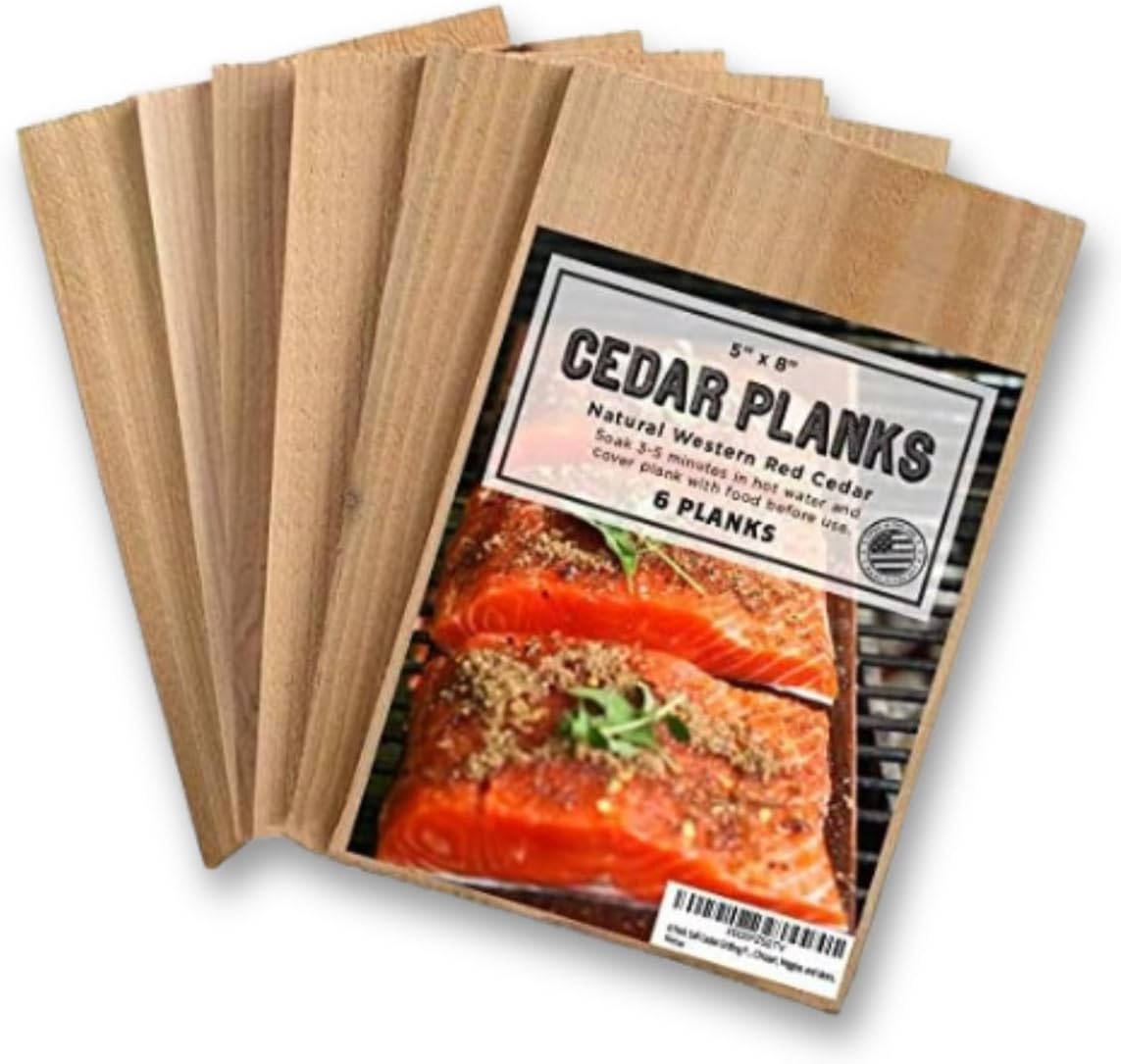
Western Premium Cedar Grilling Planks — Pack of 6
Food-safe, aromatic cedar planks sized for salmon sides. Pre-soak and grill for the most impressive salmon you’ve ever served at a dinner party.
Check Price on AmazonTroubleshooting: Fixes for Every Grilled Salmon Problem
Even experienced grillers run into problems with salmon. The fish is forgiving up to a point, but certain mistakes produce consistent, predictable failures. Here’s how to diagnose and fix every common problem.
Problem 1: Salmon Is Sticking to the Grates
Why it happens: Grates not clean, grates not hot enough, grates not oiled enough, salmon too moist before going on.
Fix: Clean grates aggressively before preheating. Let grill come to full temperature (10–15 minutes with lid closed). Oil grates with a paper towel and tongs (repeat 2–3 times). Pat salmon completely dry. Oil the salmon itself. And then — critically — don’t touch it until it releases naturally.
If you’re still having sticking issues after following all the steps above, switch to grilling skin-side down the entire time without flipping. Close the lid, and let the skin take all the heat — the flesh will cook through from the ambient heat above. Zero flipping required and zero sticking guaranteed.
Problem 2: Salmon Is Overcooked and Dry
Why it happens: Too high a temperature, cooking too long, not using a thermometer, thin fillets treated like thick ones.
Fix: Lower your target internal temperature (aim for 125–130°F rather than 145°F). Use a thermometer every time. Remove salmon from the grill when it’s 5°F below target — carryover cooking will finish the job. Thinner fillets need lower grill temperatures (375–400°F instead of 450°F).
Problem 3: Salmon Falls Apart When Flipping
Why it happens: Wrong spatula, flipping too early, fillet wasn’t uniform in thickness and cooked unevenly.
Fix: Use a wide, thin fish spatula — a standard spatula is too thick and too narrow. Make sure the fish releases naturally before attempting the flip. If the fillet has a thin tail section, fold it under the thicker portion before putting it on the grill.
Problem 4: No Grill Marks / Poor Sear
Why it happens: Grill not hot enough, too much moisture on the fish’s surface, not letting it sit long enough on each side.
Fix: Preheat longer and hotter. Pat salmon bone dry. Don’t oil the grates too heavily — a thin coat is better. For the best possible sear, press gently on the fillet for the first 30 seconds of contact using a spatula to ensure full contact with the grates.
Problem 5: Salmon Tastes Bland
Why it happens: Underseasoning, no surface sugar for caramelization, no smoke, wrong species (leaner salmon has less flavor).
Fix: Season aggressively — salmon needs more salt than you think. Add a touch of brown sugar or honey to any seasoning blend to promote Maillard browning. Use wood chips or a cedar plank to add smoke dimension. Consider the miso glaze for maximum flavor depth.
Problem 6: Uneven Cooking
Why it happens: Uneven fillet thickness, grill hot spots, starting with cold salmon straight from the fridge.
Fix: Always temper the salmon 15–20 minutes before grilling. Know your grill’s hot spots (do a bread test — lay slices across the grates and see which brown fastest). For uneven fillets, use indirect heat to finish the thicker portions after the thin sections are done.
For grill-specific temperature management issues, our guides on why your grill isn’t heating properly and how to prevent flare-ups on a gas grill address the underlying grill health issues that affect all high-heat cooking.
If you ever notice mold or residue on your grates affecting the flavor of your food, our guide on grill mold causes and cleaning techniques is essential reading. And when it comes time for a thorough cleaning of your entire setup, our barbecue grates cleaning guide walks through the complete process.
Wood Smoke Pairing: Which Woods Complement Salmon Best
Wood smoke flavor is one of the most powerful ways to elevate grilled salmon beyond what any marinade can achieve alone. The right wood adds a layer of aromatic complexity that interacts with salmon’s natural richness in ways that are frankly difficult to describe — you just have to experience it once and you’re hooked.
| Wood Type | Flavor Profile | Intensity | Salmon Rating | Notes |
|---|---|---|---|---|
| Alder | Mild, slightly sweet, earthy | Light | ★★★★★ | The Pacific Northwest classic. Gold standard for salmon. |
| Apple | Sweet, fruity, delicate | Light–Medium | ★★★★★ | Beautiful with honey or brown sugar glazes. |
| Cherry | Mild-sweet, slightly tart | Light–Medium | ★★★★☆ | Adds lovely color and subtle sweet smoke. |
| Maple | Sweet, mild caramel notes | Medium | ★★★★☆ | Excellent with Cajun or lemon-herb profiles. |
| Oak | Neutral, smoky, balanced | Medium | ★★★☆☆ | Works, but won’t add character. Backup choice only. |
| Hickory | Strong, bacon-like, savory | Heavy | ★★☆☆☆ | Too strong — overpowers the salmon’s delicate flavor. |
| Mesquite | Earthy, intense, pungent | Very Heavy | ★☆☆☆☆ | Avoid entirely. Will make salmon taste bitter and acrid. |
If you’re using a gas grill, add wood chips in a smoker box or a foil pouch with holes punctured in the top. Place it directly over the burner flame and allow it to start smoking before adding the salmon. Use just a small handful — salmon is a short cook and you don’t need much smoke, especially with lighter woods. For more on the nuanced differences between wood types and delivery formats, check out our deep comparison of hickory vs. mesquite and how to choose between different smoke box options.
For those interested in taking the smoking approach further — cold-smoking salmon for lox-style results, or hot-smoking whole sides for elaborate entertaining — our dedicated guide on smoking salmon on a pellet grill provides a complete roadmap.

Cameron’s Alder Wood Chips — The Pacific Northwest Standard
Fine-textured, sustainably sourced alder chips designed for the delicate smoke salmon needs. Just a small handful delivers perfect flavor without overpowering the fish.
Check Price on AmazonSauces, Sides & Serving: Building the Complete Grilled Salmon Plate
Grilled salmon is a generous canvas — it pairs well with an enormous range of flavors, from bright citrus and herb sauces to rich compound butters to complex Asian-inspired glazes. Getting the accompaniments right transforms a good grilled salmon fillet into a truly memorable meal.
Five Sauces That Belong on Grilled Salmon
1. Lemon-Caper Butter
Melt 4 tbsp butter with 2 tbsp capers, 1 minced shallot, zest of one lemon, and juice of half a lemon. Spoon over the salmon at the table. The salt from capers and brightness from lemon balance the richness of the salmon perfectly.
3. Mango Salsa
Dice 1 ripe mango, half a red onion, one jalapeño, and a bunch of cilantro. Add lime juice and salt. This tropical approach is particularly beautiful with the honey-garlic soy marinade.
5. Tahini-Herb Drizzle
Whisk tahini with lemon juice, garlic, olive oil, and fresh parsley until smooth and pourable. An unexpected but wildly delicious pairing that bridges Mediterranean and Middle Eastern influences.
2. Dill Crème Fraîche
Combine crème fraîche or sour cream with fresh dill, lemon zest, a touch of honey, and sea salt. Served cold alongside hot salmon, the temperature contrast adds an extra sensory dimension to the plate.
4. Chimichurri
The Argentine herb sauce — parsley, garlic, olive oil, red wine vinegar, and chili flakes — is exceptional on grilled salmon. The herbal brightness and acidic edge cut through the fish’s richness with authority. Pairs beautifully with the Cajun rub.
The Best Side Dishes for Grilled Salmon
The rule of thumb: pair rich salmon with bright, acidic, or light sides. Heavy, starchy sides compete rather than complement.
- Grilled corn: The sweetness and char from BBQ grilled corn mirrors salmon’s caramelized edges beautifully.
- Grilled vegetables: Asparagus, zucchini, and bell peppers all grill in the same time window as salmon — making this a seamless one-grill dinner. See our guide on how to grill vegetables like a pro.
- Cucumber-dill salad: Thinly sliced cucumber with dill, red onion, rice vinegar, and a touch of honey. Crisp, cool, and refreshing against the warm salmon.
- Orzo with lemon and feta: A Mediterranean-inspired grain salad that serves as base, sauce, and accompaniment simultaneously.
- Roasted fingerling potatoes: Start these in the oven 30 minutes before grilling so everything lands on the table at the same time.
- Couscous with herbs: Absorbs any extra sauce and provides a neutral but satisfying carbohydrate base.
How to Build a Complete Salmon BBQ Spread
If you’re entertaining and want to build a full backyard BBQ spread around grilled salmon as the centerpiece, pair it with grilled shrimp skewers as a starter and smoked mac and cheese as the indulgent side. Round it out with grilled seasonal vegetables and a good BBQ sauce selection — we cover the full range in our best BBQ sauces guide. That’s a spread that will be remembered.
Regional & Flavor Variations: 8 Styles of Grilled Salmon from Around the World
Salmon is grilled on every continent where it’s available, and regional traditions have produced a remarkable diversity of approaches. Understanding these variations expands your repertoire and helps you match the right style to the right occasion.
| Style | Origin | Key Flavors | Best Marinade | Serving Suggestion |
|---|---|---|---|---|
| Pacific Northwest | Oregon / Washington | Cedar smoke, maple, lemon | Cedar plank + maple glaze | With wild rice and grilled asparagus |
| Teriyaki | Japanese-American | Soy, mirin, sesame, ginger | Honey-garlic soy | Over steamed rice with pickled ginger |
| Cajun Blackened | Louisiana | Paprika, cayenne, thyme, butter | Cajun spice rub + butter | With coleslaw and dirty rice |
| Mediterranean | Greek/Italian | Lemon, olive oil, capers, dill | Lemon-herb | With orzo, olives, and feta |
| Miso-Glazed | Japanese | Umami miso, sake, sesame | Miso glaze | With edamame and miso soup |
| New England | Northeast USA | Maple, mustard, dill | Brown sugar + Dijon | With corn, clam chowder starter |
| Scandinavian | Norway/Sweden | Dill, mustard, aquavit | Mustard-dill marinade | With potato salad and rye bread |
| Korean BBQ Style | Korea | Gochujang, sesame, scallion | Gochujang-soy blend | With banchan, kimchi, and rice |
The Salmon Burger: A Variation Worth Mastering
While not strictly grilled salmon in the traditional sense, the salmon burger belongs in any serious griller’s recipe bank. Take 1 pound of fresh salmon, remove the skin, and chop by hand (not in a food processor — you want texture, not paste). Mix with 1/4 cup panko, 1 egg, 2 tablespoons Dijon mustard, 1 tablespoon soy sauce, 2 sliced scallions, and a tablespoon of fresh ginger. Form into four patties and refrigerate for 30 minutes to firm up. Grill over medium-high heat 4 minutes per side. The result is something entirely different from a beef burger — lighter, more complex, and genuinely exceptional. For insights on keeping fish-based burgers from falling apart on the grill (the same principles that apply to regular burgers), our guide on keeping burgers intact has transferable techniques worth reading.
Whole Grilled Salmon Side for Crowds
For large gatherings — eight or more people — consider grilling a whole salmon side (2–3 pounds) rather than individual fillets. Leave the skin on, score it every 2 inches, and apply your chosen marinade or rub. Place it skin-side down on a well-oiled grill over medium-indirect heat, close the lid, and cook without flipping for 20–25 minutes. The skin protects the flesh completely and the entire side cooks evenly without the complexity of managing multiple individual pieces. Serve directly from the grill on a plank or board — it’s dramatic and impressive in a way that individual portions simply aren’t.

ThermoPro TP-19H Instant-Read Thermometer
2-second readout, waterproof, foldable probe. The single most important tool for consistently perfect grilled salmon. No more guessing, no more dry fish.
Check Price on AmazonNutrition, Health, and Why Grilled Salmon Is One of the Smartest Proteins You Can Put on a Grill
Salmon’s reputation as a nutritional powerhouse is fully deserved, and grilling is one of the best preparation methods for preserving those benefits. Unlike frying (which adds significant fat) or heavy sauce-braising (which can add sugar and sodium), grilling allows the salmon’s own beneficial fats to do the work while shedding excess fat through the grates.
| Nutrient | Per 6oz Grilled Salmon | % Daily Value | Health Benefit |
|---|---|---|---|
| Protein | 34–37g | 68–74% | Muscle repair, satiety |
| Omega-3 (EPA+DHA) | 2,000–3,000mg | Well above AHA recommendation | Heart health, inflammation reduction |
| Vitamin D | ~570 IU | 142% | Bone health, immune function |
| Vitamin B12 | ~3.2mcg | 133% | Nerve function, red blood cell formation |
| Selenium | ~40mcg | 73% | Thyroid function, antioxidant activity |
| Potassium | ~625mg | 18% | Blood pressure regulation |
| Total Fat | 12–20g (varies by species) | 18–31% | Mostly beneficial unsaturated fats |
| Calories | 340–400 (varies by species) | 17–20% | Dense, satisfying calorie source |
The American Heart Association recommends eating fatty fish like salmon at least twice per week. Grilling is an ideal preparation because it doesn’t require added fats (beyond a small amount of cooking oil), doesn’t introduce the carcinogenic compounds associated with deep frying, and — when done at appropriate temperatures — preserves the heat-sensitive omega-3 fatty acids better than prolonged high-heat methods like extended roasting.
There has been discussion about potential health concerns related to high-heat grilling and the formation of heterocyclic amines (HCAs) and polycyclic aromatic hydrocarbons (PAHs). For salmon grilled at the temperatures and durations described in this guide (moderate heat, short cook time), these compounds form in far smaller quantities than in heavily charred meats cooked for extended periods. For a complete look at the health considerations around different grilling methods, our analysis of health impacts of charcoal grilling provides a balanced, evidence-based perspective.
Frequently Asked Questions About Grilled Salmon
What temperature should the grill be for salmon?
Grill salmon at medium-high heat between 400°F and 450°F. This temperature range creates a good sear and caramelization without overcooking the delicate flesh before the interior reaches the right temperature. The internal temperature of the salmon should reach 125°F–130°F for medium (our recommendation) or 145°F for fully cooked per USDA guidelines. If your grill runs hotter, use indirect heat to finish the cook after the initial sear.
Should I grill salmon with the skin on or off?
Grilling salmon with the skin on is strongly recommended for most methods. The skin acts as a natural protective layer between the delicate flesh and the hot grates, preventing sticking and keeping the fish moist throughout cooking. Start with the flesh side down to sear, then flip to skin-side to finish. The skin can be eaten (it becomes pleasantly crispy) or peeled off cleanly after cooking.
The exception is foil packet cooking or if a recipe specifically calls for skinless salmon — though even in foil packets, skin-on fillets often produce moister results.
How long do you grill salmon?
A standard 6-ounce salmon fillet about 1 inch thick takes roughly 8–10 minutes total on a medium-high grill: 4–5 minutes flesh-side down, then 3–4 minutes skin-side down after flipping. The general guideline is 8–10 minutes per inch of thickness. However, the most reliable method is using an instant-read thermometer — remove the salmon when the internal temperature reads 125°F–130°F (medium) or 145°F (well done). Salmon is done when it flakes easily and has turned from translucent to opaque throughout.
How do I keep salmon from sticking to the grill?
Preventing sticking requires multiple steps working together: preheat the grill fully (10–15 minutes), clean the grates with a wire brush, oil the grates with a paper towel soaked in high-smoke-point oil (repeated 2–3 times), pat the salmon completely dry, and brush the salmon itself with oil. Finally — and most critically — don’t try to move or flip the salmon before it’s ready. Let it cook undisturbed until it naturally releases from the grate. If it’s sticking, it needs more time.
What is the best marinade for grilled salmon?
The best marinades balance fat (for moisture and browning), acid (for brightness and flavor penetration), salt (for seasoning), and aromatics (herbs, garlic, ginger). Top choices include the lemon-herb classic (olive oil, lemon, garlic, dill), honey-garlic soy (soy sauce, honey, sesame, ginger), miso glaze (miso paste, mirin, sake), and the Cajun dry rub (smoked paprika, cayenne, thyme, garlic). Keep marinade time to 15–30 minutes — acid-heavy marinades left longer than 30 minutes will start to break down the salmon’s texture.
Can you grill salmon in foil?
Absolutely — grilling salmon in foil is an excellent technique, particularly for beginners or when working with thin, delicate fillets. Create a foil packet with the salmon, butter, lemon slices, and herbs, then seal tightly and grill over medium heat (350–375°F) for 12–15 minutes without flipping. The fish steams inside the packet, resulting in incredibly moist, tender flesh. The tradeoff is that you won’t get grill marks or a crispy skin — but for maximum moisture and ease of cooking, foil packets are hard to beat.
What type of salmon is best for grilling?
King (Chinook) salmon is widely considered the finest grilling salmon because of its exceptional fat content (up to 18–20g per 4oz serving), producing incredibly rich, moist results even when cooked to higher temperatures. Sockeye (red) salmon is a close second — slightly leaner but with a bolder, more distinctive flavor. Atlantic salmon (farmed) is the most widely available and grills well thanks to consistent fat content. Pink and Coho salmon are leaner and work better in foil packets or with careful low-heat methods to prevent drying out.
How do I know when grilled salmon is done?
The most reliable method is an instant-read thermometer: 120–125°F for medium-rare (slightly translucent in center), 130°F for medium (our recommendation — moist and fully safe), and 145°F for well done (USDA guideline). Visual cues also help: salmon is done when it transitions from translucent to opaque throughout and flakes easily when pressed gently with a fork. The flesh will also separate into its natural layers when lightly pressed — this is the “flaking” that indicates doneness. When in doubt, use the thermometer.
Should I oil the grill grates or the salmon?
Both. Oil the grates by holding a folded paper towel soaked in high-smoke-point oil with long tongs and wiping it across the preheated grates — repeat 2–3 times to build up a good non-stick layer. Also brush the salmon itself with oil before placing it. The dual approach provides maximum protection against sticking and promotes more even browning across the entire surface of the fillet.
What wood chips pair best with salmon?
Alder wood is the undisputed champion for salmon — it’s the traditional choice in the Pacific Northwest, where wild salmon has been smoked over alder for centuries. Its mild, slightly sweet, earthy smoke complements rather than overpowers salmon’s natural flavor. Apple and cherry woods are excellent alternatives, both bringing gentle fruit-forward sweetness that pairs beautifully with honey or citrus glazes. Avoid heavy woods like hickory and especially mesquite, which will overpower salmon completely. Use wood chips sparingly — a small handful is more than enough for a short salmon cook.
Final Thoughts: Mastering Grilled Salmon Is One of the Best Skills You Can Build
Grilled salmon rewards the attention you give it. It’s not a passive, set-it-and-forget-it cook — it requires you to be present, to read the signs the fish is giving you, and to make adjustments in real time. But the ceiling of what’s achievable is high, and the learning curve is genuinely short. The techniques in this guide — dry the fish, temper it, oil everything twice, sear flesh-side first, let it release naturally, pull it at 125–130°F — are learnable in a single cook and reliable across a lifetime of grilling.
Once you’ve nailed the fundamental direct-grill method, the variations open up a world of exploration. Cedar plank salmon for the entertainer in you. Miso-glazed for the date night ambition. Cajun blackened when you want fire and drama. A whole side, skin-on and gleaming with brown sugar glaze, for the moment you want to genuinely impress a table of eight.
Don’t stop at salmon. The same attention to heat management, timing, and technique translates directly to other fish and proteins. Try our perfect steak grilling guide, explore the world of grilled lamb chops, or graduate to the slow, meditative world of smoked pulled pork and 3-2-1 smoked ribs. Every skill you build compounds — that’s the beautiful thing about mastering the grill.
If you’re looking to upgrade your setup to give your salmon the heat control it deserves, our comprehensive guides to the best barbecue grills and best electric barbecue grills cover every budget and backyard size. For the tools that make every cook easier, see our recommendations for the best BBQ tools.
Ready to Grill the Best Salmon of Your Life?
You now have everything you need — the science, the techniques, the marinades, and the troubleshooting knowledge. The only thing left is to fire up the grill. Get after it.
Explore Top Grills Best BBQ Tools More Grill Recipes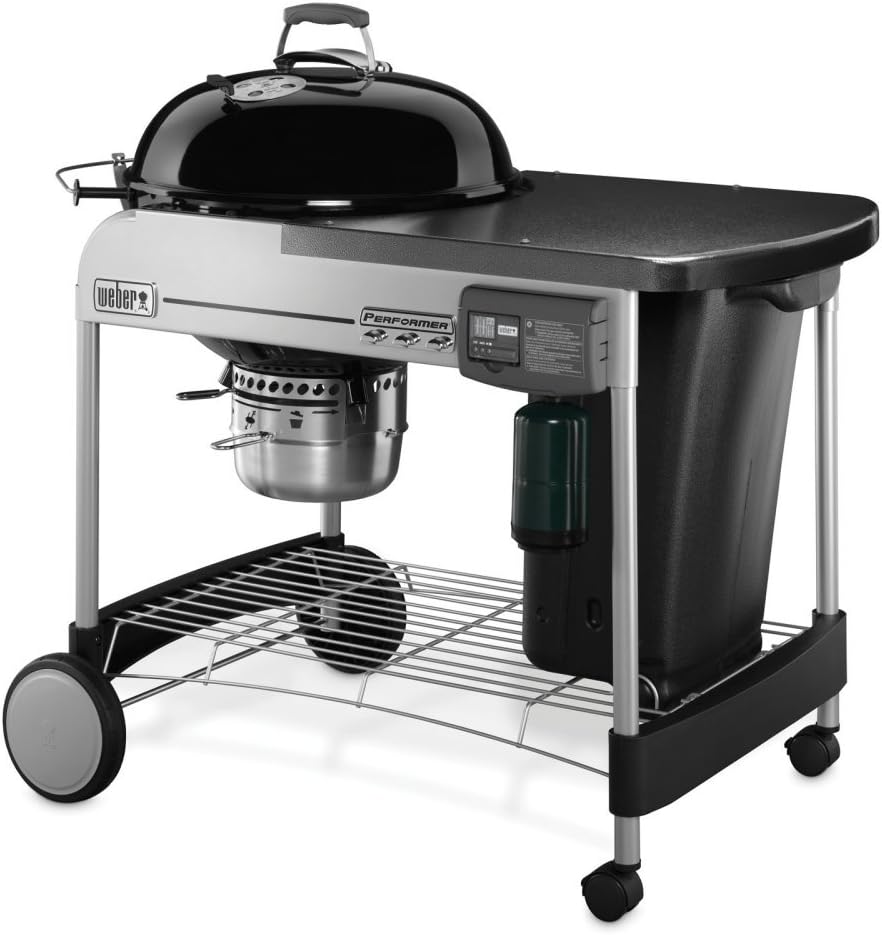
Weber Performer Deluxe Charcoal Grill — For Serious Salmon Searing
22-inch charcoal grill with gas assist ignition and built-in work table. Outstanding for the high-heat sear that makes salmon unforgettable. Read our Weber 22″ review for the full picture.
Check Price on Amazon