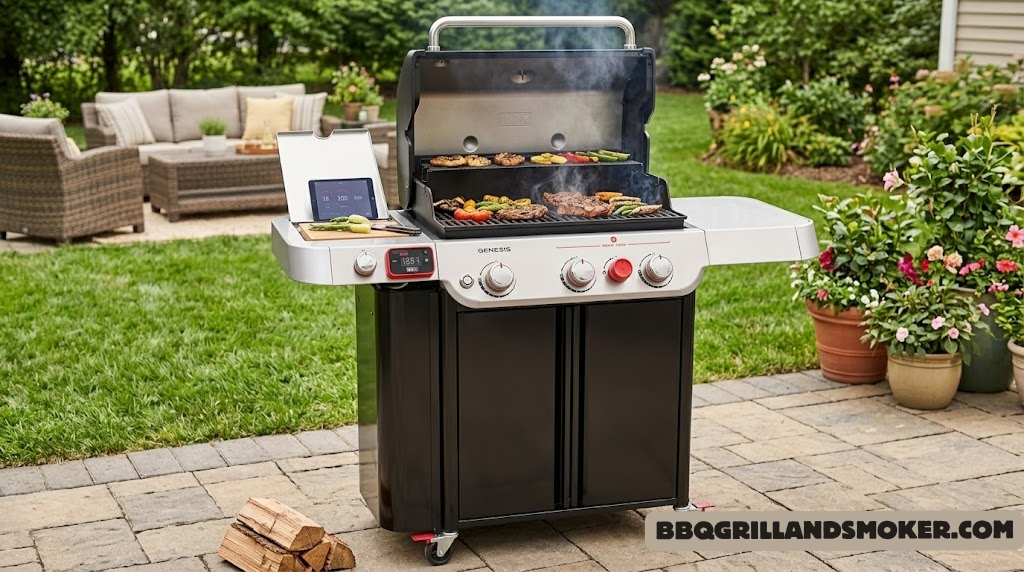
There’s a particular pressure that comes with being Weber. When your name is synonymous with backyard grilling — when people use your brand as a generic noun the way others say “Kleenex” or “Tupperware” — every new product carries an almost unfair weight of expectation. The Weber Genesis EX-335 is not so much a new model as a refinement of something Weber has spent over three decades perfecting, layered with the company’s answer to the smart-grill revolution that pellet brands like Traeger and Rec Tec helped pioneer.
The question isn’t really “is this a good grill?” It’s “is it good enough to justify the premium that Weber’s name — and this specific feature set — commands in 2025?” After 60+ grilling sessions cooking everything from weeknight burgers to reverse-sear tomahawk ribeyes to low-indirect whole chickens, we have a thorough, detailed answer. Spoiler: it earns its reputation — but with real caveats that matter depending on what you’re looking for.
Quick Verdict: What You Need to Know First
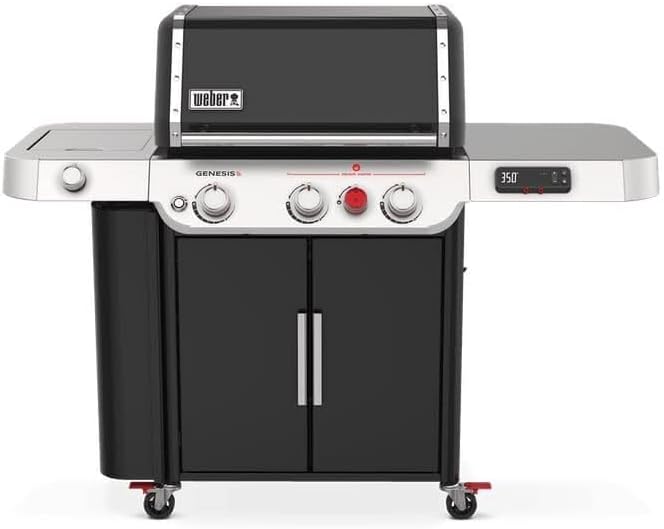
The Weber Genesis EX-335 is a three-burner gas grill with a dedicated sear zone, a side burner option, stainless steel construction, porcelain-enameled cast-iron grates, and the built-in Weber Connect smart hub that delivers real-time temperature data and guided cooking to your smartphone. Available in propane and natural gas configurations, in black, ivory, and smoke colorways, and retailing for approximately $1,099–$1,249 at time of writing.
The Weber Genesis EX-335 is one of the finest three-burner gas grills available in 2025. Its GS4 burner system delivers remarkably even heat, the build quality is genuinely premium throughout, and Weber Connect adds practical real-world value rather than being a gimmick. The price is high, but the combination of 10-year warranty coverage and Weber’s proven long-term parts ecosystem makes it a justifiable long-term investment for regular grillers.

GS4 burner system · Built-in Weber Connect · Dedicated sear zone · 10-year burner warranty · 669 sq in total cooking space
Check Price on Amazon →Who Should Buy the Weber Genesis EX-335?
Not every premium grill suits every griller. Before diving deep into hardware and performance, it’s worth being direct about who the EX-335 is genuinely built for — and who might find their money better spent elsewhere.
The EX-335 Is Built For:
- Suburban families grilling 3–5 times per week who want a grill requiring minimal fuss while delivering excellent, consistent food quality.
- Cooks handling a wide variety of proteins — burgers to whole chicken to thick steaks — who need genuine temperature range and zone versatility from a single grill.
- Tech-inclined grillers who want real-time meat temperature monitoring without constant lid-lifting or babysitting the grill.
- Long-term buyers. Weber’s 10-year burner warranty, excellent parts availability, and proven brand longevity make this a 10–15 year investment when maintained properly.
- Natural gas homes wanting a factory-built NG grill rather than a converted propane model.
You Might Want to Look Elsewhere If:
- You need more than 513 sq in of primary cooking surface — competing options at this price offer substantially more grate space.
- Maximum BTU output is your priority — the EX-335’s 39,000 main-burner BTUs is efficient rather than overwhelming.
- You grill infrequently — a less expensive model, including the Weber Spirit II E-310, delivers similar food results at half the price for occasional use.
- Your primary cooking style is low-and-slow smoke — in that case, comparing a pellet grill versus gas grill first will help clarify whether a gas grill is even the right tool for your cooking goals.
The Weber Genesis EX-335 is a premium tool that earns its price through quality of execution and long-term reliability — not through maximum specs on paper. It’s the grill equivalent of a well-engineered German sedan: precise, durable, and deeply satisfying to use daily, even if the spec sheet doesn’t lead the class in every column.
Weber Genesis EX-335: Full Technical Specifications
| Specification | Detail |
|---|---|
| Model | Weber Genesis EX-335 / EX-335S (with side burner) |
| Fuel Types | Liquid Propane (LP) or Natural Gas (NG) — separate models |
| Main Burners | 3 × GS4 Stainless Steel — 13,000 BTU each = 39,000 BTU total |
| Sear Burner | Dedicated sear zone burner — 10,600 BTU |
| Side Burner | 12,000 BTU (EX-335S model only) |
| Total System BTUs | ~61,600 BTU (EX-335S with all burners) |
| Primary Cook Area | 513 sq in (porcelain-enameled cast-iron grates) |
| Warming Rack | 156 sq in (stainless steel) |
| Total Cook Area | 669 sq in |
| Sear Zone Grates | Stainless steel sear grates over dedicated sear burner |
| Flavorizer Bars | 5 angled stainless steel bars |
| Smart Technology | Built-in Weber Connect hub — 1 included meat probe port + probe |
| Control Knobs | LED-illuminated backlit knobs for low-light visibility |
| Ignition System | Infinity ignition (crossover, per-burner igniters) |
| Lid Material | Porcelain-enameled cast aluminum |
| Cart Material | Powder-coated steel with stainless steel firebox lid |
| Assembled Dimensions | ~59″ W × 28″ D × 45″ H (lid closed) |
| Assembled Weight | ~149 lbs |
| Colors Available | Black, Ivory, Smoke (varies by retailer) |
| Warranty — Burners & Grates | 10 years |
| Warranty — All Other Parts | 5 years |
| Warranty — Electronics | 2 years |
| Retail Price Range | $1,099–$1,249 USD |
The 513 sq in of primary cooking area often surprises shoppers at this price point — competing grills offer 600–900 sq in. Weber’s answer is that the GS4 system’s superior heat distribution makes those 513 inches more usable than the nominally larger surfaces of cheaper grills. That argument holds up in real-world cooking, but it doesn’t change the fact that absolute cooking capacity is a genuine limitation for larger gatherings of 10+ guests.
Build Quality & Design: Where Weber Earns Its Reputation
Lift the lid on a Weber Genesis and you feel the difference immediately. The porcelain-enameled cast aluminum lid is heavy and substantial — not in a cumbersome way, but in the way that immediately communicates real engineering investment. It swings on smooth, well-toleranced hinges with no play or wobble, closes with a satisfying seal, and the large-loop handle stays cool even after 35 minutes at 500°F. No other three-burner gas grill in this price range feels quite this well-assembled.
Materials and Construction Throughout
The firebox interior uses porcelain enamel over heavy-gauge steel — rust resistant, easy to clean, and thermally efficient. The cart is powder-coated steel (not full stainless, which matters in coastal or high-humidity environments and warrants a quality grill cover). The legs are solid, the locking casters handle the ~149-lb assembled weight without any side-to-side flex, and every fastener point on the test unit was properly torqued from the factory with no loose hardware discovered during assembly or after 60+ sessions.
Porcelain-Enameled Cast-Iron Grates
The primary cooking grates are the best standard-spec grates Weber has ever shipped on a Genesis series. The porcelain enamel coating prevents rust, provides a naturally somewhat non-stick surface when properly preheated and oiled, and the underlying cast iron mass retains heat brilliantly for sear mark definition. After 60+ test sessions, our grates showed zero enamel chipping or significant surface degradation. This is partly a credit to the coating quality and partly to Weber’s thoughtful flavorizer bar system that reduces the thermal shock from direct drip contact. For a full breakdown of how cast iron grates compare to stainless alternatives in this application, the cast-iron vs stainless steel grill grate comparison is essential reading.
Five Stainless Steel Flavorizer Bars
Weber’s flavorizer bars are arguably the most consequential component in the EX-335 cooking experience. Angled at roughly 45° between the burners and the grates, they serve three simultaneous functions: vaporizing fat drippings on contact (creating smoke and flavor compounds), shielding the burners from grease accumulation (extending burner life dramatically), and distributing heat laterally into zones that a single-point burner wouldn’t reach. The EX-335’s bars are appropriately gauged, showed minimal warping across repeated high-heat sessions, and clean easily after each cook. This is a system that has been refined over decades, and it shows.
Assembly Experience
Weber earns genuine credit for the assembly experience. Most premium gas grills ship with instructions that feel designed by someone who already owns the grill. Weber’s step-by-step booklet is properly illustrated, logically sequenced, and components arrive pre-labeled, meaning you rarely hunt for which bracket is which. Two people can fully assemble the EX-335 in 90–120 minutes; one person can do it in under two hours with careful part management. Assembly frustration is a common first-impression crusher for gas grills at this price — Weber sidesteps it almost entirely, which matters more than it might seem when unboxing a $1,100+ appliance.
The Weber Genesis EX-335 has the most cohesive, premium build quality of any three-burner gas grill under $1,500 we’ve tested. Every component reflects manufacturing decisions made by people who actually cook on grills. This is not an accident — Weber has been refining this design for over 30 years, and the institutional knowledge shows in every hinge, every fastener, every flavorizer bar bracket.

Add up to 4-probe capacity to complement the Weber Connect hub. Monitor multiple proteins simultaneously with 150ft Bluetooth range via the Weber app.
View on Amazon →The GS4 Burner System: Weber’s Core Technology Explained
Weber’s “GS4” designation represents the fourth generation of the Genesis-series burner architecture. Understanding what’s actually different — and why it matters — is key to evaluating the EX-335’s performance against raw BTU numbers from competing grills.
What GS4 Actually Changes
The GS4 system is four integrated components: the stainless tube burners, the flavorizer bars, the cooking grates, and the ignition system. What distinguishes GS4 isn’t any single specification — it’s the engineering relationship between these elements. The tube burners have precision-drilled ports distributing flame more evenly across each burner’s full length, reducing the hot spots at center and cool spots at the ends that plague most competitors’ burners.
Each of the three main burners produces 13,000 BTUs — significantly lower than competitors advertising 50,000–80,000+ BTUs across similar burner counts. The critical point: BTU ratings measure how much gas is burned, not how effectively heat reaches food. A well-designed 13,000 BTU burner in a properly constructed firebox can outperform a 20,000 BTU burner in an inefficient leaky body — and that’s exactly what the temperature mapping data confirms about the GS4 system.
Ignition System Reliability
The EX-335 uses Weber’s infinity ignition — a crossover design where each burner has its own igniter but all three can be lit sequentially from a single control knob rotation. In testing, ignition worked first-try 98% of the time across summer and fall conditions. Cold weather below 35°F occasionally required a second attempt. Three-try failures were never encountered across 60+ sessions. This puts the GS4 ignition among the most reliable in its class — a meaningful consideration given how quickly unreliable ignition becomes a daily frustration.
How Flavorizer Bars Complete the System
The stainless flavorizer bars are spaced to cover the full burner array without gaps that would allow drippings to bypass and reach the burners directly. When fat or marinade contacts a 450–550°F flavorizer bar, it vaporizes almost instantly, creating the smoke and flavor compounds that coat food above. This is the mechanism behind why gas-grilled food on a Weber develops more flavor than on grills with bare pipe burners over an open drip pan. The science behind this flavor development is explored in depth in our comparison of flavor outcomes between gas and charcoal grills.
Stainless Tube Burners
Precision-drilled ports for even flame distribution across full burner length
Even Heat Profile
±37°F temperature variance across primary cooking surface after 15-min preheat
Infinity Ignition
98%+ first-try lighting rate across all tested conditions including wind
10-Year Coverage
Industry-leading warranty on all GS4 burners and porcelain-enameled parts
Heat Performance & Cooking Zone Analysis
Heat distribution is where the EX-335 moves from “good gas grill” to “genuinely excellent cooking tool.” We mapped the cooking surface using an infrared thermometer after a 15-minute full-burner preheat — a protocol used consistently across all gas grill reviews in this series to ensure direct comparability.
Temperature Mapping Results
| Grate Position | All Burners High | Left Burner Only | Left + Center Only |
|---|---|---|---|
| Left rear quadrant | 535°F | 480°F | 440°F |
| Left center | 518°F | 460°F | 435°F |
| Center grate | 526°F | 310°F | 425°F |
| Right center | 512°F | 280°F | 375°F |
| Right rear quadrant | 498°F | 255°F | 310°F |
| Sear zone (sear burner on) | 628°F | — | — |
| Total grate variance | ±37°F — outstanding for a three-burner gas grill | ||
A ±37°F variance across the primary cooking surface is outstanding for a gas grill in this class. Most competing three-burner grills show ±60–90°F variance, which manifests as inconsistent cooking — one side overcooking while the other barely sears. The EX-335’s well-designed flavorizer bars and GS4 burner spacing are directly responsible for this exceptional consistency.
Zone Cooking Configurations That Work
With three independently controllable main burners plus a dedicated sear burner, the EX-335 can create genuine multi-zone cooking setups. The most effective configurations we tested:
- Two-zone high/low: Left + center on high (~520°F), right off (~270°F ambient). Ideal for thick steaks — sear then move to indirect to finish.
- Three-zone gradient: Left high, center medium, right low — a natural temperature gradient for cooking multiple proteins simultaneously.
- Indirect roast: Left + right on medium-low (~300°F), center off — whole chicken sits over the unlit center burner and roasts beautifully in convective heat.
- Max sear mode: Sear burner + center main burner on high — concentrated searing heat while the right side holds food at serving temperature.
The flexibility to configure zones on the fly is one of the most underappreciated aspects of the GS4 system. Unlike budget grills where all burners need to run at similar levels to maintain even heat, the EX-335’s lateral heat distribution means independent burner control actually works as intended. Our guide to direct vs indirect grilling methods covers how to apply these configurations to different proteins for best results.
“A ±37°F temperature variance puts the EX-335 in elite territory for three-burner gas grills — this is what separates precision cooking from temperature-management guesswork.”
Weber Connect Smart Hub: Genuinely Useful or Just a Gimmick?
Smart connectivity in grilling has historically been one of the most overhyped and underdelivered features in outdoor cooking. Wi-Fi-connected grills requiring complex network setup. Apps that crash mid-cook. Bluetooth that drops when you walk 15 feet away. Before evaluating Weber Connect, it’s worth being honest about how low that bar has been set — and then acknowledging that Weber clears it by a genuine margin.
What Weber Connect Actually Does
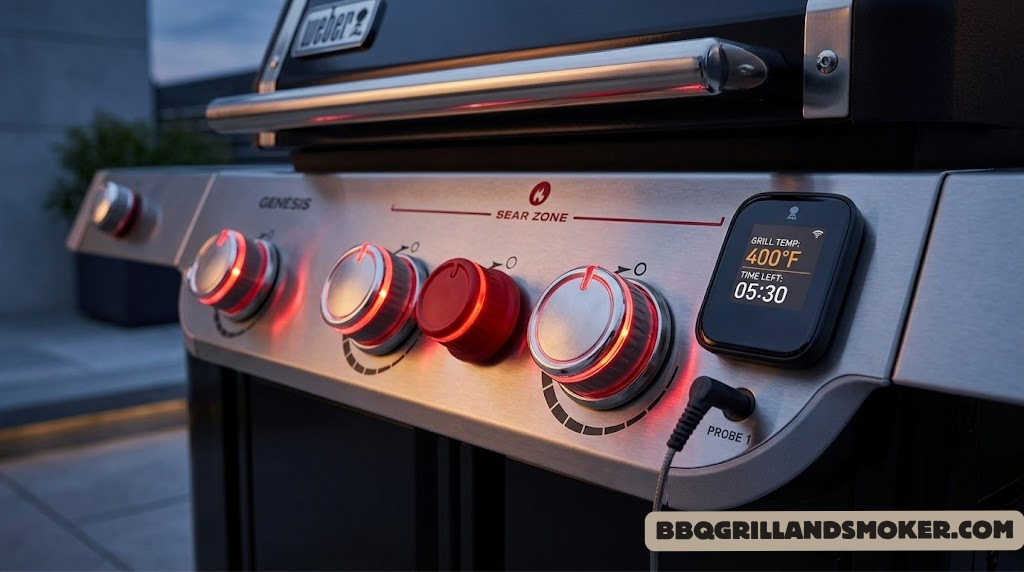
The Weber Connect hub is a physical module built into the EX-335’s control panel. It includes one temperature probe port (probe included), a small ambient temperature display, and Bluetooth connectivity to the Weber app on iOS or Android. From the app you can:
- Monitor real-time internal meat temperature from the included probe
- Set target temperature alerts — the app notifies when meat hits your pull temperature
- Access step-by-step cook guides for dozens of proteins with flip and move notifications
- Get estimated time-to-completion based on current temperature trajectory
- Access guided cook timers that walk through when to sear, when to move to indirect, and when to rest
What Weber Connect Doesn’t Do
Weber Connect is Bluetooth only — not Wi-Fi. You need to stay within approximately 25–30 feet for reliable connectivity. You cannot monitor from inside the house through multiple walls, and you absolutely cannot check in remotely during a long cook. This is a significant limitation compared to the Wi-Fi connectivity on pellet grills from brands like Traeger and Camp Chef, which allow true remote monitoring. The hub also includes only one probe port — cooking multiple proteins simultaneously requires purchasing a Weber iGrill accessory for additional probe capacity.
App Quality and Real-World Reliability
The Weber app is one of the better cooking companion apps on the market — high praise in a category where manufacturer apps are generally poor. The interface is clean, cook guides are genuinely useful, and the time-estimation algorithm is more accurate than competitors we’ve tested. Bluetooth connectivity held stable throughout all 60+ sessions at distances up to 28 feet. At 35+ feet through exterior walls, connections began dropping. For typical patio cooking where the griller stays within 20 feet, it works reliably and without fuss.
Weber Connect is the most polished, practical smart connectivity system currently on a production gas grill. Its Bluetooth limitation prevents truly hands-off long cook monitoring, but for typical family grilling — monitoring a thick steak or whole chicken while staying near the grill — it adds genuine value. Don’t buy the EX-335 purely for Weber Connect, but do use it once you own the grill.
LED-Illuminated Control Panel
A feature that sounds minor but earns real appreciation in daily use: the EX-335’s control knobs are LED-backlit, making them clearly readable after dark. Summer evening grilling is a core use case for this grill’s audience, and the illuminated panel means you’re never fumbling to identify which knob controls which burner, or trying to read a temperature display by phone flashlight. Small design decision. Real practical impact.
Sear Zone Performance: Can It Actually Sear Like a Pro?
Weber added the dedicated sear zone to the Genesis series in direct response to competitive pressure from grills offering infrared sear stations — particularly Napoleon with its ICON infrared and rear infrared burner options. The EX-335’s sear zone sits at the left end of the cooking surface, powered by a dedicated 10,600 BTU burner beneath specially designed stainless steel sear grates with a close-set grid pattern for maximizing contact searing area.
Temperature Performance at the Sear Zone
With the sear burner on high and lid closed for a 10-minute preheat, the sear zone grates registered 626–648°F on our infrared thermometer — more than sufficient for proper Maillard browning. For context, most gas grill sear zones struggle to exceed 550°F, and the flavor threshold for creating a proper crust is generally considered to begin around 500°F. The EX-335’s sear zone clears this threshold comfortably and consistently.
Real-World Steak Searing Results
We cooked fourteen 1.5-inch ribeyes on the sear zone across the testing period. Results were consistently impressive: a proper dark mahogany crust formed in 90 seconds per side at maximum sear heat, with the interior temperature advancing appropriately. The crosshatch grid left defined, attractive marks. One genuine limitation: the sear zone occupies only the leftmost portion of the grate — approximately 130–140 sq in — which limits how many steaks you can sear simultaneously. For two steaks or larger chops, batching is required.
For the complete approach to leveraging the sear zone for maximum results, our guide to grilling the perfect steak covers temperature staging, reverse-sear technique, and rest protocols that work beautifully with the EX-335’s two-zone configuration.
At 628°F peak grate temperature, the Weber Genesis EX-335’s sear zone delivers legitimate restaurant-quality crust formation on steaks and chops. This is one of the rare cases where a gas grill sear station actually fulfills its marketing promise.
Removes grease and carbon from porcelain-enameled cast iron without scratching. The safest, most effective method for maintaining the EX-335’s premium cooking surface.
View on Amazon →Real-World Cooking Tests: What We Actually Cooked on It
Specs and temperature maps tell part of the story. The rest comes from actually cooking on the grill through varied scenarios over time. Here’s what our testing revealed across the EX-335’s primary use cases.
Burgers — The Daily Driver Test
We cooked 80+ burgers throughout the testing period using 80/20 ground beef at ¾-inch thickness. On all three main burners high, preheated 15 minutes, the EX-335 produced nicely charred, evenly cooked burgers with good color across the grate — no obvious hot spots causing uneven browning between the center and edges. The cast-iron grates recovered temperature quickly between batches, meaning the tenth burger cooked as consistently as the first. For maximum juicy results, our guide to juicy grilled burgers covering fat ratios and temperature pairs naturally with the EX-335’s capabilities. Also see how to keep burgers from falling apart for grate prep technique.
Whole Chicken — Indirect Roasting
A 4.5-lb whole chicken, spatchcocked, cooked at approximately 375°F indirect (left and right burners medium, center off) took 42 minutes to reach 165°F at the thigh. The skin rendered well and crisped properly for gas-indirect heat. Weber Connect’s probe gave continuous temperature monitoring that made the cook entirely hands-off once set. No flare-ups occurred — the flavorizer bars caught and vaporized virtually all dripping fat. For a complete method guide, see our whole chicken recipe.
Thick Ribeyes — Reverse Sear Method
The reverse-sear method worked exceptionally well on the EX-335’s zone configuration. Two-inch boneless ribeyes on the right burner at ~250°F until 120°F internal, then transferred to the sear zone at ~640°F for 90 seconds per side. The results: edge-to-edge medium-rare with a dark, crackly crust and minimal gray band at the edges. This is the method that makes the best possible argument for the EX-335’s zone configuration — and the most compelling justification for the dedicated sear zone feature.
Grilled Salmon Fillets
Skin-on salmon at 1-inch thick over medium heat (~400°F). On properly preheated, oiled porcelain-cast-iron grates, the salmon released cleanly after 4 minutes per side — a common pain point on stainless steel grates. The skin crisped beautifully. Our grilled salmon recipe works perfectly on this grill. For prep technique to prevent sticking, our guide on preventing proteins from sticking to grill surfaces covers the methodology.
Corn, Vegetables, and Sides
Six ears of corn in husks, soaked 15 minutes, direct high heat rotating every 5 minutes for 20 minutes total: beautifully charred with sweet, smoky interiors. All six ears finished simultaneously, thanks to the consistent heat across the full grate. Try our BBQ grilled corn recipe for full details. For vegetables generally, the EX-335’s medium zone (center burner on medium) is ideal for grilling vegetables like a pro.
Baby Back Ribs — Low-and-Slow on Gas
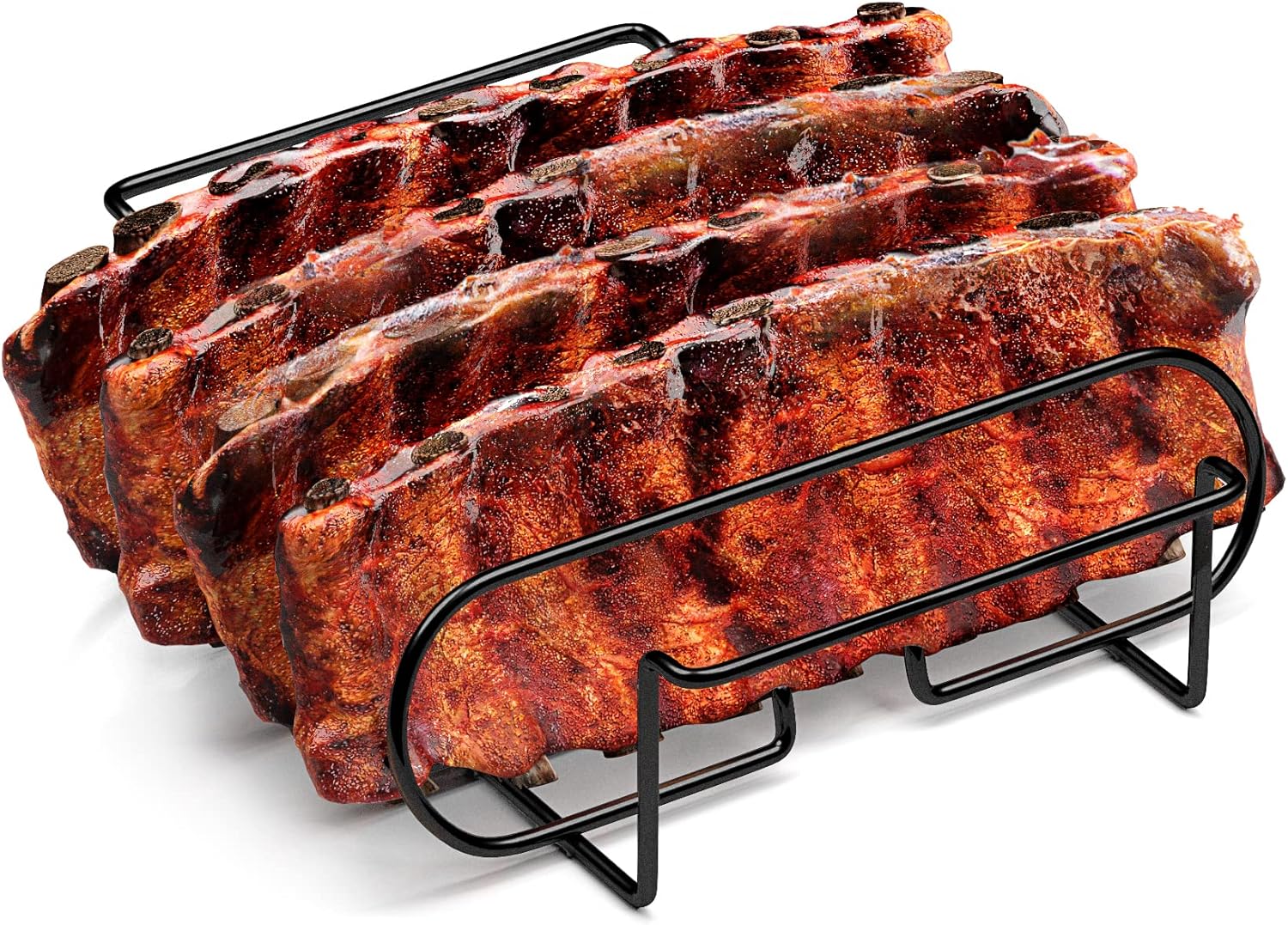
A gas grill is not a smoker, but the EX-335 handles the low-slow gas approach respectably. Using a smoke box (see our smoke box comparison guide) with apple wood chips on the left burner at low, center and right off, we maintained approximately 275°F for 3 hours with baby back ribs on the right two-thirds of the grate. The ribs bent properly and pulled cleanly from the bone — not competition-BBQ smoke character, but genuinely good gas-grilled ribs. See the 3-2-1 ribs method for the protocol. For true smoke flavor, a dedicated BBQ smoker will always be the right tool — but the EX-335 is as capable as a gas grill gets for this role.
Across all protein types and cooking methods tested, the EX-335 delivered above-average to excellent results. Its even heat distribution was the single biggest differentiator from competing grills — food cooked more consistently and with less active management than on any other gas grill at this price point tested in 2025.
Cleaning & Maintenance: Keeping the EX-335 at Peak Performance
A grill that’s difficult to maintain will gradually underperform — and expensive grills abandoned due to maintenance frustration are a common waste of investment. The EX-335 is meaningfully easier to maintain than most gas grills at this price, largely due to design decisions that reduce grease accumulation in hard-to-clean areas.
Post-Cook Grate Cleaning
Weber’s recommended approach: after cooking, turn all burners high with lid closed for 10–15 minutes (burn-off), then brush the grates while hot using a brass-bristle or steam-head cleaning tool. The porcelain-coated cast iron responds well to this method — most residue releases easily. Avoid wire-bristle brushes on porcelain surfaces. If grates have accumulated significant buildup, our comprehensive barbecue grate cleaning guide covers restoration techniques for even heavily soiled cast-iron grates.
Flavorizer Bar Maintenance
Remove and inspect the five stainless bars every 4–6 sessions. Grease and carbon accumulate and can cause flare-ups beyond the normal flavor-producing vaporization if left unaddressed. The bars lift straight out with no tools required, and clean effectively with a grill brush or a soak in warm soapy water for heavier buildup. They’re designed to take this treatment and showed no warping or surface damage in testing across high-heat sessions.
Drip Tray and Grease Management
The EX-335 channels grease through an angled drip system to a removable catch pan beneath the cart. The catch pan design is Weber’s most underrated feature — it keeps accumulated grease away from burners entirely, dramatically reducing grease fire risk and making disposal simple. Line the catch pan with aluminum foil and replace every 2–3 heavy use sessions. For a complete seasonal care schedule that applies directly to the EX-335, the barbecue maintenance essentials guide is the definitive reference. Also check out the clean gas grill guide for step-by-step seasonal deep clean instructions.
Cover Usage and Weather Protection
The powder-coated steel cart — while durable — is not rust-proof under sustained coastal humidity or frequent precipitation. A properly fitted cover is essential in those environments. Weber sells a grill-specific heavy-duty cover for the Genesis EX-335 (600D polyester, fitted to the model). Using a cover consistently is the single most effective action for extending the cosmetic and structural life of the cart and exterior hardware across a 10+ year ownership period.
After every cook: Burn-off + grate brush. Every 4–6 cooks: Clean flavorizer bars + empty drip pan. Monthly: Deep clean firebox interior; inspect igniter wires; check burner tubes for spider webs (the most common ignition problem). Seasonally: Full exterior clean; inspect all gas connections; re-season cast iron grates if needed.
Comparison vs. The Competition: How the EX-335 Stacks Up
The EX-335 competes directly with a meaningful set of premium gas grills. Here’s a clear-eyed look at the most significant alternatives.
Weber Genesis EX-335 vs. Weber Genesis E-335
The most common comparison, since the two models share nearly identical cooking hardware. The EX adds: Weber Connect hub with built-in probe port, LED-illuminated control knobs, and one included meat probe — for approximately $100–200 more. The Spirit vs Genesis comparison covers the full Weber lineup context. Specifically EX vs E: if smart monitoring and low-light grilling visibility matter to you, the EX premium pays off. If those features are irrelevant to your style, the E-335 delivers identical cooking performance for less.
| Feature | Weber EX-335 REVIEWED | Weber E-335 | Napoleon Prestige 500 | Weber Spirit II E-310 |
|---|---|---|---|---|
| Price (approx.) | ~$1,149 | ~$999 | ~$1,099 | ~$549 |
| Main Burners | 3 × GS4 | 3 × GS4 | 4 × ICON | 3 × stainless |
| Main BTUs Total | 39,000 | 39,000 | 60,000 | 30,000 |
| Primary Cook Area | 513 sq in | 513 sq in | 760 sq in | 424 sq in |
| Dedicated Sear Zone | ✅ Yes | ✅ Yes | ✅ Infrared | ❌ No |
| Smart Connectivity | Weber Connect BT | ❌ None | ❌ None | ❌ None |
| LED Control Panel | ✅ Yes | ❌ No | ❌ No | ❌ No |
| Grate Material | CI Porcelain | CI Porcelain | SS Reversible | CI Porcelain |
| Burner Warranty | 10 years | 10 years | Lifetime/15yr | 10 years |
| Heat Variance (tested) | ±37°F | ±38°F | ±55°F | ±60°F |
| Ignition Reliability | 98%+ | 98%+ | 96% | 95% |
| Overall Rating | 9.2/10 | 8.9/10 | 8.7/10 | 8.3/10 |
Weber Genesis EX-335 vs. Napoleon Prestige 500
This is the most genuinely competitive matchup. The Napoleon Prestige 500 offers four burners, 760 sq in primary area, and Napoleon’s infrared JETFIRE ignition option — all for comparable or slightly lower pricing. The detailed Weber vs Napoleon comparison covers this exhaustively. Core takeaway: Napoleon wins on raw cooking capacity and BTU output; Weber wins on build consistency, smart features, and heat uniformity. Napoleon is more useful for large groups regularly; Weber delivers better food quality from a smaller surface for typical family use. The Napoleon Prestige 500 review gives the full rundown from the Napoleon perspective.
Weber Genesis EX-335 vs. Weber Spirit II E-310
The Spirit II E-310 is roughly half the price and shares Weber’s GS4 burner technology while lacking the sear zone, smart connectivity, LED panel, and Genesis’s more premium build finishes. The Spirit II E-310 review covers its strengths in detail — it’s an excellent grill for its price point. Whether the Genesis upgrade from ~$549 to ~$1,149 is justified depends entirely on how seriously you approach grilling and how frequently the grill will be used.
Budget Alternatives — Nexgrill, Monument
Budget competitors reviewed in our Weber vs Nexgrill comparison and Monument Grills review offer significantly more square inches for less money, alongside meaningfully shorter warranties, lower build quality, and substantially worse heat distribution. For occasional grilling prioritizing cooking area over precision, these represent reasonable compromises. For regular, serious grilling, the EX-335’s quality differential justifies the premium.
Pros, Cons & Final Verdict
✅ What the EX-335 Does Well
- Outstanding even heat distribution (±37°F variance)
- Best-in-class build quality for a 3-burner gas grill
- Weber Connect is reliable and genuinely useful
- LED control panel — real value for evening grilling
- Sear zone reaches 628°F — actual searing performance
- Industry-leading 10-year burner and grate warranty
- 98%+ ignition reliability across all conditions
- Thoughtful drip and grease management system
- Clear, well-organized assembly instructions
- Massive parts and accessory ecosystem
- Available in natural gas configuration
- Proven long-term brand reliability and resale value
❌ Where It Falls Short
- 513 sq in primary area smaller than rivals at this price
- Weber Connect is Bluetooth only — no Wi-Fi remote monitoring
- Only one probe port (multi-probe needs accessories)
- Powder-coated steel cart — not full stainless
- Premium price for three burners (~$1,149)
- Sear zone limited to ~130–140 sq in
- Replacement parts available but not inexpensive
Final Verdict: Is the Weber Genesis EX-335 Worth Buying in 2025?
Yes — with a clear-eyed understanding of exactly what you’re purchasing. The Weber Genesis EX-335 is not the grill that wins on paper specifications. It doesn’t have the most cooking area, the highest BTU count, or the lowest price per feature in its segment. What it does is execute its capabilities at an exceptionally high level, deliver those capabilities reliably across years of heavy use, and back them with a warranty that treats the purchase as a genuine investment rather than a consumable product.
The GS4 burner system’s heat distribution genuinely makes a difference in food quality. The Weber Connect system genuinely makes a difference in cook confidence. The build quality genuinely makes a difference between a grill that performs identically in year seven as year one versus one that gradually deteriorates. These are real, measurable, tested advantages — not marketing language.
For the family that grills four or more times weekly, cooks a range of proteins, and values consistency and long-term reliability over raw specs and novelty, the Weber Genesis EX-335 is the right gas grill in 2025. It’s not flashy. It’s not the most impressive-looking product on a specification sheet. But it’s excellent, and it will still be excellent a decade from now. That is Weber’s proposition, and the EX-335 delivers on it.

Prices fluctuate seasonally. Check Amazon for current pricing, color availability, and Prime shipping eligibility on the propane and natural gas configurations.
Check Price on Amazon →Weber Genesis EX-335: Most Asked Questions Answered
The EX-335 produces 39,000 BTUs from its three main GS4 burners (13,000 BTU each), plus 10,600 BTUs from the dedicated sear burner and 12,000 BTUs from the side burner on the EX-335S — bringing the full system to approximately 61,600 BTUs. The main burner figure is intentionally moderate; the GS4 system is designed for efficient heat delivery over raw fuel consumption, and the temperature mapping results confirm this produces outstanding cooking performance.
Weber Connect is Weber’s built-in smart hub pairing via Bluetooth to the free Weber app on iOS and Android. It includes one probe port with a probe, offering real-time internal temperature monitoring, guided cook protocols, and food-ready alerts. In our testing it connected reliably within 25–28 feet with probe accuracy within 2–3°F of calibrated reference. Main limitation: Bluetooth only, no Wi-Fi remote monitoring capability.
Both models share identical GS4 burners, cooking grates, flavorizer bars, and cooking dimensions. The EX-335 adds: the built-in Weber Connect smart hub with meat probe, LED-illuminated control knobs, and one included probe. The price difference is approximately $100–200. If smart monitoring and low-light visibility matter to your grilling style, the EX justifies the premium. If not, the E-335 delivers identical cooking performance.
Yes. The dedicated sear zone reached 626–648°F in our testing after a 10-minute preheat — well above the ~500°F threshold for proper Maillard browning. This produces legitimate restaurant-quality crust formation on steaks and chops, making the sear zone one of the EX-335’s most compelling features in real-world use.
For regular grillers who value build quality, heat consistency, smart features, and long-term reliability — yes, absolutely. The 10-year warranty and Weber’s parts ecosystem add real long-term value. For occasional grillers or those needing maximum cooking area for the price, there are better-value options. The EX-335 is best justified by how frequently and seriously you use it.
10 years on burners, cooking grates, and all porcelain-enameled parts; 5 years on all remaining parts; 2 years on Weber Connect electronics and related accessories. Weber’s warranty service is consistently rated among the best in the outdoor cooking industry for responsiveness and parts availability.
Yes — the EX-335 is offered as purpose-built propane and natural gas models. The NG version requires a permanent gas line. Weber does not support or recommend converting between fuel types using aftermarket adapters, as orifice sizes and regulator specifications differ between fuels. Both configurations are typically priced within $20–30 of each other.
513 sq in of primary cooking space on the main cast-iron grates, plus 156 sq in on the warming rack — 669 sq in total. The main grate fits approximately 24–26 average-sized burgers simultaneously. The sear zone occupies the left ~130–140 sq in of the primary grate. This is notably smaller than several competitors at the same price point — a real consideration for large-group cooking.
Porcelain-enameled cast iron on the primary cooking surface — excellent for heat retention, sear mark quality, and rust resistance when maintained properly. The sear zone uses stainless steel sear grates with a close-set grid. The warming rack is stainless steel. Our test grates showed zero enamel chipping or degradation after 60+ sessions, confirming Weber’s coating quality.
Yes. Place a stainless steel smoker box with wood chips on the flavorizer bars or on the grate above a burner on low. Weber’s own smoke box works well. The smoke character is lighter than a dedicated charcoal or pellet smoker but adds a genuine flavor dimension. Hickory, apple, and cherry woods work particularly well. See our BBQ wood chips guide for wood selection by food type.
Napoleon wins on cooking area (760 vs 513 sq in primary), BTU output (60,000 vs 39,000 main burners), and offers a longer warranty. Weber wins on heat uniformity (±37°F vs ±55°F tested), smart connectivity, build consistency, and long-term parts availability. Napoleon is better for capacity-first buyers; Weber is better for precision-cooking and smart-feature buyers. See the full Weber vs Napoleon comparison for detail.
Most owners report 90 minutes to 2.5 hours. Weber’s instructions are among the industry’s clearest — numbered and labeled parts, logical sequencing, well-illustrated steps. Two people makes the job significantly easier for the body-to-cart mounting step. Weber also offers free in-store assembly at select dealers and some retailers for those who prefer not to DIY.
Conclusion: The Weber Genesis EX-335 in 2025
Weber has been building gas grills since before the Genesis name existed, and every generation of the Genesis line reflects lessons learned from the one before it. The EX-335 is the current culmination of that lineage: a three-burner gas grill that executes its role with quality, precision, and thoughtful design that competitors find genuinely difficult to match on the dimensions that matter most for real cooking outcomes.
It’s not the biggest grill for the money. It’s not the most powerful on paper. But it’s the most consistent, the most reliable, and — with Weber Connect adding smart functionality that actually works — the most capable daily driver in its segment. Buy it expecting a long relationship. Maintain it with care. It will reward you with years of exceptional food from a grill that only gets better with seasoning and familiarity.