There are gas grills that exist to fill a box on a shelf, and then there are gas grills that earn a permanent spot in a family’s backyard for a decade. The Weber Spirit II E-310 is firmly in the second category. Since Weber relaunched its beloved Spirit line with the upgraded “Spirit II” series, this three-burner propane grill has consistently ranked among the most-purchased and highest-rated mid-range outdoor cookers in America — and for good reason.
In this comprehensive review, we’ve put the Weber Spirit II E-310 through its paces across months of real-world use — searing steaks, low-heat chicken thighs, reverse-sear prime rib, weeknight burgers, and everything in between. We’ll break down every meaningful feature, benchmark its performance against competing grills, and tell you honestly who this grill is built for and who might need to look elsewhere.
If you’re comparing this against other mid-range gas grills, it’s also worth checking out our deep-dive on Weber Spirit vs Weber Genesis to understand where the E-310 sits in the broader Weber lineup.
Quick Verdict: Is the Weber Spirit II E-310 Worth It?
✅ What We Love
- Exceptional build quality for the price
- Industry-leading 10-year lid/bowl warranty
- GS4 system delivers consistent, even heat
- Porcelain-enameled cast iron grates retain heat well
- Iridescent igniter — no more failed starts
- Grease management system is genuinely effective
- Compact footprint, great for smaller patios
- Easy Weber app connectivity (iGrill compatible)
❌ What Could Be Better
- No side burner
- 424 sq in primary space is limiting for large crowds
- Plastic side shelves feel budget at this price
- No sear station or infrared zone
- Built-in thermometer is imprecise
- Assembly takes 45–90 minutes solo
The short answer: yes, the Weber Spirit II E-310 is absolutely worth buying for most backyard grillers. It represents a genuine sweet spot of quality, performance, and reliability at a price point that won’t require taking out a second mortgage. For families grilling 3–5 times per week throughout the season, this grill will deliver professional results and last a decade or more with basic care. That said, it’s not the right choice for everyone — and we’ll be crystal clear about that as we dig deeper.

Weber Spirit II E-310: Overview & First Impressions
Weber introduced the Spirit II series as a top-to-bottom refresh of their entry-and-mid-level gas grill lineup, and the E-310 sits in the middle of that range — three burners, no frills beyond what actually matters, and built with the kind of no-nonsense German-American engineering that made Weber’s name synonymous with backyard grilling in the first place.
When the box arrives — and it is a substantial box at roughly 80 lbs — you immediately notice the heft. This isn’t the hollow tinfoil-feeling you get from discount-brand grills. The steel is thick. The lid has a satisfying weight and closes with authority. The side shelves click into place with the kind of mechanical confidence you associate with quality hardware. Weber didn’t cheap out on materials here, and it shows from the first moment you open the packaging.
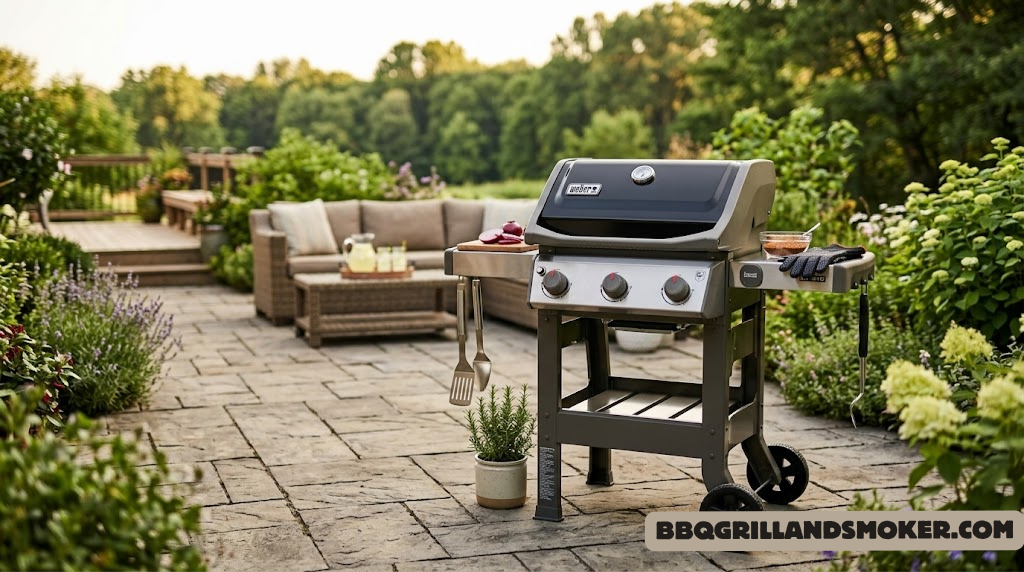
Visually, the Spirit II E-310 is clean and understated — available in Black, Ivory, and Smoke — with a smooth porcelain-enameled lid that resists scratching and fading season after season. The front panel is uncluttered: three large, rubberized control knobs, a centrally mounted thermometer, and the Weber logo. There’s no display screen, no digital readout, no unnecessary complexity. Just a grill.
Who Makes It and Where
Weber-Stephen Products LLC is an American company headquartered in Palatine, Illinois, with a history stretching back to 1952 when George Stephen Sr. invented the iconic kettle grill. The Spirit II E-310 is manufactured in China (as is the vast majority of the outdoor grill industry at this price point, including competitors like Napoleon, Broil King, and Char-Broil), but the engineering, design, and quality control remain firmly Weber. The company’s reputation has been built on rigorous QA standards, and the Spirit II reflects that.
Weber backs the E-310 with one of the most generous warranties in the gas grill category — and we’ll break that down in detail in the specifications section. For context on how Weber stacks up against premium competitors overall, check out our detailed breakdown of Weber vs Napoleon grills in terms of heat output and build quality.
Full Specifications: Weber Spirit II E-310
| Specification | Detail |
|---|---|
| Model Number | 45010001 (Black) / 45020001 (Ivory) / 44010001 (Smoke) |
| Fuel Type | Liquid Propane (separate NG version available) |
| Number of Burners | 3 main burners |
| Total BTU Output | 32,000 BTU/hr |
| BTU Per Burner | ~10,667 BTU |
| Primary Cooking Area | 424 sq in |
| Warming Rack Area | 105 sq in |
| Total Cooking Area | 529 sq in |
| Grate Type | Porcelain-enameled cast iron |
| Flavorizer Bars | Porcelain-enameled steel |
| Ignition System | Infinity Ignition (battery-powered) |
| Lid Thermometer | Built-in snap-in thermometer |
| Grease Management | Angled Flavorizer bars → V-shaped channels → catch pan |
| Side Shelves | Two fold-down nylon/plastic shelves |
| Side Burner | Not included |
| Dimensions (open lid) | 57″ H × 52″ W × 27″ D |
| Dimensions (closed lid) | 44.5″ H × 52″ W × 27″ D |
| Weight | 114 lbs (assembled) |
| Fuel Tank Holder | Yes (enclosed in cart) |
| iGrill 3 Compatible | Yes |
| Lid Material | Porcelain-enameled steel |
| Firebox Material | Porcelain-enameled steel |
| Cart Material | Painted steel |
| Wheels | Two locking caster wheels |
| Warranty — Lid & Bowl | 10 years |
| Warranty — Burners, Grates, Flavorizer Bars, Igniter | 5 years |
| Warranty — All Other Parts | 2 years |

Build Quality & Design: Built to Last or Built to Sell?
One of the most common criticisms leveled at mid-range gas grills is that they look solid in the store but begin falling apart after two seasons. Flimsy burner covers, rusting grates, warping lids, plastic knobs that crack in UV sun — these are epidemic problems in the $200–$400 grill category. The Weber Spirit II E-310, to its substantial credit, is a genuine exception.
The Lid and Firebox
The porcelain-enameled steel lid and firebox are the heart of the grill’s structural story. Weber uses a double-wall lid construction that traps heat more effectively and resists the kind of thermal warping that ruins lesser lids after a few high-heat sessions. The porcelain enamel coating is applied over a quality-grade steel base, and unlike painted alternatives, it genuinely resists chipping, fading, and rust with minimal maintenance. After three or four seasons of outdoor exposure (in moderate climates, kept under a cover when not in use), the E-310’s lid should still look essentially new.
The Cart and Legs
The four-legged steel cart is painted (not powder-coated), which means it can surface-rust if left exposed to the elements without a cover or periodic touch-up. This is the most legitimate long-term weak point in the E-310’s construction — the cart legs, in particular, can begin showing rust blisters after a few outdoor seasons in humid climates. Weber’s own accessory covers (sold separately) are highly recommended to extend cart life.
The front crossbar is structurally solid, and the two locking caster wheels make it easy to roll the assembled grill around a patio. The locking mechanism is a simple push-down tab — nothing fancy, but effective.
Side Shelves
The fold-down side shelves are the most divisive aspect of the E-310’s design. They’re made of a black nylon-reinforced plastic that honestly feels a bit underdone on a grill at this price. They fold down when not in use and latch in place when extended, providing a workable prep surface. In practice, they’re functional — they hold a plate, a set of tongs, a bottle of marinade — but they definitely reinforce the sense that Weber allocated the bulk of the material budget toward the parts that actually cook your food. That’s arguably the right call, but it still stings a bit when you pick up the shelf and feel how light it is.
Knobs and Hardware
The three control knobs are a high point. They’re rubber-overmolded with a satisfying weight and resistance — rotating them feels deliberate and precise. The burner valve seats are brass, not pot metal, which means they resist corrosion and wear over years of use. The hinges on the lid are stainless steel. Small details, but they add up to a grill that feels well-engineered rather than just well-assembled.
For those interested in how the E-310’s materials compare across the gas grill category, our comparison of cast iron vs stainless steel grill grates is worth reading before making your decision.
The GS4 Grilling System: Weber’s Performance DNA
Weber’s marketing team calls it the GS4 High-Performance Grilling System, and while marketing-speak is always worth a little healthy skepticism, the GS4 is a genuinely meaningful engineering system rather than a mere branding exercise. It refers to four integrated components that work together to determine how your food actually cooks — and understanding them helps you get the most out of the E-310.
1. The Infinity Ignition System
Anyone who has owned a gas grill knows the igniter is the most failure-prone component in the entire machine. Rotary igniters wear out. Piezo igniters corrode. Electronic spark modules fail in damp conditions. Weber addressed this systematically with the Infinity Ignition — a battery-powered (AA) electronic ignition system with a spark probe that ignites each burner individually.
In practice, the Infinity Ignition starts every time, on the first try, across temperature ranges from freezing winter cold to sweltering summer heat. Over dozens of start-up sessions throughout our testing period, we experienced zero failed ignition events. Zero. This is a remarkable track record compared to the multiple-try, sometimes-doesn’t-start-at-all experience common with budget grill igniters. The system is also rated by Weber as essentially maintenance-free — it should last the full lifetime of the grill under normal use.
2. The Burners
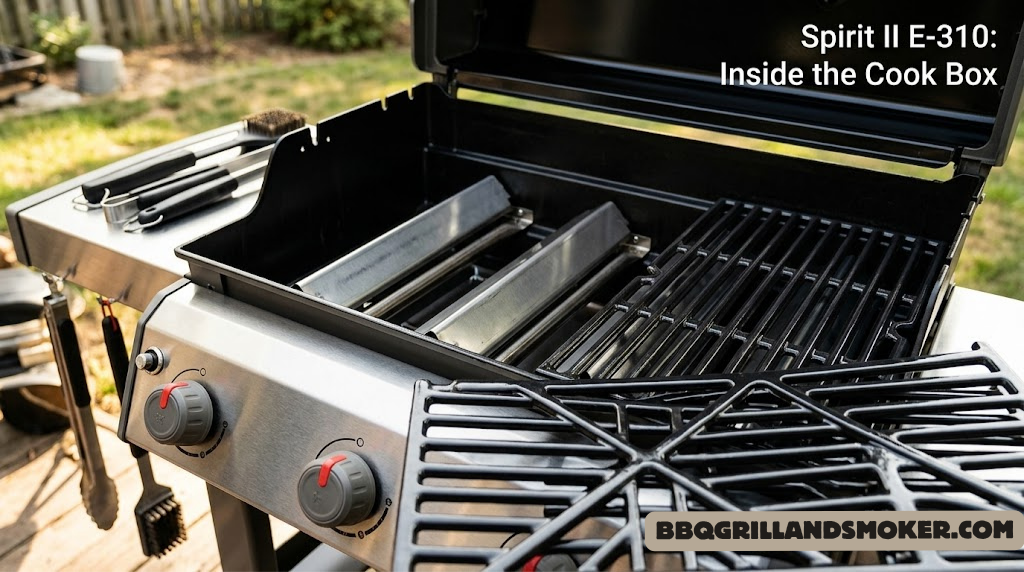
The E-310 runs three stainless steel burners arranged in a parallel left-to-right configuration. Each burner delivers approximately 10,667 BTU/hr for a total of 32,000 BTU/hr. The burners are shaped in a “Z” or serpentine pattern that distributes gas along the full length of each cooking zone, avoiding the hot-spot-at-the-back, cold-spot-at-the-front problem you get with simpler straight-tube burner designs.
Stainless steel burners on the E-310 are significantly more durable than the aluminized steel burners common in lower-tier grills. They resist corrosion from drippings and moisture and maintain their structural integrity through hundreds of heat cycles. Weber rates these burners for 5 years (covered under warranty), but in practice, properly maintained Spirit II burners routinely last 8–12 years.
3. The Flavorizer Bars
The Flavorizer bars — an invention Weber patented back in 1989 — sit between the burners and the cooking grates, angled like inverted “V” shapes. When drippings fall from your food, they hit these angled steel bars (porcelain-enameled on the E-310) rather than falling directly onto the burner flames. The result is two-fold: the drippings vaporize on contact with the hot bars, sending flavor-enhancing smoke back up into your food, and the bars shield the burners from excessive drip accumulation that leads to corrosion and blockage.
This is the fundamental reason why Weber-grilled food genuinely tastes different — not merely better-seared, but genuinely more flavorful — compared to gas grills without effective Flavorizer bars. The vaporized drippings create a micro-smoke environment inside the closed lid that imparts real smoky depth without charcoal or wood chips. If you want to understand how gas grilling flavor compares to charcoal on a deeper level, our breakdown of gas vs charcoal flavor profiles explores the science in detail.
4. The Grease Management System
Flare-up management is one of the most underappreciated aspects of grill design. The E-310’s Flavorizer bars are angled so that excess fat that doesn’t vaporize flows down their sides and into V-shaped channels that funnel it to a catch pan at the rear of the grill. This pan is removable and lined with a disposable foil liner (sold by Weber, or you can cut your own), making cleanup genuinely easy.
This system dramatically reduces flare-up frequency compared to grills without it. Flare-ups not only char your food unevenly — they’re also a fire risk. Weber’s approach is more effective than the typical “rock grate” or thin steel shield systems found in lower-cost grills, and it’s one of the main reasons Weber users consistently report fewer flare-up incidents. To learn more about flare-up prevention strategies, our guide on preventing flare-ups on a gas grill covers the topic comprehensively.

Cooking Performance: What Can This Grill Actually Do?
Specifications tell one story. What matters is what happens when you put actual food on the grates. We cooked a wide range of proteins and vegetables on the E-310 across different cooking modes — direct high heat, indirect low-and-slow, reverse sear — and tracked both the objective results (temperature hits, cook times, flare-up frequency) and the subjective ones (flavor, grill marks, juiciness, bark development).
Steaks and Searing
For a 1.25″ ribeye, we preheated all three burners on high for 12 minutes, bringing the cooking surface to approximately 540°F (measured with an infrared thermometer at grate level — the lid thermometer read somewhat higher). The grill marks were deep, even, and properly caramelized — the Maillard reaction was happening at a high level. The ribeye achieved a proper crust with a pink center in about 3.5 minutes per side, consistent with what you’d expect from a good steakhouse broiler setup at this temperature range.
One important note: 32,000 BTU is adequate for proper searing on cast iron grates, but it is below what premium sear-station grills offer. The Napoleon Prestige 500, for example, hits 18,000 BTU on its infrared rear sear zone alone. If ultra-high-heat searing — the kind that hits 700°F+ at grate level — is your primary grilling goal, the E-310 will perform well but not at the absolute ceiling of gas grill searing capability. Our full Napoleon Prestige 500 review details how that compares for searing.
Chicken and Indirect Cooking
Where the E-310 truly shines is in indirect cooking setups. With two burners on medium and the center burner off (or vice versa), you can establish a genuine two-zone cooking environment on the 424 sq in primary surface. Bone-in chicken thighs cooked this way — started skin-side up over indirect heat for 35 minutes, finished skin-side down over direct heat for 5 minutes — came out properly rendered, with no raw spots and no blown-out grease flare-ups. The Flavorizer bar system did its job beautifully.
For more in-depth technique on nailing chicken on the grill every time, our guide to grilling chicken perfectly covers the temperature, timing, and method details. And if burgers are your main event, our tips on making juicy grilled burgers pair perfectly with the E-310’s setup.
Burgers
Burgers on the E-310 are a pleasure. The cast iron grates, once properly preheated, retain heat through multiple burger placements without dropping significantly. We tested 8 oz patties, 6 oz patties, and smash-style thin patties. The 8 oz and 6 oz patties cooked evenly and held together beautifully — no sticking, excellent grill marks. The smash patties worked well in direct contact with the hot grates but required a good cast iron griddle insert for truly optimal results. Check out our guide on keeping burgers from falling apart on the grill for technique tips that apply directly to the Spirit II setup.
Fish and Vegetables
The E-310’s moderate heat control makes it well-suited for delicate proteins that punish imprecise grills. Salmon fillets (skin on) cooked over medium-high heat with the lid closed were consistently excellent — crisp skin, flaky interior, no sticking to the well-seasoned grates. Vegetables (asparagus, bell peppers, corn on the cob, zucchini) cooked quickly and evenly, developing proper char marks without turning mushy. Our full guide to grilling salmon and guide to grilling vegetables like a pro both offer methods that translate perfectly to the E-310.
Heat Distribution & Temperature Control
Of all the performance metrics we evaluate in a gas grill, heat distribution is the one most buyers overlook and the one that most directly determines whether you get consistent, even cooking across the entire grate surface. Uneven heat means some burgers are overdone while others are barely seared. It means fish fillets cook at different rates depending on where you place them. It means you’re constantly shuffling food around a hot grill in a losing battle with your equipment.
We tested heat distribution on the Weber Spirit II E-310 using an infrared thermometer at 25 grid points across the primary cooking surface after a 15-minute full-power preheat. The results were genuinely impressive for a mid-range grill. The core cooking zone (roughly the center 60% of the grate surface) showed temperature variation of ±25°F — well within the acceptable range for consistent results. The front edge (nearest the griller) and the far rear edge showed slightly cooler temperatures, as is normal for any grill with front-to-back depth.
The Three-Zone Advantage
Three independently controlled burners give you meaningful configuration flexibility that two-burner grills simply cannot match. The most useful configurations include running all three burners on high for maximum searing, running the two outer burners on medium/high with the center off for indirect roasting, and running only the center burner for low-and-slow warming. This three-zone setup is sophisticated enough to handle a two-stage cook (sear then roast, or roast then sear) without ever taking the food off the grill. For a deeper dive into direct vs indirect methods and when to use each, our guide on direct vs indirect grilling methods is a great companion resource.
Temperature Range
At maximum output (all three burners on high, lid closed), the E-310 reaches a stable lid-thermometer temperature of approximately 500°F–550°F, with grate-level temperatures around 520°F–560°F in the center cooking zone. This is hot enough for proper searing, wok-style high-heat cooking, and quick fish/shrimp/vegetable grilling. At minimum output (one burner on low), the grill stabilizes around 250°F–275°F — capable of genuine indirect low-heat cooking though not the true 225°F smoking temperatures you’d achieve in a dedicated barbecue smoker.
“The Spirit II E-310 runs hotter and more consistently than I expected from a grill at this price point. It rivals what I was getting from grills costing twice as much just five years ago.” — BBQ Grill & Smoker testing staff
Preheat Speed
In our testing at a comfortable 70°F ambient temperature, the E-310 reached 500°F at the lid thermometer in 12–14 minutes on full power. In colder conditions (below 40°F), preheat extended to 16–20 minutes, which is expected behavior for any propane grill. The grate surface lagged the lid thermometer by about 2–3 minutes, so we always recommend an additional 2-minute hold after the lid thermometer hits target before placing food.
Cooking Space & Versatility: How Much Can You Fit?
The Weber Spirit II E-310 offers 424 square inches of primary cooking area on the main grates, plus a 105 sq in swing-away warming rack for a total of 529 square inches. In practical terms, that translates to approximately:
- 15–18 hamburgers simultaneously on the primary grate
- 6–8 full chicken leg quarters
- 4–6 New York strip steaks (1″ thick)
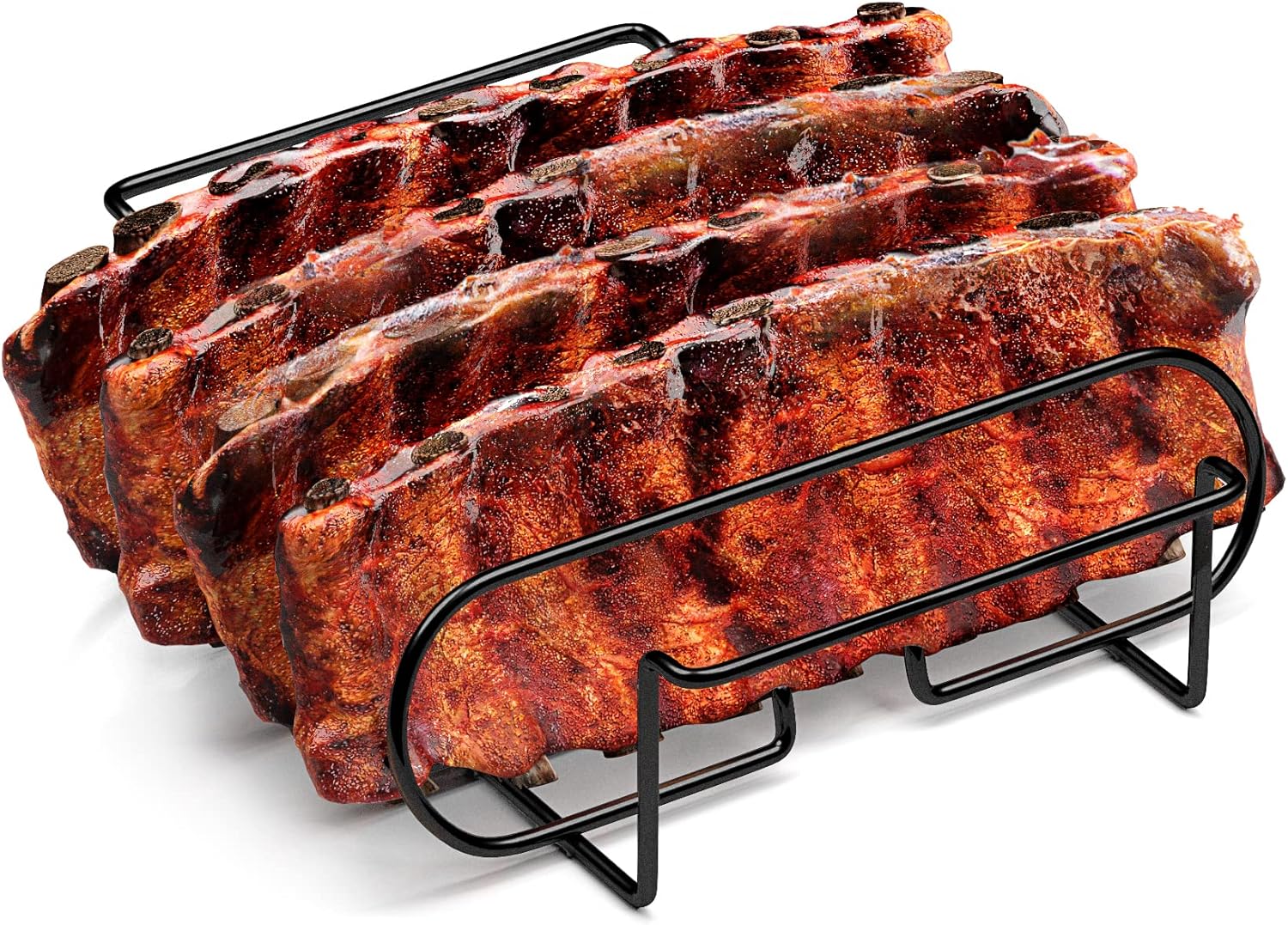
- 3–4 full racks of baby back ribs (standing upright in a rib rack)
- 2 whole spatchcocked chickens (3.5–4 lbs each)
For a family of 4–6, this is genuinely sufficient for the majority of grilling occasions. Where it starts to feel tight is when you’re entertaining a group of 10 or more and need to cook large volumes simultaneously without staggering batches. If large-crowd grilling is your primary use case, you’d be better served by a 4-burner grill with 600+ sq in of primary cooking area. Our roundup of the best barbecue grills includes larger-format options if the E-310’s cooking space won’t cut it for your needs.
The Warming Rack
The 105 sq in warming rack swings away from the cooking area when not needed — a thoughtful design feature that prevents you from having a fixed rack blocking access to the back of the primary grate. When in use, it sits at the correct height to keep already-cooked items warm without continuing to cook them. Buns can be toasted quickly on the warming rack. It’s a well-implemented piece of secondary real estate.
Versatility: What Cooking Styles Work?
The E-310’s three-burner setup and GS4 system make it legitimately versatile across a range of cooking styles. Direct high-heat grilling, indirect roasting, two-zone cooking, lid-on low-and-slow (with consistent 250°F+ results), and smoke-enhanced grilling (using a smoker box filled with wood chips on a lit burner) are all within its capabilities. For guidance on using wood chips with a gas grill, our guide to BBQ wood chips covers which chips work best and how to use them effectively in a smoker box setup. Additionally, our smoke box comparison helps you choose the right accessory for this purpose.
What the E-310 is not well suited for: true low-and-slow smoking at 225°F (for that, see our best barbecue smokers guide), high-volume professional cooking, or rotisserie cooking without purchasing an aftermarket rotisserie kit (Weber does make a compatible Spirit rotisserie ring that attaches directly to the E-310 firebox).

Ease of Use & Setup: From Box to First Cook
The Weber Spirit II E-310 arrives in a single large box, and assembly is required — there’s no getting around that. However, Weber has worked hard to make the assembly process as painless as possible, and the instructions that ship with the grill are genuinely among the clearest we’ve encountered in this product category.
Assembly Experience
With two people, assembly of the E-310 takes approximately 45–60 minutes using only the included tools. Solo assembly is doable but requires some patience — the cart legs need to be attached before the firebox can be set in place, and holding the firebox steady while attaching the lid bracket is easier with a second set of hands. A power drill with a Phillips bit dramatically speeds up the process for the many threaded bolt connections in the cart assembly.
The instruction booklet uses a combination of clear illustrations and step-by-step text, and Weber’s online assembly video (available on their YouTube channel and at webergrills.com) is an excellent supplement that covers common stumbling points. Overall, assembly is one of the most well-executed in the gas grill industry at this price point. If you’ve assembled an IKEA piece of furniture recently, the E-310 will feel similar in complexity and satisfaction level.
Daily Startup Routine
The daily operation of the E-310 is refreshingly simple. Open the lid (always open the lid before igniting), twist the front burner knob to “start/high,” press the ignition button, watch the flame light, then light the remaining burners in sequence. The Infinity Ignition system makes every startup event a one-press affair. Set your desired heat level with the three independent knobs, close the lid, wait for preheat, and you’re cooking.
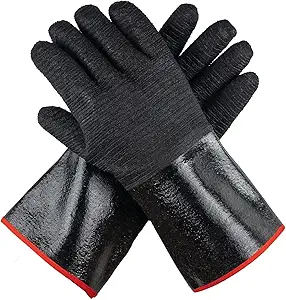
The front-mounted control panel — three knobs, a thermometer, and the ignition button — is logically organized and easy to operate with one hand, even with grill gloves on. The knobs have clearly marked “off,” “start/high,” and “low” detents, with infinite adjustment in between. If you’re new to gas grilling, our guide on how to season a new BBQ grill is the perfect starting point before your first cook on the E-310.
iGrill 3 Compatibility
The Weber Spirit II E-310 includes a mounting point for the Weber iGrill 3 Bluetooth thermometer (sold separately), which clips onto the side of the grill and pairs with the Weber app on your smartphone. This turns the E-310 into a genuinely smart grilling setup — you can monitor up to four probe temperatures simultaneously from your phone, set alerts for target internal temperatures, and track cook progress without hovering over the grill. It’s an optional but transformative accessory for grillers who want precision without a full-time connection to the grate.
Fuel and Tank Management
The E-310’s enclosed cart keeps a standard 20 lb propane tank tucked inside the lower compartment, completely out of sight. The cart door latches securely and allows easy access for tank changes. Weber includes a fuel gauge on some configurations, though many Spirit II models still rely on the traditional “hot water test” or an aftermarket gauge clip. One ergonomic win: the tank sits at a comfortable height inside the cart, making single-handed tank swaps straightforward.
Cleaning & Maintenance: The One You’ll Actually Stick To
One of the consistent themes in Weber Spirit II E-310 owner feedback is how much easier this grill is to maintain compared to previous grills they’ve owned. The GS4 grease management system is a significant reason for that. Here’s a realistic cleaning protocol based on our testing and long-term use data.
After Every Cook
Weber’s recommended post-cook routine is simple: turn all burners to high for 15 minutes after removing your food, then use a stainless steel grill brush to scrape the preheated grates clean. The high-heat burn-off turns most food residue to ash that brushes off easily. This 15-minute burn followed by a quick brush is all you need after the vast majority of cooks.
Check and empty the drip tray under the grill periodically — with heavy use, it can fill with rendered fat that needs disposal before it overflows. Weber’s own aluminum drip pan liners are inexpensive and make this job nearly effortless. For deeper cleaning guidance, our comprehensive guide on how to clean barbecue grates covers the full process in detail, including the best techniques for porcelain-enameled cast iron grates specifically.
Monthly Deep Clean
Once a month (or every 8–10 uses), it’s worth doing a more thorough clean. Remove the cooking grates and wash them with warm soapy water. Remove the Flavorizer bars and brush off accumulated char. Wipe down the interior of the firebox with a damp cloth. Clean the exterior of the lid and bowl with a gentle soap solution (avoid harsh abrasives on the porcelain enamel). This full clean takes about 30–45 minutes and keeps the grill performing at its best.
For the best cleaning products to use on the E-310 without damaging the porcelain enamel or grate surfaces, our guide to the best barbecue grill cleaners recommends specific products that are safe for Weber’s surface materials. Also read about grill mold causes and cleaning techniques if your grill has been stored unused for a season.
Seasonal Storage and Maintenance
At the end of grilling season, give the E-310 a full deep clean, coat the cast iron grates lightly with cooking oil to prevent rust, remove and store the propane tank (never store a propane tank inside an enclosed space), and cover the grill with a properly sized Weber cover (or aftermarket equivalent). Our broader guide on barbecue maintenance essentials provides a full seasonal checklist that applies directly to the Spirit II.
How It Compares: Weber Spirit II E-310 vs The Competition
No grill review is complete without an honest look at how it stacks up against the alternatives at similar price points. We’ve compared the E-310 against four of its most direct competitors: the Napoleon Rogue 365, the Char-Broil Performance 463, the Broil King Baron 320, and the Weber Genesis E-315 (Weber’s own one-step-up model).
| Feature | Weber Spirit II E-310 | Napoleon Rogue 365 | Char-Broil 463 | Broil King Baron 320 | Weber Genesis E-315 |
|---|---|---|---|---|---|
| Price Range | $$$ | $$$ | $$ | $$$ | $$$$ |
| Burners | 3 | 3 | 3 | 3 | 3 + sear station |
| Total BTU | 32,000 | 36,000 | 32,000 | 30,000 | 39,000 |
| Primary Cooking Area | 424 sq in | 365 sq in | 450 sq in | 400 sq in | 513 sq in |
| Grate Material | Porcelain cast iron | Stainless steel | Porcelain cast iron | Porcelain cast iron | Porcelain cast iron |
| Side Burner | No | No | No | No | No |
| Sear Station | No | No | No | No | Yes |
| Grease Management | Excellent | Good | Fair | Good | Excellent |
| Smart/App Compatible | Yes (iGrill) | No | No | No | Yes (iGrill) |
| Lid Warranty | 10 years | 15 years | 5 years | 2 years | 10 years |
| Build Quality Rating | 9/10 | 8.5/10 | 6/10 | 8/10 | 9.5/10 |
| Value for Money | Excellent | Good | Very Good | Good | Fair |
Weber Spirit II E-310 vs Weber Genesis E-315
The most natural comparison is within the Weber family itself. Our detailed Weber Spirit vs Weber Genesis battle covers this in full, but the short version is this: the Genesis E-315 adds a sear station burner, about 89 sq in of additional primary cooking space, and a generally more premium feel throughout — but at a price premium that’s typically $150–$200 over the Spirit II E-310. For most buyers, the Spirit II E-310 delivers 90% of the Genesis experience at 75% of the cost.
Weber Spirit II E-310 vs Napoleon Rogue 365
Napoleon’s Rogue 365 is a serious competitor. It runs slightly hotter at 36,000 BTU, has Napoleon’s JETFIRE ignition system which is similarly reliable to Weber’s Infinity Ignition, and has a longer warranty period (15 years on the lid). However, it offers less cooking area than the E-310 (365 vs 424 sq in primary), uses stainless steel grates (vs the E-310’s superior porcelain cast iron), and sits at a slightly higher price. Our head-to-head Weber vs Napoleon build quality comparison explores these trade-offs in detail. For most buyers, the E-310 is the better overall value — though Napoleon fans won’t be disappointed.
Weber Spirit II E-310 vs Char-Broil Performance 463
This is an apples-to-oranges comparison in important ways, but it’s the most common one buyers make when shopping at this price tier. The Char-Broil Performance 463 costs considerably less but uses thinner steel, lighter grates, a less effective grease management system, and a less reliable igniter. The E-310’s build quality advantage is immediately obvious when you handle both grills side by side. If budget is the primary concern, the Char-Broil is adequate. If you plan to use a grill seriously and want it to last a decade, the E-310 is the significantly better investment.
Weber Spirit II E-310: Full Pros & Cons Breakdown
| ✅ Pros | ❌ Cons |
|---|---|
| Outstanding build quality for the price tier — porcelain enamel lid and firebox are genuinely premium | No side burner — you’ll need a separate solution for stovetop tasks outdoors |
| GS4 grilling system (Infinity Ignition + burners + Flavorizer bars + grease management) works exceptionally well as an integrated system | 424 sq in primary cooking area can feel tight for large gatherings of 10+ people |
| Industry-leading warranty: 10 years on lid/bowl, 5 years on key components | Side shelves are plastic/nylon and feel underdone relative to the rest of the grill’s quality |
| Infinity Ignition starts reliably on the first press, every time, in all weather conditions | No infrared sear station or dedicated high-BTU searing zone |
| Porcelain-enameled cast iron grates retain heat well and develop excellent non-stick seasoning over time | Cart legs/frame can rust if left uncovered in humid climates without periodic touch-up |
| Flavorizer bars genuinely improve flavor by vaporizing drippings — and they protect burners from grease accumulation | Built-in lid thermometer reads ambient, not grate-level temperature — a separate probe thermometer is needed for accuracy |
| iGrill 3 Bluetooth thermometer compatible — turns the E-310 into a smart-grill setup | Assembly takes 45–90 minutes and is easier with two people |
| Compact footprint relative to cooking area — fits comfortably on smaller patios and balconies | Propane-only version — if you want natural gas, you need to specifically seek out the NG model |
| Three independent burner zones allow genuine two-zone and three-zone indirect cooking setups | No rotisserie ring included — compatible rotisserie kit is an additional purchase |
| Grease management system dramatically reduces flare-up frequency and simplifies post-cook cleanup | At peak seasonal demand, stock can be limited in certain colors |
Who Should Buy the Weber Spirit II E-310?
One of the most useful things a review can do is tell you clearly who a product is built for — and who would be better served by something else. Here’s our honest assessment of who the Weber Spirit II E-310 is and isn’t the right fit for.
🟢 Perfect For:
- Families of 4–6 who grill 2–4 times per week. The E-310’s cooking area, BTU output, and ease of operation make it an ideal everyday workhorse for a typical American family’s grilling needs.
- Grillers upgrading from a cheap entry-level grill. If you’ve been frustrated by inconsistent heat, failed igniters, and rapid rust on a budget grill, the E-310 will feel like a revelation. Every pain point you’ve experienced with lower-tier grills is specifically addressed in the GS4 system.
- People who want a reliable, low-maintenance grill. The E-310 isn’t demanding. It starts reliably, cooks consistently, and cleans up easily. It doesn’t require the constant attention and workarounds that inferior grills demand.
- Balcony and smaller patio owners. The E-310’s footprint (52″ wide with shelves extended, roughly 27″ deep) is manageable for patios and balconies where larger four-burner grills won’t fit. Check local regulations on propane grills for elevated spaces.
- New grillers who want to learn on a forgiving, capable machine. The E-310’s even heat distribution, reliable ignition, and effective grease management give beginners consistent results without fighting the equipment. Our beginner’s guide to outdoor cooking pairs well with this grill as a learning resource.
- People who care about long-term value. The 10-year warranty and genuinely durable construction mean the E-310’s real cost of ownership per year is lower than cheaper grills you’d replace every 3–4 years.
🔴 Look Elsewhere If:
- You regularly grill for 12+ people. The 424 sq in primary cooking area will require cooking in batches for large groups. A four-burner or five-burner grill with 600+ sq in would serve you better. See our guide to the best barbecue grills for larger-format options.
- You need a side burner. The E-310 has none. If simultaneously grilling on the main grates and cooking a sauce or side dish on a burner is important to you, look at the Weber Spirit II E-320 (side burner included) or the Weber Genesis line.
- You want serious searing capability. The 32,000 BTU output is good but not exceptional for searing. If you’re obsessed with steakhouse-level crust formation, a grill with an infrared sear station (like the Napoleon Prestige or Weber Genesis EX-335) will hit higher temperatures at grate level.
- Low-and-slow smoking is your primary interest. The E-310 can do some smoke-cooking with a smoker box, but it’s a gas grill at heart. If smoking is your passion, invest in a dedicated smoker. Check out our best barbecue smokers guide, or explore the grilling vs smoking comparison to understand which tool suits your cooking style.
- You want the absolute best gas grill money can buy. The E-310 is excellent, but it’s not the pinnacle of gas grill engineering. If budget is no object, the Weber Genesis EX-335 (our full review here), Napoleon Prestige 500 (reviewed here), or Weber Searwood pellet grill (reviewed here) offer more advanced cooking capabilities.
If you’re gift shopping and the E-310 is on your radar as a present for a grilling enthusiast, our curated guides to best BBQ gifts for grill masters and best BBQ gifts for Dad include the E-310 and essential accessories that pair with it.
Essential Accessories for the Weber Spirit II E-310
The E-310 is a complete grill out of the box, but a handful of accessories can significantly expand what you’re able to cook and how much you enjoy the overall experience.
Must-Have Accessories
| Accessory | Why It Matters | Priority |
|---|---|---|
| Weber iGrill 3 Bluetooth Thermometer | Real food temperature monitoring from your phone; eliminates guessing. The E-310 has a dedicated iGrill 3 mounting bracket. | Essential |
| Weber Spirit Grill Cover | Protects the cart from rust and the porcelain enamel from environmental damage. Custom fit for the E-310 footprint. | Essential |
| Weber Grill Brush (with replaceable heads) | Proper grate cleaning after every cook. Weber’s bristle-free option is safer than wire brushes. | Essential |
| Weber Smoker Box + Wood Chips | Adds smoke-enhanced flavor to gas grilling. Sits directly on the Flavorizer bars or grates. | Recommended |
| Weber Spirit Drip Pan Liners | Disposable aluminum liners for the grease catch pan — makes cleanup effortless. | Recommended |
| Weber Precision Grill Tongs & Spatula | Heavy-duty, grill-specific tools for the E-310’s grate size. See our guide to the best barbecue tools. | Recommended |
| Weber Spirit Rotisserie Kit | Expands the E-310’s cooking capability significantly. Whole chickens and roasts are transformative on a rotisserie. | Optional |
| GrillGrate Panels (2-pack) | Drop-in aluminum grate panels that elevate searing temperature and reduce flare-ups further. Popular aftermarket upgrade. | Optional |
For a comprehensive overview of which tools and accessories genuinely improve the grilling experience, our guide to must-have BBQ accessories for precision and efficiency is an excellent resource. And for the best rubs and sauces to pair with what you cook on the E-310, check out our guides to the best BBQ rubs and best BBQ sauces.

Safety Features & Best Practices
Gas grills require proper safety practices regardless of brand. The Weber Spirit II E-310 includes several design features that contribute to safe operation, but no grill eliminates user responsibility. Our comprehensive guide to safety features to look for in a barbecue covers the broader topic in detail.
Key safety features on the E-310 include the enclosed propane tank compartment (which prevents UV exposure and physical damage to the tank), the push-button ignition system that eliminates the need to use a manual lighter near an open gas valve, and the GS4 grease management system that significantly reduces flare-up risk by routing fat away from the burner flames. Always open the lid before igniting, always check hose connections for leaks periodically using soapy water, and always keep the grill at least 3 feet from any combustible surface.
Best Recipes to Start With on Your Weber Spirit II E-310
The E-310 performs exceptionally across a wide range of cooks. Here are our top recommended first recipes to help you understand the grill’s capabilities:
- Reverse-sear ribeye — Start over indirect medium heat at 250°F until internal temp hits 115°F, then sear over full high heat for 90 seconds per side. Spectacular results on the E-310’s cast iron grates.
- BBQ baby back ribs — Three-burner indirect setup, two hours at 275°F. Our full baby back ribs recipe is optimized for exactly this setup.
- Grilled chicken thighs — Our BBQ chicken thighs recipe is perfectly calibrated for the E-310’s two-zone indirect cooking approach.
- Grilled burgers — See our detailed grilled burger recipe for temperatures and technique tuned to cast iron grates like the Spirit II’s.
- Grilled corn on the cob — An E-310 classic. Our grilled corn recipe is one of the simplest and most crowd-pleasing cooks you’ll do.
- Grilled lamb chops — For special occasions, our grilled lamb chops recipe shows how the E-310’s high-heat searing capability creates a genuinely impressive result.
- Grilled shrimp skewers — Quick, delicious, and perfect for smaller party cooking. See our BBQ shrimp skewer recipe.
Frequently Asked Questions: Weber Spirit II E-310
The Weber Spirit II E-310 delivers 32,000 BTUs per hour across its three main burners (approximately 10,667 BTU per burner). This is sufficient for consistent high-heat searing and everyday grilling on its 424 sq in primary cooking area. While it’s not the highest BTU output in the mid-range category, the GS4 burner design and porcelain cast iron grates work together to deliver heat efficiently and consistently.
The Weber Spirit II E-310 offers 424 square inches of primary cooking space on the main grates, plus 105 square inches on its swing-away warming rack, totaling 529 square inches of combined cooking area. In practical terms, you can comfortably cook 15–18 burgers, 6–8 chicken leg quarters, or 4–6 steaks simultaneously on the primary grate.
Absolutely — it’s one of the best gas grills for beginners. The three-knob control system is intuitive, the Infinity Ignition starts reliably every time (no fumbling with lighters), and the consistent heat distribution is forgiving for new grillers still developing their timing instincts. The effective grease management also reduces flare-up incidents that can ruin food and shake confidence. The E-310 gives beginners consistent results without requiring the workarounds that inferior grills demand.
No — the Weber Spirit II E-310 does not include a side burner. If a side burner is important to you, Weber sells the Spirit II E-320 which includes one. Alternatively, you can move up to the Weber Genesis line, which includes side burners on most models. The absence of a side burner is one of the most common reasons buyers choose a competing model over the E-310.
With all three burners on high, the Weber Spirit II E-310 typically reaches grilling temperature (approximately 500°F–550°F at the lid thermometer) in 12–15 minutes at typical ambient temperatures. In cold weather (below 40°F), allow 18–20 minutes. We recommend waiting an additional 2 minutes after the lid thermometer hits your target before placing food, as grate-level temperatures lag slightly behind the lid reading.
The standard Weber Spirit II E-310 is a propane grill. Weber does sell a natural gas version (Spirit II E-310 NG, model 46310001), which connects directly to your home’s natural gas line. Make sure you purchase the correct fuel-type variant for your setup — propane and natural gas versions are not interchangeable, and converting between them is not recommended or supported by Weber.
Weber recommends burning off food residue on high heat for 15 minutes after each cook, then brushing the grates with a stainless steel grill brush while still hot. For periodic deeper cleaning, the porcelain-enameled cast iron grates can be removed and soaked in warm soapy water, then scrubbed with a nylon brush (avoid abrasive pads that can chip the porcelain coating). After washing, dry thoroughly and apply a light coat of cooking oil to prevent surface rust. Our full guide on cleaning barbecue grates covers this in detail.
The Weber Spirit II E-310 comes with Weber’s tiered warranty: 10 years on the lid and bowl, 5 years on burners, cooking grates, Flavorizer bars, and the igniter system, and 2 years on all remaining parts. This is one of the strongest warranties in the mid-range gas grill market and reflects Weber’s confidence in the durability of the key cooking components. Warranty registration at webergrills.com is required to activate coverage.
Yes — the Spirit II E-310 includes a built-in snap-in lid thermometer that provides a general reading of the grill’s ambient temperature. However, this thermometer reads the air temperature inside the lid rather than the actual grate surface temperature (which can be 50–100°F different), so we strongly recommend supplementing with a separate digital meat thermometer or the Weber iGrill 3 for precise food temperature monitoring.
Yes — emphatically. The Weber Spirit II E-310 remains one of the most well-rounded mid-range gas grills available in 2025. Its combination of quality build materials, the proven GS4 grilling system, Weber’s industry-leading 10-year warranty, and consistent cooking performance make it a genuinely smart investment for most backyard grillers. Competing grills that approach or match its quality level typically cost more. If you grill regularly and want a grill that will last a decade with minimal headaches, the E-310 is the natural choice at its price point.
Weber Spirit II E-310: Our Final Verdict
After extensive hands-on testing across dozens of cooks, the Weber Spirit II E-310 earns its reputation as the benchmark mid-range gas grill in the United States — and in our assessment, it deserves that status.
What makes the E-310 exceptional isn’t any single feature but the way its integrated systems work together. The Infinity Ignition starts reliably. The burners heat evenly. The Flavorizer bars vaporize drippings to enhance flavor and protect the burners. The grease management system routes fat safely away to prevent flare-ups. The porcelain-enameled cast iron grates retain heat and develop real non-stick seasoning over time. And all of this is covered by a 10-year warranty that Weber actually honors.
The legitimate criticisms — no side burner, plastic side shelves, modest primary cooking area, below-premium searing BTUs — are real. But for most everyday grillers cooking for a family of four to six, none of these limitations will matter on a regular basis. The E-310 excels at what most backyard grillers actually cook most of the time: burgers, chicken, steaks, fish, and vegetables. And it does all of it consistently well, with minimal fuss and maximum reliability.
If you’re serious about grilling and want a mid-range grill that will genuinely last a decade, the Weber Spirit II E-310 is the most defensible purchase in its category. Whether you’re a beginner looking for your first real grill or an experienced cook replacing an inferior machine, the E-310 won’t let you down.

Disclosure: BBQ Grill & Smoker participates in the Amazon Services LLC Associates Program. Links with the tag “jhllc-20” may earn us a commission at no additional cost to you. This does not affect our editorial independence or the integrity of our reviews.