Pit Boss 700FB: The Complete Pellet Grill Breakdown
Everything you need to know before buying — performance data, real-world cook tests, honest pros & cons, and how it compares to every major rival.
Quick Verdict & Overview
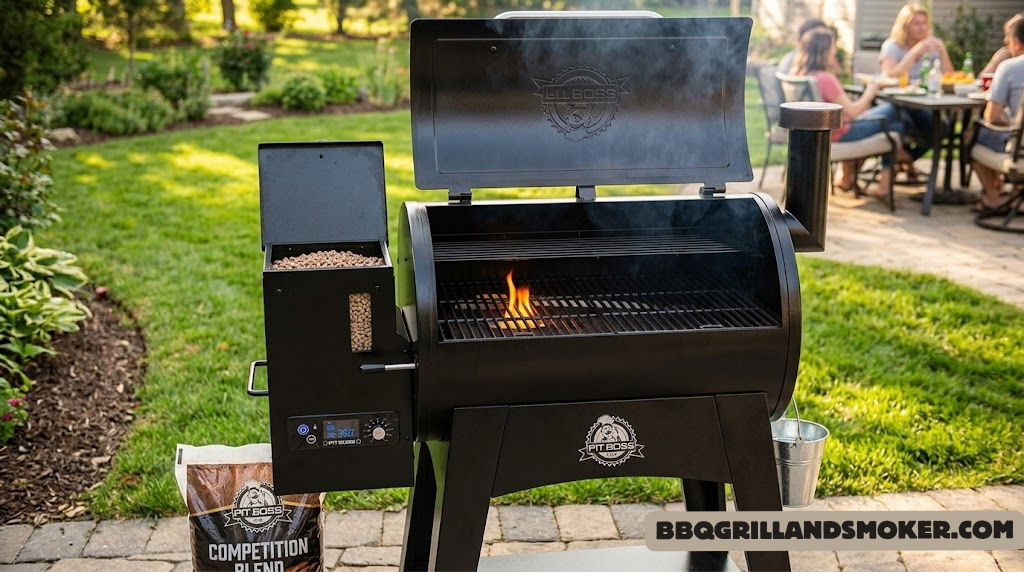
Let’s get something straight right off the top: the pellet grill market is brutally competitive. You have brands like Traeger, Camp Chef, and Recteq fighting for the same dollar with slick marketing and premium features. Then there’s Pit Boss — a brand that took a different approach and decided to compete on value and cooking surface rather than brand prestige.
The Pit Boss 700FB represents that philosophy at its most focused. It’s a mid-size pellet grill with 700 square inches of total cooking space, a unique slide-plate Flame Broiler system, and a controller that keeps things refreshingly simple. When you think about the Pit Boss vs. Traeger debate, the 700FB is often the first model that comes up — and for good reason.
I’ve cooked on this grill extensively: whole briskets, racks of baby back ribs, whole chickens, seared steaks, smoked pork shoulders, and everything in between. This review is built on real cook data, not spec sheets. You’ll get the full picture — including the parts Pit Boss probably wishes I wouldn’t mention.
- Exceptional value — more grill for the money than almost any competitor
- 700 sq in total cook surface is genuinely spacious
- Flame Broiler enables direct-heat searing — a true differentiator
- Strong, authentic smoke flavor output
- 21-lb hopper handles long cooks without constant refills
- 5-year warranty beats most rivals by 2 full years
- Porcelain-coated cast iron grates retain heat beautifully
- Simple dial controller is intuitive and reliable
- Temperature swings of ±15–25°F wider than premium models
- No WiFi or app connectivity for remote monitoring
- Lid seal is not tight — heat escapes at higher temps
- Controller lacks a built-in meat probe port
- Grease management system can be awkward to clean
- Paint finish shows wear faster than competitors
- Assembly instructions could be significantly clearer
Full Specifications Breakdown
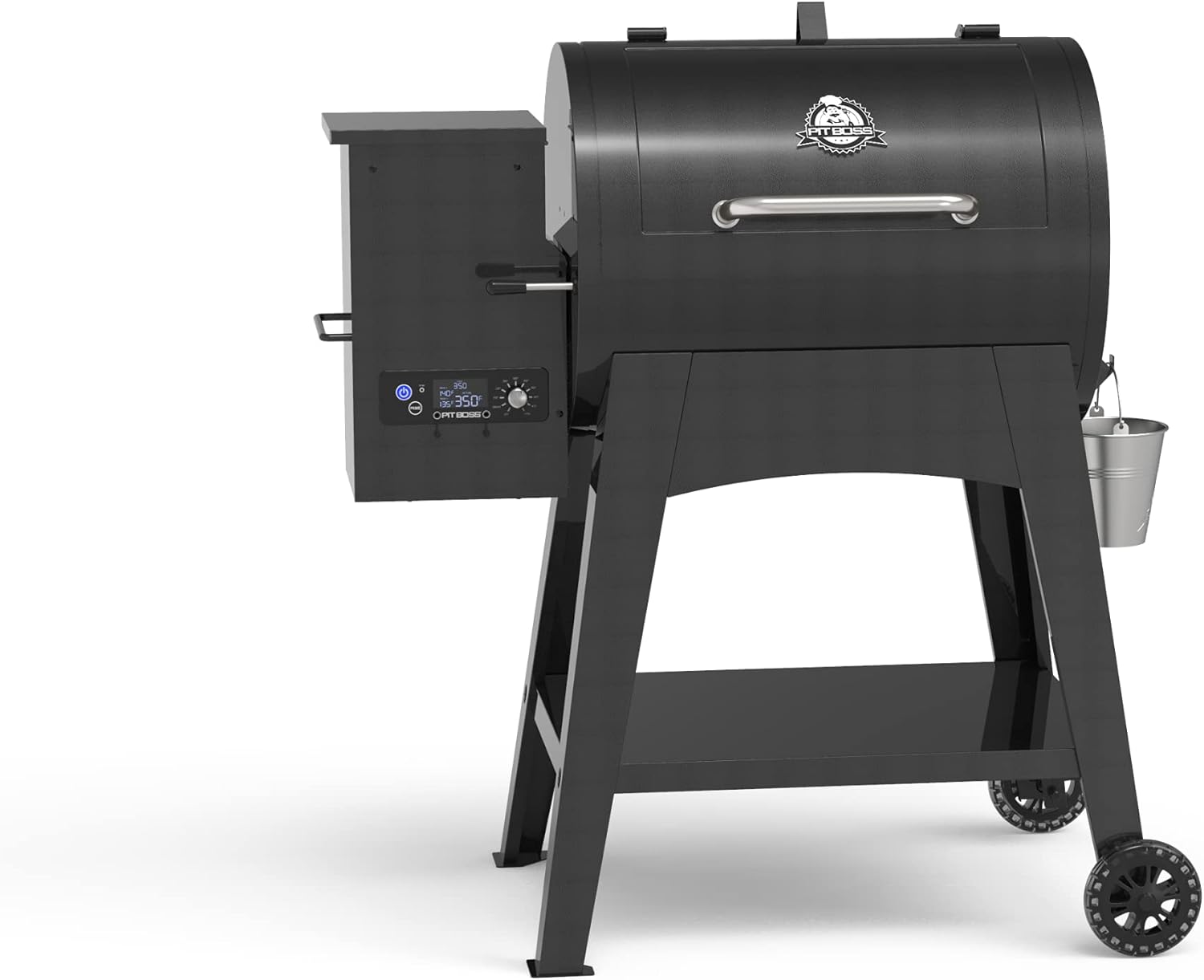
Before we dig into real-world performance, let’s lay out exactly what you’re getting. One of the first things I always do when reviewing a pellet grill is compare the advertised specs against what actually shows up at your door. With the 700FB, Pit Boss is mostly honest — though there are a few details worth flagging.
| Specification | Detail | Notes |
|---|---|---|
| Model Number | 700FB | “FB” = Flame Broiler |
| Fuel Type | Wood Pellets | Standard 1/4″ BBQ pellets |
| Primary Cook Surface | 580 sq in | Porcelain-coated cast iron |
| Upper Rack | 120 sq in | Porcelain-coated steel wire |
| Total Cook Area | 700 sq in | Enough for 6–8 racks of ribs |
| Temperature Range | 180°F – 500°F | + Smoke setting ~150–170°F |
| Temperature Increments | 25°F steps | Via dial controller |
| Ignition System | Auto Start Hot Rod | ~4–7 min preheat to 250°F |
| Hopper Capacity | 21 lbs | ~12–16 hrs at low temp |
| Pellet Cleanout | Bottom drain door | Manual cleanout |
| Controller Type | Digital Dial | No WiFi / Bluetooth |
| Flame Broiler | Yes — Slide Plate | Opens for direct flame access |
| Grate Material | Porcelain Cast Iron | Excellent heat retention |
| Body Material | Steel w/ High-Temp Paint | Not stainless |
| Power Requirement | 120V / 300W | Standard outlet |
| Dimensions (LxWxH) | 45.5″ × 22″ × 47″ | With lid closed |
| Assembled Weight | ~124 lbs | Includes hopper |
| Warranty | 5-Year Limited | On parts & components |
| Side Shelf | Yes — Foldable | With utensil hooks |
| Ash Cleanout System | Manual | No auto-ash removal |
💡 Important Clarification on “700 Square Inches”
The 700 sq in figure includes the 120 sq in upper warming rack. The primary main grate is 580 sq in. That’s still genuinely large — noticeably bigger than a Traeger Pro 575 (572 sq in primary) at a considerably lower price. When comparing models, always verify how cook area is calculated, as some brands are more generous with their math than others.
What the spec sheet won’t tell you is how these numbers translate to actual cooks. For context on what 700 sq in looks like in practice: during testing we fit an 8-lb pork butt, a full rack of spare ribs, and 6 chicken thighs simultaneously on the main grate — with room to spare. That’s meaningful real-world capacity that matters when you’re cooking for a crowd. If you’re weighing a pellet grill vs. charcoal grill in terms of versatility and capacity, this is where the 700FB makes a compelling case.
Unboxing, Assembly & First Impressions
The 700FB arrives on a pallet via freight delivery, partially disassembled. Don’t let that intimidate you — assembly is achievable solo, though having a second pair of hands makes the process considerably smoother, especially when it’s time to mount the legs and flip the barrel body.
What’s in the Box
- Main barrel body (pre-assembled with auger system installed)
- Four legs with caster wheels (two locking)
- Lower shelf frame
- Foldable side shelf with utensil hooks
- Porcelain-coated cast iron main grates (2 pieces)
- Upper warming/smoking rack
- Flame Broiler slide plate and housing
- Grease tray and drip bucket
- Heat deflector plate
- Hardware bag and instruction manual
Assembly Time & Difficulty
Plan for 60–90 minutes for a relaxed first assembly, or around 45 minutes if you’re experienced with flat-pack outdoor equipment. The instruction manual is functional but not great — illustrations are small and some steps assume familiarity with how pellet grills work. If you’ve never assembled one before, watching a 700FB-specific YouTube assembly video alongside the manual makes a significant difference.
🔧 Assembly Tips From Experience
Before connecting the hopper to the barrel, verify the auger spins freely by hand. Apply a thin coat of cooking oil to all interior surfaces before your initial seasoning burn-off. Tighten all leg bolts to snug-plus-quarter-turn rather than maximum torque. Connect the power cord last, after all structural assembly is complete.
Initial Seasoning Burn-Off
Like all new pellet grills, the 700FB needs an initial burn-off before your first real cook. Run at 350°F for 45 minutes, then bump to 450°F for another 30 minutes to burn off any factory residues. After that, coat the grates with a thin layer of cooking oil while hot and allow to cool naturally. For the full process, see our guide on how to season a new BBQ grill. First impressions out of the box are positive but not premium — the paint finish is good, the welds are clean, and the overall fit and finish is competitive for this price bracket.
Build Quality, Materials & Design
Build quality is where budget pellet grills most often reveal their limitations, and it’s worth examining the 700FB with a critical eye. The honest assessment: Pit Boss built a grill that’s structurally solid but cosmetically average.
Body & Frame Construction
The main barrel is fabricated from steel with a high-temperature powder coat finish. The gauge is adequate — sufficient to hold heat effectively and resist denting under normal use. The barrel is notably heavier than grills from cheaper competitors, which is generally a positive indicator of heat retention and long-term durability. The four thick-gauge steel legs with locking caster wheels give the grill a stable, planted feel that inspires confidence when you’re managing long overnight cooks.
Lid & Seal Quality
Seal Upgrade Tip: Many 700FB owners apply a strip of gasket tape (high-temp silicone or fiberglass type) around the barrel rim to improve the lid seal. This $15–$20 upgrade measurably improves temperature consistency and fuel efficiency. See our pellet grill maintenance guide for specifics on which tape products work best at high temperatures.
The lid itself is well-made, but the seal between lid and barrel is not airtight. At temperatures above 400°F, heat and smoke escape around the perimeter in several spots — contributing to temperature inconsistency and slightly reduced fuel efficiency. This is the 700FB’s most common owner complaint and one worth addressing early with the gasket tape upgrade mentioned above.
Grate Quality
The porcelain-coated cast iron grates are a genuine highlight. Cast iron holds and radiates heat better than the stainless steel grates found on many competitors at this price. The porcelain coating provides non-stick properties and rust resistance. For a detailed look at how this material performs long-term, see our analysis of cast iron vs. stainless steel grill grates. Proper maintenance — light oiling after each cook, gentle brushing while warm — will keep these grates performing beautifully for years.
Hopper & Auger System
The 21-lb hopper is one of the 700FB’s strongest selling points. A full hopper at 225°F will run for approximately 14–16 hours — enough to carry a full brisket cook with fuel to spare. The hopper lid closes securely, keeping pellets dry in light weather, though it’s not fully weatherproof. The auger is a standard variable-speed design that feeds pellets to the firepot based on the controller’s feedback loop. After 50+ cooks, we experienced zero auger jams — a testament to mechanical reliability when quality, low-dust pellets are used consistently. For pellet selection guidance see our complete BBQ wood guide.
Temperature Performance & Consistency
Temperature control is the heartbeat of pellet grilling, and it’s the category that most clearly separates premium pellet grills from budget options. I tested the 700FB with a dual-probe third-party thermometer placed at two grate locations — center-left and center-right — measuring every 5 minutes across multiple sessions at different target temperatures.
Temperature Accuracy vs. Set Point
At 225°F (low-and-slow territory), the 700FB ran an average of 12°F hotter than the set point. This is common in pellet grills; a good rule of thumb is to set 10–15°F below your actual target temperature until you know your unit’s specific behavior. At 350°F, accuracy improved significantly, averaging within ±7°F of the set point. At 450°F, we saw the widest variation — 428°F to 471°F depending on the cook, ambient temperature, and hopper fill level.
Temperature Variance (Left vs. Right Grate)
Hot spots are the nemesis of every pellet grill, and the 700FB has them. The area directly over the firepot (roughly center-left) runs 15–20°F hotter than the back-right corner during low-and-slow cooks. During high-heat sessions, that variance can reach 30°F. In practice, rotating your meat during long cooks is important — but once you learn your grill’s hot zones after a few sessions, you’ll start placing proteins strategically. It becomes second nature quickly.
🌡️ Temperature Setting Guide for the 700FB
Based on our testing: for smoking at 225°F, set the controller to 210°F. For roasting at 300°F, set to 290°F. For grilling at 400°F, set to 390°F. These real-world adjustments account for the 700FB’s characteristic of running slightly hot, particularly at lower temperatures. After 3–4 cooks you’ll have your unit’s tendencies memorized.
Real-World Cook Tests
Spec sheets and temperature charts only tell part of the story. What matters most is what comes off the grill. We ran the 700FB through a comprehensive battery of real-world cook tests over several weeks — from brisket and ribs to chicken, burgers, and salmon. Here’s the honest data.
Beef Brisket (Flat)
Baby Back Ribs (3-2-1)
Pork Shoulder (Pulled)
Ribeye Steak (Seared)
Whole Chicken
Smoked Salmon
Brisket — The Ultimate Pellet Grill Test
A great brisket is the proving ground for any serious smoker, and the 700FB acquitted itself admirably. We cooked a 10.5-lb flat at 210°F (controller set to compensate for the grill’s run-hot tendency) over 14+ hours using hickory pellets. The resulting bark was genuinely excellent — a deep mahogany crust with meaningful flavor and bite. The smoke ring measured just under 3/8 inch consistently across the flat, which is competitive for a pellet grill. Interior moisture was outstanding. For more on achieving the ideal smoke ring, see our guide on assessing smoke ring formation and meat color changes.
Baby Back Ribs — Where It Truly Shines
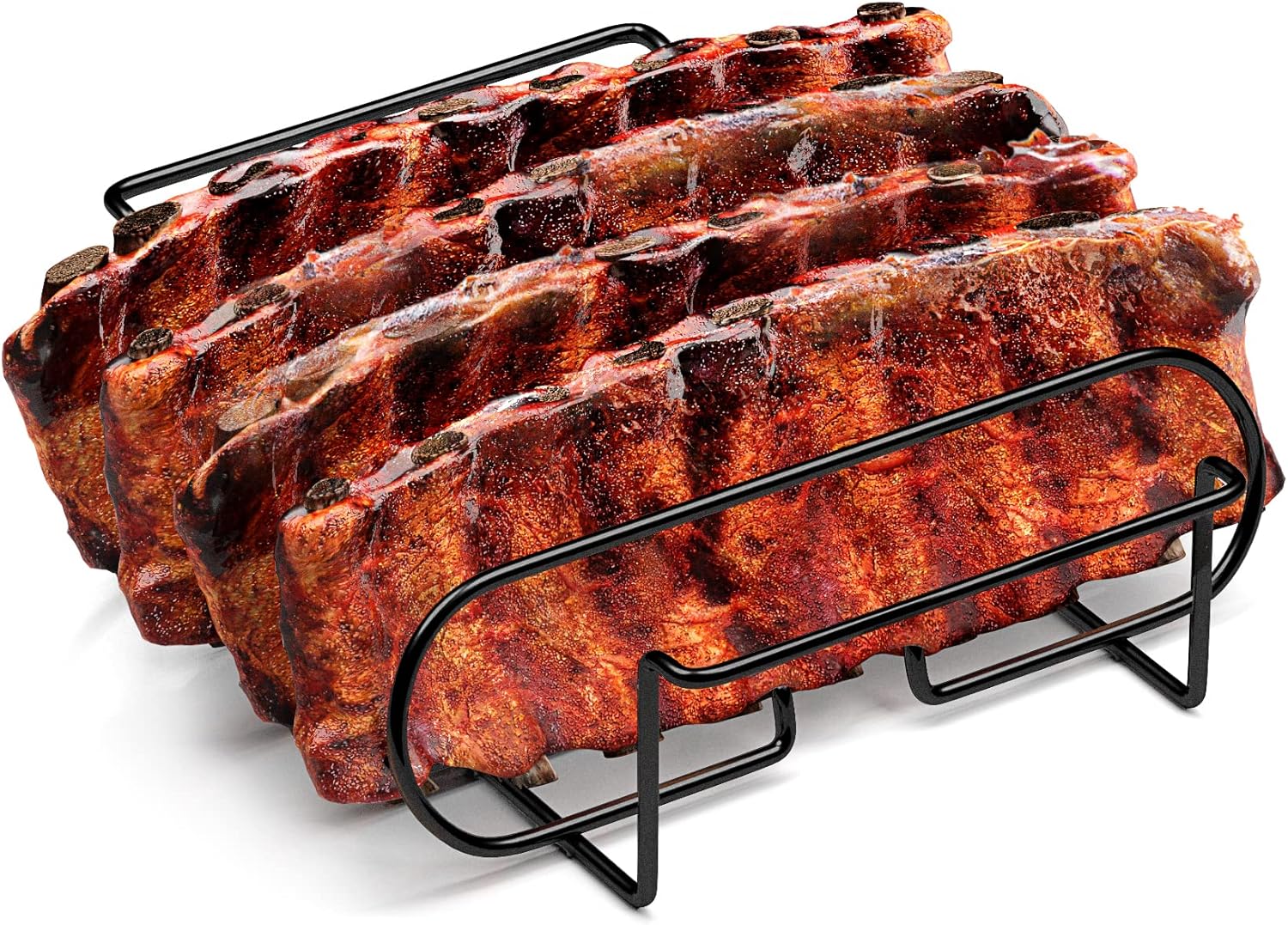
Baby back ribs on the 700FB are exceptional. Three full racks fit comfortably on the main grate without stacking, allowing air circulation and even smoke penetration. We used the 3-2-1 method with apple and cherry pellets: 3 hours smoke at 225°F, 2 hours wrapped in foil with butter and brown sugar, 1 hour unwrapped to set the glaze. Results were fall-off-bone tender with a beautiful caramelized exterior and deep smoke flavor that genuinely rivaled offset smoker output. This is probably the single best thing to cook on the 700FB.
Pork Shoulder — Crowd Feeder
An 8.2-lb bone-in pork shoulder cooked at 225°F over 11.5 hours produced pulled pork that was genuinely competition-worthy. The fat cap rendered beautifully, the bark was thick and flavorful, and the interior was moist throughout. Pellet consumption was approximately 6 lbs for the full cook — very efficient for a low-and-slow session of this length. Serve it with our smoked pulled pork recipe and it’ll disappear immediately. For keeping pulled pork moist during a long cook, see our tips on keeping smoked meat moist.
Reverse Sear Ribeye — Testing the Flame Broiler
The reverse sear method — smoking a steak low and slow until it reaches 125°F internal, then searing over direct high heat — is where the Flame Broiler system fundamentally changes what the 700FB can do. The sear quality when the Flame Broiler slide is fully open at 500°F is legitimately impressive for a pellet grill. Crust development was strong, though you need to work quickly — the direct fire zone is intense and steaks can go from perfect to overdone in 30 seconds per side. To master the technique, see our complete guide to grilling the perfect steak.
The Flame Broiler: Pit Boss’s Secret Weapon
The Flame Broiler is the feature that most decisively separates the Pit Boss 700FB from its direct competitors. It’s a sliding plate system built into the heat deflector beneath the main cooking grate. When closed, it routes heat and smoke around the deflector plate for indirect, even convection cooking — exactly what you want for smoking. When you slide it open, you expose a direct line of sight to the wood-burning firepot below, creating a zone of intense direct-flame heat for searing.
How It Works in Practice
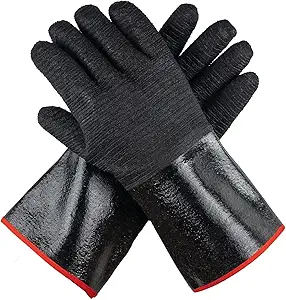
The slide mechanism is operated manually via a handle at the front of the grill. It moves smoothly even when the grill is hot, though using a glove is strongly recommended since the handle gets warm during extended high-heat cooking. The opening is positioned in the center of the cooking area, exposing approximately a 6–8 inch zone of direct flame directly above the firepot.
In practice, the Flame Broiler delivers genuine searing performance that no other pellet grill in this price range can match using indirect heat alone. Moving steaks directly over the open broiler at 450–500°F creates an intense, audible sizzle and meaningful crust formation within 60–90 seconds per side. It won’t fully replicate a screaming-hot cast iron pan or a charcoal chimney sear, but it’s closer than any indirect pellet approach can get.
Best Uses for the Flame Broiler
- Reverse sear steaks and chops: Smoke to 10°F below target internal temp, then slide open and sear. The best use case by far.
- Finishing burgers: Build smoke flavor over 20 minutes at low heat, then sear over direct flame for the final crust. Our grilled burger recipe works beautifully with this technique.
- Chicken thighs: Smoke until 155°F internal, then slide open briefly to crisp the skin. Game-changing skin texture for smoked chicken.
- Finishing lamb chops: A quick sear over direct flame after smoking develops a beautiful crust. Try our grilled lamb chops recipe adapted for the pellet grill.
🔥 Flame Broiler Caution
When the Flame Broiler is open, fat dripping directly onto the firepot can cause flare-ups — similar to cooking on a gas grill without a flame tamer. Keep a spray bottle of water nearby and don’t leave the grill unattended with the broiler open and fatty cuts directly overhead. Learn to prevent and manage flare-ups — the same principles apply here.
Flame Broiler vs. No Flame Broiler Pellet Grills
This feature is simply absent from Traeger’s entire lineup and from most Camp Chef models without the Sidekick accessory. If searing performance matters to you — and it should, because the difference between a good pellet-grilled steak and a great one is almost entirely about final crust development — the Flame Broiler makes the 700FB a fundamentally more capable machine than its direct competition. When we compare the Pit Boss vs. Traeger heat output and control, the Flame Broiler is the single biggest practical differentiator that tips many buyers toward Pit Boss.
Pellets, Smoke Flavor & Wood Selection
Smoke flavor is the fundamental promise of pellet grilling, and the 700FB delivers it with more conviction than most competitors in its price class. Several factors drive this — the Smoke setting that runs the grill at ~150–170°F for maximum smoke production, the heavy cast iron grates that create more radiant heat and better combustion conditions, and the relatively large firepot that supports a robust burn cycle.
The “Smoke” Setting
The dial controller’s Smoke setting is positioned below the numbered temperature settings and runs the auger on a very slow, intermittent cycle that produces thick, rolling smoke without raising the internal temperature much above 170°F. This setting is ideal for cold-smoking cheese, warming already-cooked food with smoke, or starting a long cook with maximum smoke penetration before transitioning to your target temperature. The quality of smoke from the Smoke setting is genuinely impressive — thick, aromatic, and clean when quality pellets are used.
Pellet Recommendations for the 700FB
Pellet quality matters enormously for flavor and performance. Low-quality pellets with high moisture content or poor compression produce excessive ash, inconsistent burns, and weaker flavor. We recommend:
- Competition blend: Best for general use — a balanced mix of hickory, cherry, and maple that works with almost any protein.
- Hickory: The classic barbecue smoke for pork, brisket, and chicken. Bold and authentic. For a detailed comparison of wood flavors see our hickory vs. mesquite showdown.
- Cherry or Apple: Sweeter, milder fruit woods for chicken, pork ribs, and fish. Excellent choice for the baby back rib cook described above.
- Mesquite: Intense and assertive — excellent for beef brisket but overpowering for more delicate proteins.
- Pecan: A middle ground between hickory and fruit woods. Outstanding for poultry and pork shoulder.
For a deeper dive into how different wood types affect smoke flavor, our guide on wood chips vs. chunks covers the underlying science, and these flavor profiles translate directly to pellet selection. The 700FB handles all of the above pellet types well, and we found no meaningful performance difference between major brands when pellet quality was comparable.
💡 Enhancing Smoke Output on the 700FB
For even more smoke flavor during low-and-slow cooks, start the cook on the Smoke setting for the first 60–90 minutes before raising temperature to your target. This initial smoke period penetrates raw meat most effectively before the exterior begins to form a crust that limits further smoke absorption. Many competition pitmasters use this technique even on dedicated offset smokers.
One honest comparison worth making: if deep, complex smoke flavor is your highest priority, a well-managed offset smoker still produces different smoke characteristics than any pellet grill, including the 700FB. The combustion chemistry of a large log fire is simply different from the compressed wood pellet burn cycle. But for the convenience, consistency, and overall flavor quality the 700FB delivers, pellet smoking has become a genuinely legitimate format — not a compromise one.
Cleaning & Maintenance
Pellet grills require more attentive maintenance than gas grills — ash accumulates in the firepot and vacuum area, grease builds up in the drip tray, and the cooking chamber needs periodic deep cleaning to prevent grease fires and maintain proper airflow. The 700FB’s cleaning access is adequate but could be better designed in a few areas.
Post-Cook Routine (15 Minutes)
- With the grill still warm (not hot), brush grates with a quality grill brush or scraper to remove food debris.
- Empty the drip bucket before it overflows — a common beginner mistake. Line it with foil for dramatically easier cleanup.
- Wipe the cooking chamber walls with a damp cloth to remove fresh grease before it bakes on permanently.
- Allow the grill to fully cool before covering.
Weekly Deep Clean (30–45 Minutes)
- Remove grates and vacuum ash from the firepot area using a shop vacuum. Ash accumulation restricts airflow and causes temperature inconsistency — this step is more important than most new owners realize.
- Wipe down the heat deflector and Flame Broiler plate with a damp cloth or paper towels.
- Clean the drip tray and grease channel with hot water and mild detergent (rinse thoroughly).
- Inspect the grease drain tube and clear any blockage — a clogged drain is the number one cause of interior grease fires in pellet grills.
- Wipe exterior surfaces with a damp cloth and apply a light coat of stainless or painted steel protectant.
Seasonal Maintenance
Every season or after approximately 15–20 cooks, empty and clean the hopper completely, inspect the auger for pellet dust buildup, and check all electrical connections and the hot rod igniter for corrosion. Replacing the hot rod igniter is a simple and inexpensive maintenance task that preempts the most common reason pellet grills fail to light properly. Our comprehensive barbecue maintenance essentials guide covers the full seasonal protocol that applies directly to the 700FB. Stored properly with a fitted cover and regular oiling of metal surfaces, this grill can provide 10+ years of service without major component failure.
ERH Code Warning: If you encounter an ERH (High Temperature) error code on the controller, don’t panic. This is usually triggered by a grease fire or extreme temperature spike. See our dedicated guide on the Pit Boss ERH code — why it happens and how to fix it for a step-by-step resolution process.
Pit Boss 700FB vs. The Competition
No review is complete without honest head-to-head context. Here’s how the 700FB stacks up against its most common competitors across the features that actually matter during everyday cooking.
| Feature | Pit Boss 700FB | Traeger Pro 575 | Camp Chef Woodwind 24 | Z Grills 700D |
|---|---|---|---|---|
| Total Cook Area | 700 sq in | 572 sq in | 573 sq in | 700 sq in |
| Primary Grate | 580 sq in | 575 sq in | 429 sq in | 504 sq in |
| Max Temp | 500°F | 500°F | 500°F | 450°F |
| Hopper Capacity | 21 lbs | 18 lbs | 22 lbs | 20 lbs |
| Flame Broiler / Direct Sear | ✓ Yes (built-in) | ✗ No | ~ Sidekick (add-on) | ✗ No |
| WiFi Connectivity | ✗ No | ✓ Yes | ✓ Yes (WiFi model) | ✗ No |
| Meat Probe Ports | ✗ No (external probe) | ✓ 1 included | ✓ 2 included | ~ 1 included |
| Grate Material | Porcelain Cast Iron | Porcelain Steel | Stainless Steel | Porcelain Steel |
| Warranty | 5 Years | 3 Years | 3 Years | 3 Years |
| Approx. Price (USD) | $350–$450 | $700–$800 | $550–$700 | $350–$450 |
| Overall Value | Excellent | Good (premium cost) | Very Good | Good |
700FB vs. Traeger Pro 575 700FB Wins on Value
The Traeger Pro 575 is the most-compared alternative, and the gap in real-world value is significant. Traeger offers WiFi connectivity and a slightly tighter temperature hold — genuine advantages for set-and-forget convenience. But you’re paying roughly $300 more for those features while getting less cooking surface and no direct searing capability. The Traeger’s D2 controller is excellent. The app is polished. But for cooks who prioritize cooking performance over connectivity, the 700FB simply outperforms its price. For the detailed breakdown, read our Pit Boss vs. Traeger full comparison.
700FB vs. Camp Chef Woodwind 24 Tied — Different Strengths
Camp Chef’s Woodwind WiFi 24 is arguably the 700FB’s most evenly matched competitor when budget is set aside. Camp Chef offers superior temperature consistency, WiFi monitoring, two integrated probe ports, and their Slide-and-Grill direct searing system (similar to Flame Broiler but on the Woodwind Pro). But it costs meaningfully more. Our Camp Chef Woodwind WiFi 24 review goes deep on those details. If you can stretch to the Camp Chef price, you get a more refined overall package. If budget is a real constraint, the 700FB delivers 85% of the performance at 65% of the price.
700FB vs. Z Grills 700D 700FB Wins Overall
The Z Grills 700D is the 700FB’s closest price competitor. Similar total cook area, similar price, similar entry-level controller philosophy. Where the 700FB wins decisively is the Flame Broiler (absent on Z Grills) and the 5-year warranty vs. Z Grills’ 3-year coverage. The Z Grills vs. Pit Boss comparison explores this duel in depth — the summary is that the Flame Broiler alone tips the balance to Pit Boss for anyone who ever wants to sear.
Who Should Buy the Pit Boss 700FB?
After extensive testing, I have a clear picture of who this grill is designed for — and who would be better served by a different choice.
The 700FB Is Perfect For:
- First-time pellet grill buyers who want a capable, honest introduction to wood-fired cooking without a significant financial risk.
- Value-focused cooks who want maximum cooking surface and real searing capability at a budget price.
- Families of 4–8 — the 580 sq in primary grate comfortably handles a full meal for a crowd without juggling food in batches.
- Rib and pork specialists — low-and-slow pork is where the 700FB genuinely shines, matching or exceeding grills at twice the price on smoke flavor and texture.
- Steak searing enthusiasts who want direct-flame capability from their pellet grill without buying an expensive add-on accessory.
- Gift buyers looking for a complete, capable package — pair it with a quality BBQ rub set and a tool kit for the perfect gift for a grill master.
Consider Something Else If:
- You cook overnight frequently and need rock-solid temperature control with remote monitoring — a WiFi-enabled grill like the Camp Chef Woodwind WiFi or Traeger Ironwood is a worthwhile upgrade.
- You primarily grill hot-and-fast and smoke occasionally — a traditional gas grill paired with a smoke box may suit you better.
- You want the deepest, most complex wood-smoke character achievable — a dedicated offset smoker produces a qualitatively different smoke profile.
- You need a compact unit for a small patio or apartment balcony — at 45.5 inches wide the 700FB requires meaningful outdoor footprint.
🎁 Father’s Day or Holiday Gift Idea
The 700FB makes an outstanding gift for any dad who loves outdoor cooking. Consider bundling it with a quality barbecue rub collection, a selection of premium BBQ sauces, and a fitted cover. Our Father’s Day gift guide for grill masters has the full bundle playbook.
Expert Tips & Tricks for the 700FB
After cooking on the 700FB across dozens of sessions, certain practices consistently produced better results. These are the techniques that aren’t in the manual but matter enormously in practice.
- 1Run at lower set temps than your target. The 700FB runs 10–15°F hot at most settings. For 225°F smoking, dial to 210°F. This one adjustment prevents overcooked exteriors on long brisket and pork butt cooks.
- 2Upgrade the lid seal immediately. A $15 roll of high-temp gasket tape around the barrel rim transforms temperature consistency and fuel efficiency. Do this before your second cook.
- 3Start every cook on the Smoke setting for 60 minutes. Maximum smoke penetration happens in the first 60–90 minutes on cold or raw meat. Start low, then ramp to your target temperature after this smoke window.
- 4Line your drip bucket with foil. This 30-second prep step makes post-cook cleanup dramatically faster. Replace the foil, not the bucket.
- 5Rotate meat halfway through long cooks. The firepot creates a slight hot spot center-left. Rotating at the halfway point ensures even cooking without requiring any temperature adjustment.
- 6Vacuum the ash regularly. Ash accumulation above the firepot restricts the combustion air supply, causing temperature drops and potential auger jams. A quick vacuum every 2–3 cooks prevents this entirely.
- 7Use the Flame Broiler for chicken skin. Smoke thighs to 155°F internal, then slide the Flame Broiler open for 2–3 minutes per side over direct heat. The skin goes from rubbery to shatteringly crisp. This technique alone is worth the price of the grill for chicken lovers. See our guide to grilling chicken perfectly.
- 8Store pellets in an airtight container. Moisture is the enemy of pellet performance. Even a week of humidity exposure can degrade pellet integrity, leading to ash production and inconsistent burns. Airtight storage buckets are inexpensive insurance.
- 9Always use a third-party thermometer. The 700FB’s controller reads ambient temperature in the chamber, not surface temperature or meat internal temperature. A quality dual-probe thermometer is non-negotiable — it’s how you know your actual cooking environment and when your protein is done.
- 10Season the grill seasonally. At the start of each grilling season, run a full burn-off, re-oil the grates, and inspect all seals and connections. This 45-minute annual maintenance session adds years of reliable service. Our pellet grill maintenance guide has the complete checklist.
Common Issues & How to Fix Them
No pellet grill is entirely without operational quirks, and the 700FB has its share of common complaints. Here’s what current owners encounter most frequently — and how to resolve each issue without a service call.
-
🌡️ Grill Running Too Hot or Too ColdThe most common complaint from new owners. The 700FB’s dial controller uses a relatively simple feedback loop that is not as precise as PID controllers in premium grills. Fix: recalibrate your set temperatures using a third-party probe (see tip #9 above), add gasket tape to the lid seal, and ensure the ash pot isn’t restricting airflow. In cold weather, expect to add 20–30°F to your controller setting to compensate for ambient heat loss.
-
🔥 ERH (Error High Temp) Code on ControllerThis error fires when the grill detects a temperature above 650°F — almost always caused by a grease fire in the drip tray or a pellet flare-up. Power off the grill at the switch (do not just turn the dial — let the fan continue running until all combustion stops). Allow to fully cool. Remove and clean the drip tray and grease drain. Restart and monitor closely. Our detailed Pit Boss ERH code guide covers every scenario and fix in depth.
-
🔥 Grill Won’t Ignite or Takes Very Long to LightUsually caused by a failing hot rod igniter, excessive ash in the firepot smothering ignition, or wet/degraded pellets that won’t combust cleanly. Fix: vacuum the firepot thoroughly, load fresh dry pellets from an airtight container, and test the igniter. Replacement hot rods cost $15–$25 and are a simple swap. If the grill still won’t light, check the auger is feeding pellets normally — a jammed auger starves the firepot of fuel.
-
📦 Pellet Auger JamAuger jams are caused almost exclusively by moisture-swollen pellets that expand and lock the auger shaft. Prevention is the cure: store pellets properly, never leave the hopper exposed to rain, and periodically clean pellet dust from the hopper floor. If a jam occurs, power off, remove remaining pellets, and use a rod or drill (with the appropriate auger adapter bit) to reverse-rotate the auger free.
-
🎨 Paint Discoloration and PeelingCosmetic issue, not structural. The high-temp paint on the barrel lid shows discoloration and occasional flaking after 10–20 cooks. This is normal for a painted steel barrel exposed to extreme heat cycling. Touch up with high-temperature grill paint (available in most hardware stores) rated for 1200°F+. Apply to clean, dry metal surface. This is maintenance, not a defect.
-
💧 Grease Leak from Drain AreaIf grease appears dripping from beneath the cooking chamber rather than flowing cleanly into the drip bucket, the grease drain channel is likely blocked. Power off and cool completely. Remove the grease tray and clean the drain tube with a flexible brush. A clear drain path prevents interior grease fires. Line the drip tray with foil (changed after each cook) to prevent buildup from reaching the drain in the first place.
Frequently Asked Questions
-
Yes — emphatically. The 700FB remains one of the best-value pellet grills available in 2025. While newer models have added WiFi and PID controllers, the 700FB’s combination of 700 sq in cooking surface, the unique Flame Broiler direct searing system, porcelain cast iron grates, and a 5-year warranty at a sub-$450 price point is genuinely hard to beat. If you’re upgrading to your first pellet grill from a gas or charcoal unit and want maximum capability for your dollar, it’s still our recommended entry-point pick.
-
“700” refers to the total square inches of cooking surface (700 sq in including the upper rack). “FB” stands for Flame Broiler — the signature slide-plate direct searing system built into the heat deflector. It’s what separates this model from Pit Boss’s standard 700-series grills. If you see a 700 model without “FB” in the name, it lacks this feature.
-
The Flame Broiler is a sliding steel plate positioned in the heat deflector directly beneath the main cooking grates. When closed, heat and smoke are routed around the deflector for indirect convection cooking — perfect for smoking. When you slide it open (via a front-mounted handle), food above that zone receives direct radiant heat from the firepot below — enabling searing temperatures of 500°F+ with intense direct-flame contact. It converts the 700FB from a pure smoker into a hybrid grill/smoker in seconds.
-
Yes. The 580 sq in primary grate accommodates brisket flats up to approximately 14–15 lbs laid flat. A full packer brisket (flat + point combined, often 12–16 lbs) may require trimming to fit comfortably, or can be positioned diagonally on the grate. We cooked a 10.5 lb flat flat on the 700FB with excellent results — a 3/8-inch smoke ring and exceptional bark quality after a 14-hour cook at 210°F set temperature. For the full technique guide see our smoked beef guide.
-
No. The 700FB uses a straightforward digital dial controller with no wireless connectivity. There’s no companion app, no WiFi, and no Bluetooth. This is one of the genuine trade-offs relative to competitors like the Traeger Pro 575 or Camp Chef Woodwind WiFi. If remote temperature monitoring is important to you, you’ll need to use a third-party wireless meat thermometer — which we recommend regardless of what grill you own. The lack of connectivity is the 700FB’s biggest limitation for cooks who do long overnight smokes.
-
Competition blend, hickory, cherry, and apple pellets all perform exceptionally well in the 700FB. For most cooks, a competition or all-natural hardwood blend gives you the most versatile baseline flavor. For beef brisket and ribs, hickory or pecan deliver the most authentic Southern barbecue profile. For poultry and fish, cherry or apple provide a sweeter, more delicate smoke. Use quality pellets from established brands — low-quality pellets with high moisture or filler content reduce smoke flavor quality and increase ash accumulation significantly. See our hickory vs. mesquite guide for a detailed flavor comparison.
-
At low-and-slow temperatures (225°F), a full 21-lb hopper lasts approximately 14–16 hours in moderate ambient conditions (60–75°F). At higher temperatures (350–400°F), expect 8–10 hours. In cold weather below 40°F, consumption increases by approximately 20–25% due to the grill working harder to maintain temperature. A gasket tape lid seal upgrade also improves pellet efficiency measurably. For a 16-hour brisket cook, plan to have a second bag of pellets available as backup insurance even if the hopper theoretically holds enough.
-
Yes — it’s one of our top beginner recommendations in the pellet grill category. The simple dial controller removes the complexity of app-based systems, the large cooking surface provides room for error and experimentation, and the Flame Broiler means beginners aren’t locked into indirect-only cooking. The main learning curve is understanding the grill’s run-hot tendency and learning to compensate with set temperature adjustments. After 3–4 cooks, most owners have their unit’s behavior internalized. Start with our complete smoker guide for beginners to get oriented quickly.
-
The ERH (Error High Temp) code fires when the controller detects temperatures above 650°F, almost always triggered by a grease fire in the drip tray or an extreme flare-up. Immediately turn the power switch to OFF (not just the dial) to shut down the auger while allowing the fan to continue cooling the fire. Leave the lid closed. Do not open the lid — oxygen will worsen a grease fire. Allow the unit to fully cool before opening. Once cool, clean the drip tray, drain tube, and grease channel thoroughly. Restart. For a complete walkthrough with every possible ERH cause, see our dedicated Pit Boss ERH code repair guide.
-
The 700FB undercuts both Traeger and Recteq significantly on price while offering more cooking surface and the unique Flame Broiler that neither brand includes at standard. Traeger and Recteq have better temperature precision (PID controllers), polished app ecosystems, and premium build quality details. In terms of actual food quality — bark, smoke ring, tenderness, moisture — the gap between the 700FB and a Traeger Pro 575 is much smaller than the price difference suggests. The Recteq lineup, explored in our Recteq DualFire review, is a legitimate step up in precision and build quality, but at 2–3× the price. For most backyard cooks, the 700FB delivers 85–90% of that performance at 40–50% of the cost.
Final Verdict: The Budget Pellet King Still Delivers
After weeks of real-world testing, dozens of cooks, and an honest look at everything this grill does well and where it falls short, the conclusion is clear: the Pit Boss 700FB is one of the most compelling pellet grills you can buy at any price point under $500, and there is nothing else in its price class that offers the same combination of cooking surface area, direct-flame searing capability, cast iron grate quality, and warranty coverage.
Its shortcomings are real. Temperature consistency lags behind PID-controlled competitors. The lid seal needs upgrading. There’s no WiFi for the modern connected backyard chef. The paint finish shows age faster than premium alternatives. These are genuine limitations, not just nitpicks.
But here’s what matters most: the food it produces is genuinely excellent. Baby back ribs that fall clean off the bone. Brisket with a legitimate smoke ring and proper bark. Pork shoulder that pulls effortlessly after a full night’s cook. Reverse-seared steaks with a real crust courtesy of the Flame Broiler. These results are why the 700FB has become a fixture in backyards across the country — because at the end of the cook, what matters is what’s on the plate, and the 700FB delivers every time.
For the value-focused buyer who wants a capable, versatile pellet grill that does the fundamentals beautifully without asking you to spend premium money, the Pit Boss 700FB is still our recommendation in 2025. It earned a 4.2 out of 5 — not a perfect grill, but very close to a perfect value.
Ready to Fire Up the 700FB?
Check today’s Amazon price — stock levels fluctuate and promotional pricing is available seasonally. Bundle yours with a quality rub set and BBQ tools for the complete setup.
🛒 Check Price on Amazon